
Blue Star Leopard Wrasse

Blue Star Leopard Wrasse for Sale: One of the Most Beautiful Wrasses
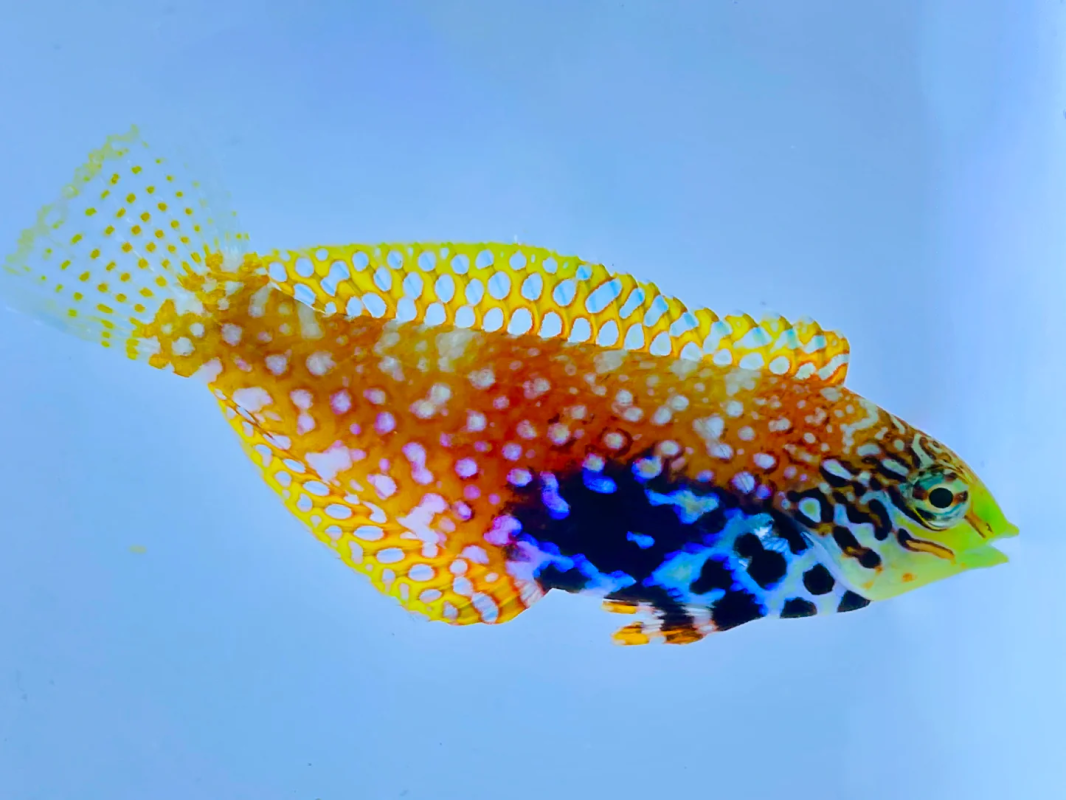
The Blue Star Leopard Wrasse is the kind of fish that stops experienced reef keepers mid-sentence when they first see one. Its intricate pattern of blue, white, and orange markings creates a level of visual complexity that rivals any fish in the saltwater hobby. At Dr. Reef’s Quarantined Fish, we apply the specialized expertise required to properly condition this demanding but deeply rewarding species so that it arrives at your tank healthy, eating, and ready to dazzle.
What Is the Blue Star Leopard Wrasse?
The Blue Star Leopard Wrasse, known scientifically as Macropharyngodon bipartitus, is a member of the Leopard Wrasse genus and is widely considered one of the most beautiful species within this already stunning group. It is native to the reefs of the Indian Ocean, particularly around the Maldives, Sri Lanka, and the East African coast.
Female and juvenile Blue Star Leopard Wrasses display a white body covered in orange-edged blue spots arranged in a complex, almost geometric pattern across the entire body and fins. Males develop more elaborate coloration as they mature, with green, blue, and orange tones adding new layers of visual interest to the already stunning base pattern. The transition from juvenile to adult coloration is a gradual and endlessly fascinating process to observe over time in the home aquarium.
Like all Leopard Wrasses, the Blue Star sleeps buried in the sand bed every night. This natural behavior requires specific tank setup considerations that must be addressed before the fish is introduced.
The Challenge and Reward of Keeping Blue Star Leopard Wrasses
The Blue Star Leopard Wrasse shares the same care challenges associated with all Leopard Wrasse species. It is sensitive to transport stress, can be reluctant to accept prepared foods initially, and requires pristine water quality and a deep sand bed for its nightly sleeping behavior. In the hands of an unprepared vendor or an underprepared hobbyist, these challenges can quickly become problems that compromise the health and survival of the fish.
At Dr. Reef’s Quarantined Fish, the conditioning process for Blue Star Leopard Wrasses is thorough and patient. Each fish is given adequate recovery time after collection, offered a wide variety of small meaty foods until it is eating reliably, and confirmed in good health before being made available for purchase. The result is a fish that arrives with the most difficult part of captive transition already completed under expert supervision.
Tank Setup Requirements
A minimum tank size of 75 gallons is recommended, with a fine aragonite sand bed of at least three to four inches depth throughout the tank or in a dedicated area. The sand must be fine-grained enough for the wrasse to dive into and remain buried comfortably overnight without injuring itself or becoming stuck.
Live rock with natural copepod and amphipod populations provides important supplemental nutrition through natural grazing behavior. The Blue Star Leopard Wrasse spends much of its day picking through rock surfaces and sand for small invertebrates, and a well-seeded tank with thriving microfauna supports this natural behavior perfectly.
A secure, tight-fitting lid is essential. Feed multiple times daily with frozen copepods, frozen mysis shrimp, and other small meaty offerings to meet the frequent feeding needs of this active grazer.