
Yellow Tangs

Yellow Tangs for Sale: How to Choose Healthy Specimens for Your Saltwater Aquarium
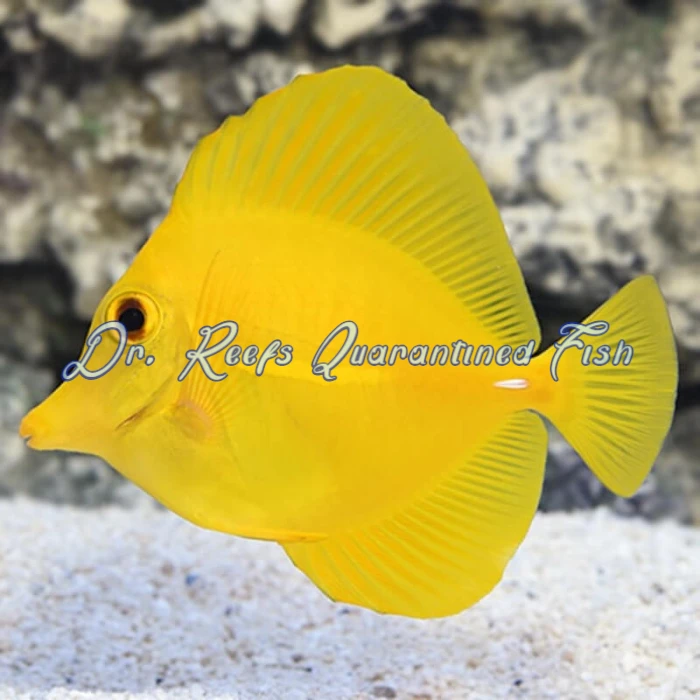
Few fish in the marine aquarium hobby carry the instant recognition of the Yellow Tang (Zebrasoma flavescens). That unmistakable uniform yellow coloration, the oval compressed body, and the active, energetic presence in the water column have made it one of the most popular saltwater fish in the world for decades. But popularity does not make a fish bulletproof, and choosing a healthy Yellow Tang from a trustworthy source is the single most important decision you will make as a prospective keeper. Dr. Reef’s Quarantined Fish supplies Yellow Tangs that have been properly held, observed, and confirmed healthy before reaching your tank, giving you the foundation every successful tang keeper needs.
Why the Yellow Tang Remains a Hobby Icon
Yellow Tang’s enduring popularity is not accidental. It combines striking, consistent coloration with a hardy constitution relative to many other reef fish, active daytime behavior that makes it one of the most visible and engaging fish in any system, and a genuinely useful role as an algae grazer that contributes to the cleanliness of the tank. In a well-maintained reef or fish-only system, a healthy Yellow Tang is almost always in motion, working methodically over live rock, glass surfaces, and open water with the characteristic sweeping, wing-like pectoral fin movement the genus is known for.
The species is native to the Pacific Ocean, with the vast majority of aquarium specimens historically sourced from Hawaii, where a well-managed collection fishery supplied the global hobby for decades. Collection from Hawaiian waters was banned in 2021, shifting the supply chain toward aquacultured specimens and collections from other Pacific locations including the Marshall Islands and Johnston Atoll. Aquacultured Yellow Tangs, now increasingly available, represent an important step forward for the hobby and tend to acclimate more readily to captive conditions than wild-caught animals.
Recognizing a Healthy Yellow Tang at Purchase
Choosing the right individual is where many keepers make their first mistake, and it is where the value of a specialist supplier like Dr. Reef’s Quarantined Fish becomes most apparent. A healthy Yellow Tang should display several clear indicators that are worth understanding before you buy.
Coloration is the most immediate signal. A genuinely healthy Yellow Tang displays rich, uniform, saturated yellow across the entire body with no pale patches, fading toward the edges, or grayish tones. Slight color variation at night or during sleep is normal, but a tang that appears washed out or unevenly colored during active daytime hours is showing signs of stress or underlying illness.
Body condition is equally important. The body profile should be full and rounded, with no visible pinching behind the head, which indicates muscle wasting from prolonged starvation or disease. The eyes should be clear, bright, and tracking movement. The fins should be intact and carried naturally, with no clamping, fraying, or torn edges. The fish should be actively swimming and responsive to movement outside the tank rather than hovering in a corner or resting on the substrate.
Feeding behavior is perhaps the most reliable health indicator of all. A Yellow Tang that is eating actively and competing confidently for food is demonstrating the single clearest sign of genuine health. At Dr. Reef’s Quarantined Fish, every Yellow Tang is confirmed to be feeding reliably on prepared foods before being made available for sale. This step eliminates one of the most common causes of loss in newly acquired tangs, the transition from wild or wholesale diets to the prepared foods available in a home aquarium.
Ich and Disease Susceptibility: The Tang Keeper’s Primary Challenge
Yellow Tangs have a well-deserved reputation for susceptibility to marine ich (Cryptocaryon irritans) and marine velvet (Amyloodinium ocellatum). This is the single biggest health challenge associated with the species and the primary reason why the quarantine history of your specimen matters so much.
Tangs in general are among the most ich-susceptible fish in the hobby, and the Yellow Tang is no exception. A tang purchased from a source with no quarantine protocol, shipped directly from a wholesaler and added straight to a display tank, brings with it a significant risk of introducing ich to every fish in the system. Even if the tang itself appears healthy at the time of purchase, subclinical ich infestations that are not yet visibly apparent can establish in a new tank and explode in population within days of the stress of introduction.
At Dr. Reef’s Quarantined Fish, Yellow Tangs are held through a structured quarantine period that specifically addresses this risk. Each fish is observed for the characteristic white spot presentation of ich, the gold dusting appearance of velvet, and any respiratory distress that signals gill involvement. Fish showing any signs of parasitic infection are treated and held until they are genuinely clear before being offered for sale. The result is a tang that arrives at your tank without the hidden parasitic burden that plagues so many specimens purchased from less careful sources.
Tank Requirements for Yellow Tangs
Yellow Tangs are active, open-water swimmers that require more space than their modest adult size of 7 to 8 inches might suggest. A minimum tank size of 100 gallons is the generally accepted baseline for a single adult Yellow Tang, with longer tank footprints strongly preferred over tall, narrow configurations. The species needs horizontal swimming room to express its natural behavior, and cramped conditions lead to stress, aggression, and the disease susceptibility that stress inevitably produces.
Water flow should be robust and multidirectional, reflecting the high-energy reef flat and surge zone environments the Yellow Tang naturally inhabits. Strong, varied flow keeps the fish active, supports respiratory function, and creates the dynamic water movement that encourages natural swimming behavior. A well-designed reef system with multiple circulation points suits Yellow Tangs extremely well.
Water parameters should reflect a healthy established reef: salinity of 1.025 to 1.026 specific gravity, temperature of 74 to 78 degrees Fahrenheit, ammonia and nitrite at zero, and stable alkalinity and pH. Yellow Tangs are sensitive to declining water quality and are often among the first fish to show visible stress responses when parameters slip, making them useful early indicators of system health as well as beautiful display animals.
Feeding Yellow Tangs in Captivity
Diet is one of the most important aspects of long-term Yellow Tang health, and it is an area where many keepers underinvest. In the wild, Yellow Tangs are dedicated herbivores, spending the majority of their active hours grazing on filamentous algae and other plant material across the reef surface. In captivity, replicating this constant access to plant-based nutrition is essential.
Dried seaweed sheets, commonly sold as nori, attached to a clip in the tank and replaced daily provide the core of a healthy captive diet. High-quality herbivore-formulated pellets and frozen foods incorporating spirulina, marine algae, and plant-based ingredients supplement this base effectively. Occasional offerings of fresh vegetables including blanched spinach, zucchini, and broccoli are accepted by most individuals and add dietary variety.
A Yellow Tang that is not receiving adequate plant-based nutrition will gradually show signs of nutritional deficiency including color fading, lateral line erosion, and reduced immune function over time. Meeting the herbivorous dietary needs of this species is not optional and should be built into the daily maintenance routine from day one.
Compatibility and Tankmates
Yellow Tangs are generally peaceful toward other reef inhabitants but can display aggression toward other tang species, particularly those with similar body shapes such as other Zebrasoma species. In larger tanks, multiple Yellow Tangs can sometimes be kept together successfully if introduced simultaneously, though individual temperament varies and aggression cannot be guaranteed absent. A single Yellow Tang in a reef system of appropriate size is the most straightforward approach for most keepers.
Compatibility with corals, clams, and most invertebrates is excellent. The Yellow Tang does not nip at coral polyps or disturb invertebrates and is genuinely reef-safe in the traditional sense. It coexists well with a wide range of fish species provided tankmates are not so aggressive that they prevent the tang from feeding freely.
The White Spine: A Natural Defense Worth Knowing
All members of the Zebrasoma genus, including the Yellow Tang, possess a sharp retractable spine on each side of the caudal peduncle, the narrow region where the body meets the tail. These spines are a natural defense mechanism and can inflict a painful wound if a fish is handled carelessly. When netting or handling a Yellow Tang, awareness of the caudal spine prevents injury to both keeper and fish. A stressed tang will erect these spines instinctively, which is another reason why calm, confident handling during acclimation is important.
Why Dr. Reef’s Quarantined Fish Is the Right Source
The Yellow Tang’s popularity means it is available from a wide range of sources, many of which apply little to no quarantine protocol before shipping. The consequences of this are well documented among tang keepers: fish that arrive apparently healthy but decline within weeks, ich outbreaks that spread through established display tanks, and the frustrating cycle of treatment and loss that follows an unquarantined introduction.
Dr. Reef’s Quarantined Fish applies the same rigorous holding and observation process to Yellow Tangs that defines their approach across all livestock. Each fish is individually observed, confirmed feeding, and cleared of parasitic concerns before being offered for sale. The detailed information provided about each specimen’s quarantine history, feeding behavior, and physical condition gives buyers a genuine basis for confidence rather than hope.
For a species this popular and this susceptible to the consequences of a rushed supply chain, sourcing from Dr. Reef’s is not merely a preference. It is the straightforward difference between a tang that thrives for years and one that struggles from the moment it enters your display tank.