
Starry Blenny

Starry Blenny for Sale – A Hardy and Useful Algae-Grazing Blenny for Saltwater Aquariums
Not every addition to a marine aquarium is chosen purely for visual drama. Some fish earn their place by doing a job, and doing it with enough personality that they become favorites in their own right. The Starry Blenny (Salarias ramosus) is exactly that fish. A functional algae grazer with a striking appearance, a comical perching habit, and a level of behavioral expressiveness that far exceeds what its size and price suggest, the Starry Blenny is one of those species that aquarists consistently discover they appreciate more than they expected to when they first added one.
At Dr. Reef’s Quarantined Fish, every Starry Blenny we offer has completed our full quarantine protocol and is confirmed eating prepared foods before being made available. A fish this useful in a reef system deserves the same rigorous handling as any showpiece species, and our process ensures that each specimen arrives stable, healthy, and ready to get to work in its new home.
The Visual Appeal of the Starry Blenny
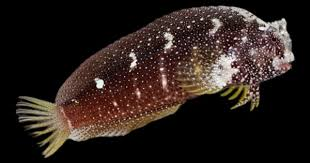
The Starry Blenny does not rely on vivid tropical coloration to make its mark. Its appeal is more textural than chromatic: a dark brown base body covered densely in small white to pale blue spots that read under reef lighting as genuinely luminous, like a fragment of night sky in motion. The head carries bushy cirri, the whisker-like appendages that protrude from between the eyes and give the fish an expression of permanent, alert curiosity. Large, mobile eyes track movement in every direction and give the Starry Blenny the kind of facial expressiveness that makes it genuinely watchable.
At full size, the Starry Blenny reaches approximately 5 to 6 inches, making it a medium-sized fish for its family and one that reads with more presence in the display than smaller blenny species. It spends the great majority of its time perched on live rock, hopping and skimming between grazing positions in short bursts of movement, with an occasionally dramatic torpedo-style dive across the tank when relocating to a new area. In a well-established system with abundant live rock, it is consistently one of the most active and entertaining fish in the display.
Grazing Function and Algae Control
The Starry Blenny is an herbivore equipped with combed teeth specifically adapted for scraping algae film from hard surfaces. It grazes continuously throughout the day, working across live rock, glass, and substrate surfaces with methodical thoroughness. In a system where nuisance algae growth is occurring, the Starry Blenny applies meaningful and sustained grazing pressure to film algae, green hair algae, and other surface growths that accumulate on rockwork.
A common and reassuring sight in tanks housing a well-fed Starry Blenny is the fish perched on a freshly cleaned patch of rock, noticeably round-bellied, pausing between grazing sessions. That round belly is the clearest indicator that the fish is eating well and the system is providing adequate food. A thin, shy Starry Blenny that avoids the open areas of the tank is a fish that is not getting enough to eat, either from insufficient algae growth or from competition with more assertive tank mates.
Tank Requirements and Care
A minimum aquarium size of 30 gallons is appropriate for a single Starry Blenny, with the ideal system providing a large surface area of well-established live rock that has been in place long enough to accumulate natural algae growth. The Starry Blenny should be added to a mature aquarium rather than a newly established one, both because the grazing substrate needs time to develop and because stable water chemistry is important to the long-term health of this species.
Live rock should be arranged with stability in mind. Starry Blennies are active movers and will occasionally dislodge rubble and smaller rock pieces while exploring and grazing. Rockwork that is not firmly seated can be toppled, potentially trapping or injuring the fish. A secure lid is essential, as members of the Salarias genus are capable jumpers when startled.
Water parameters should be maintained at 72 to 78 degrees Fahrenheit, pH between 8.1 and 8.4, and standard reef salinity. The Starry Blenny is not demanding on the chemistry side once settled into a stable system.
Feeding
In a well-established system with abundant natural algae growth, the Starry Blenny may graze sufficiently to meet most of its nutritional needs. However, relying entirely on natural algae is not a complete strategy, particularly in systems with lower nutrient levels where algae growth is intentionally suppressed. Supplemental feeding with vitamin-enriched marine algae, spirulina-based prepared foods, nori sheets secured to the glass or rockwork, and quality herbivore pellet foods ensures the fish receives consistent and complete nutrition regardless of what the system’s natural algae supply can provide.
Reef Compatibility and Tank Mates
The Starry Blenny is considered reef-safe, though with one meaningful caveat that experienced aquarists consistently flag: individuals that are not receiving adequate nutrition may nip at the mantles of clams and the polyps of LPS corals. This behavior is almost always a feeding issue rather than a predatory instinct, and a well-fed Starry Blenny in a system with abundant grazing surface will typically ignore corals and invertebrates entirely.
The Starry Blenny is peaceful toward the broad majority of reef fish but territorial toward fish that closely resemble it in shape, size, and ecological niche. Only one Starry Blenny should be kept per system unless the tank is large enough to support fully separated territories, and it should not be housed with other grazing blenny species with similar body types. Compatible tank mates include clownfish, cardinalfish, small wrasses, gobies, and anthias. Avoid housing with highly aggressive or fast-moving species that will monopolize food or subject this methodical feeder to persistent stress.
Browse our current Starry Blenny availability at Dr. Reef’s Quarantined Fish and add a properly quarantined, confirmed-feeding specimen to a system that is ready for one.