
Bimac Anthias for Sale

Bimac Anthias for Sale – A Colorful and Active Anthias for Well-Established Reef Systems
Among the many Anthias species available to serious reef aquarists, the Bimac Anthias (Pseudanthias bimaculatus) occupies a distinctive and well-deserved place. With its vivid rosy-pink and yellow coloration, active mid-water swimming behavior, and the social dynamics of a true schooling fish, the Bimac brings a level of life and color to a large reef system that very few other species can match. This is not a beginner fish. It is a species that rewards aquarists who have invested the time, equipment, and experience necessary to meet its specific needs. For those who have, keeping a group of Bimac Anthias is one of the most visually rewarding experiences the reef hobby has to offer.
At Dr. Reef’s Quarantined Fish, every Bimac Anthias we offer has completed our full quarantine protocol, arrived eating prepared foods confidently, and is genuinely ready for the display tank of an experienced reef keeper. We do not rush fish to availability. We ensure every specimen is stable, healthy, and set up for long-term success before it leaves our facility.
What Makes the Bimac Anthias So Striking?
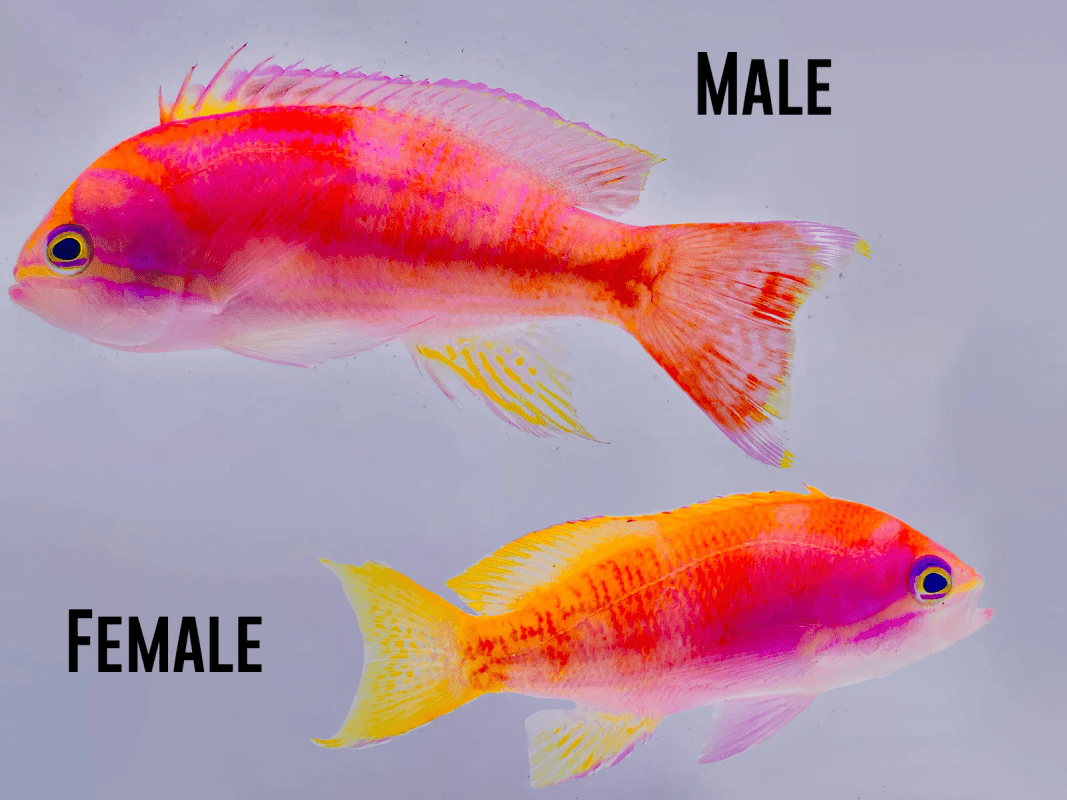
The Bimac Anthias is named for the two distinct spots, or bimaculatus markings, that appear on the body of the male. Males display a rich combination of pink, magenta, and yellow, with those characteristic spot markings adding a visual complexity that makes them immediately identifiable among the Anthias genus. Females tend toward a softer, more uniformly rosy coloration that is beautiful in its own right and provides a striking contrast when kept alongside the more flamboyant males.
Like all Anthias, Bimacs are protogynous hermaphrodites, meaning females can transition into males when the dominant male in a group is lost. This fascinating biological trait shapes how groups should be structured and maintained, and understanding it is essential to keeping a stable, thriving Bimac community in a home reef system.
Size, Lifespan, and Group Dynamics
Bimac Anthias are a medium-sized Anthias species, with males reaching approximately 4 to 5 inches at full adult size and females staying slightly smaller. They are not the largest Anthias in the hobby, but they are active, energetic swimmers that occupy the full water column of a tank and require meaningful space to express natural behavior comfortably.
Bimac Anthias should always be kept in groups. A single specimen kept in isolation will almost always decline. The ideal social structure is a harem, one male with several females, which mirrors the natural social organization these fish maintain on deep water reefs in the Indo-Pacific. A group of one male to three or four females is a practical and stable starting point for most large reef systems. Introducing the group simultaneously, rather than adding fish one at a time, minimizes aggression and allows the social hierarchy to establish more naturally.
With attentive care and stable conditions, Bimac Anthias can live for five years or more in a home reef system. Their longevity is directly tied to the consistency of their environment and the quality of their nutrition, making the commitment to proper husbandry a genuine long-term investment.
Why Bimac Anthias Require a Well-Established Reef System
The Bimac Anthias is not suited to new or unstable reef systems, and this is not a minor caveat. Anthias as a group are metabolically demanding fish with rapid feeding requirements, sensitivity to water quality fluctuations, and a tendency to decline quickly when conditions are suboptimal. For the Bimac specifically, a well-established reef of at least 18 to 24 months provides the biological stability, consistent water chemistry, and natural microfauna populations that give the fish the best possible foundation for long-term health.
A minimum tank size of 150 gallons is recommended for a small group, with larger systems strongly preferred. Bimac Anthias are naturally found in deeper water environments on wild reefs, often in areas of strong current and good oxygenation. Replicating this with robust flow, high dissolved oxygen levels, and consistent temperature stability is essential. Fluctuations in temperature, salinity, or oxygen that a hardier fish might tolerate without visible consequence can cause rapid deterioration in Anthias health.
Water temperature should be maintained between 72 and 78 degrees Fahrenheit, with particular attention to the upper end of this range. Bimac Anthias originate from deeper reef environments that tend to run slightly cooler than many shallow water reef inhabitants, and chronically elevated temperatures can suppress immune function and feeding motivation over time.
Feeding Bimac Anthias: The Most Critical Aspect of Their Care
If there is one area of Bimac Anthias care that separates successful long-term keepers from those who struggle, it is feeding. Anthias have exceptionally high metabolic rates and must eat multiple times per day to maintain healthy body condition. A Bimac Anthias that is not eating multiple times daily is a Bimac Anthias that is losing condition, and once an Anthias begins to decline from nutritional deficiency it can be extremely difficult to reverse.
The ideal feeding regimen involves small, frequent feedings of high-quality frozen foods three to five times per day. Frozen mysis shrimp, frozen copepods, and enriched frozen Cyclops are all excellent staples. Many experienced Anthias keepers also employ automatic feeders to deliver small amounts of high-quality dry food during hours when manual feedings are not possible. A refugium that produces a steady supply of live copepods into the display is one of the most valuable additions any Anthias keeper can make to their system, providing a near-constant source of natural zooplankton that Bimac Anthias will actively hunt and consume throughout the day.
Every Bimac Anthias offered at Dr. Reef’s Quarantined Fish is confirmed eating frozen mysis and prepared foods before being made available for sale. This is a non-negotiable part of our quarantine process. An Anthias that is not eating prepared foods is not ready to leave a quarantine environment, regardless of how long it has been in the facility.
Reef Compatibility and Tank Mates
Bimac Anthias are fully reef-safe and will not disturb corals or invertebrates. They occupy the open water column, spending the vast majority of their time swimming actively in the mid and upper areas of the tank rather than interacting with the rockwork or substrate. This makes them an excellent complement to a display focused on coral growth, adding constant movement and color to the open water space that corals and rockwork leave unoccupied.
When choosing tank mates, focus on similarly peaceful, non-aggressive species that will not compete aggressively for food at feeding time. Bimac Anthias can be outcompeted for food by fast, assertive species, which compounds the nutritional challenges already inherent in keeping them. Ideal companions include peaceful wrasses, smaller tangs, gobies, and other Anthias species in systems large enough to accommodate multiple groups.
Avoid housing Bimac Anthias with large aggressive fish, predatory species, or any fish known to harass or nip at active open-water swimmers. Stress is one of the primary drivers of health decline in Anthias, and a tank environment free of persistent aggression is one of the most important gifts you can give these fish.
Why Quarantine Is Non-Negotiable for Anthias
Anthias are among the most quarantine-critical fish in the hobby. They are highly susceptible to ich, brooklynella, and velvet, and the stress of shipping and handling makes newly arrived specimens particularly vulnerable to opportunistic parasitic infections. Introducing an unquarantined Anthias into a display reef risks introducing disease into a system where corals and invertebrates make chemical treatment impossible, leaving the aquarist with few options beyond watching a system deteriorate.
Beyond disease risk, the quarantine period serves a second critical function for Anthias: it provides the time and controlled environment needed to transition these fish from their wild diet to prepared foods. This transition is often the most challenging aspect of keeping Anthias successfully, and attempting it in a display tank while simultaneously managing the needs of an entire reef system dramatically reduces the chances of success.
At Dr. Reef’s Quarantined Fish, every Bimac Anthias goes through a minimum four to six week quarantine. During this period, each fish receives preventative treatment for ich, flukes, and common marine parasites, is carefully monitored and fed multiple times daily, and is confirmed eating prepared frozen foods before being offered for sale. We document the process and share feeding videos so you can see exactly what you are receiving before it arrives.
A Showpiece Fish for a Serious Reef
The Bimac Anthias is not a fish for every reef or every aquarist, and that is precisely what makes keeping them so rewarding for those who are ready. When a small harem of Bimac Anthias is established in a large, mature reef system with the flow, stability, and feeding regimen they require, the result is one of the most visually compelling displays the hobby can produce. Their color, their activity, and their constant, graceful movement through the water column elevates every aspect of a well-designed reef.
Browse our current Bimac Anthias availability at Dr. Reef’s Quarantined Fish and invest in fish that are genuinely ready for the challenge and reward of a serious reef system. When the foundation is right and the fish arrive healthy and eating, the Bimac Anthias will become the centerpiece your reef has been waiting for.