
Six Line Wrasse Reef

Is the Six Line Wrasse Reef-Safe and How Can Its Aggression Be Managed in a Community Tank?
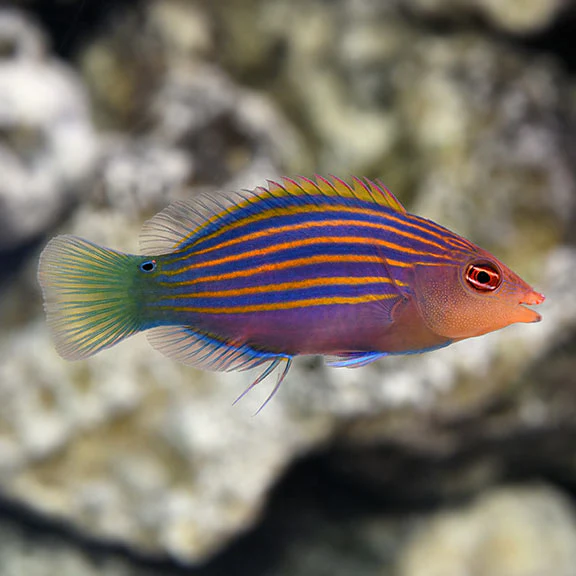
The Six Line Wrasse (Pseudocheilinus hexataenia) is one of the most popular small marine fish in the hobby. It is colorful, active, and widely available. But it also has a reputation that catches many hobbyists off guard. Despite its small size, this fish can be surprisingly aggressive, and knowing how to handle that before you add one to your tank will save you a lot of trouble down the line.
What Is the Six Line Wrasse?
The Six Line Wrasse comes from the coral reefs of the Indo-Pacific. It is a small fish, usually reaching around three inches when fully grown, with a vivid purple and orange body marked by six distinct horizontal stripes. It is fast, bold, and constantly on the move along the rockwork, hunting small invertebrates and parasites throughout the day.
What makes this fish stand out is its combination of striking appearance and genuine usefulness in a reef tank. It actively hunts pest organisms like flatworms and pyramidellid snails, which makes it a practical and rewarding addition to an established reef system.
Is It Reef-Safe?
Yes. The Six Line Wrasse is reef-safe and one of the more reliably coral-friendly species you can add to a reef aquarium. It has no interest in nipping coral polyps or bothering hard or soft corals. Its natural diet consists of small invertebrates and parasites rather than coral tissue, and this carries over reliably into captivity.
There are a couple of things to watch, however. Very small ornamental shrimp, tiny crabs, and small snails can be targeted and eaten. Larger, well-established cleaner shrimp and fire shrimp are generally left alone, but smaller or newly introduced invertebrates should be added with caution. Copepods and amphipods in the tank will also be actively hunted, so keep that in mind if you are trying to maintain a natural pod population for other fish.
Understanding Its Aggression
This is the part that surprises most people. The Six Line Wrasse is small, but it behaves like a much bigger fish when it comes to defending its space. Here is how its aggression typically shows up.
It targets fish of a similar size and shape most aggressively. Small wrasses, dartfish, gobies, and other slender or timid fish tend to bear the brunt of its attention. It will chase, nip, and persistently harass these fish, sometimes preventing them from eating or causing serious stress over time.
It also gets bolder as it settles in. A Six Line Wrasse that seems manageable in its first few weeks can become noticeably more territorial as it grows comfortable and confident in the tank. New fish added after the wrasse is already established are at the greatest risk, as the resident wrasse tends to single out newcomers during their vulnerable settling-in period.
How to Manage Its Aggression
With the right approach, the Six Line Wrasse’s aggression is very manageable. Here is what works.
Give it enough space. In a small tank, this fish can dominate the entire system and leave other fish with nowhere to go. A tank of 75 gallons or more gives everyone room to establish their own areas and avoid constant conflict.
Add it last. When the Six Line Wrasse is the last fish introduced to an established community, it enters as the newcomer rather than the resident. This puts it at a social disadvantage and significantly reduces how aggressively it behaves toward other fish already in the tank.
Choose tank mates carefully. Avoid pairing it with small, timid, or similarly shaped fish that it is likely to target. Larger, more confident tank mates such as tangs, bigger wrasses, and medium-sized angelfish are far less likely to be bullied. Fish that swim in open water rather than along the rockwork are also less likely to come into direct conflict with this species.
Create a complex aquascape. Plenty of caves, crevices, and hiding spots give targeted fish places to retreat and break line of sight with the wrasse. A well-structured rockscape is one of the simplest and most effective ways to reduce aggression in any community tank.
Keep only one per tank. Two Six Line Wrasses in the same system will almost always result in serious and ongoing conflict. Always keep just one individual per aquarium.
Why Quarantine Matters
Even a hardy species like the Six Line Wrasse benefits from proper quarantine before entering a display tank. At Dr. Reef’s Quarantined Fish, every specimen is held through a careful quarantine process, monitored for disease, and confirmed eating prepared foods before being offered for sale.
Skipping quarantine and adding an unverified fish directly into your display tank puts every animal in that system at risk. An untreated fish is one of the most common ways disease enters an established reef. Buying a quarantined specimen removes that risk entirely and gives your fish the best possible start.
Final Thoughts
The Six Line Wrasse is a reef-safe, visually striking, and genuinely useful fish in the right setting. Its aggression is real but entirely manageable with the right planning. Add it last, give it adequate space, choose its tank mates wisely, and build a good aquascape. Source a quarantined specimen from Dr. Reef’s Quarantined Fish, and this bold and hardworking little wrasse will be one of the most entertaining fish in your reef aquarium.