
Blue Star Leopard Wrasse for Sale

Blue Star Leopard Wrasse for Sale – A Stunning and Active Wrasse for Experienced Reef Aquarists
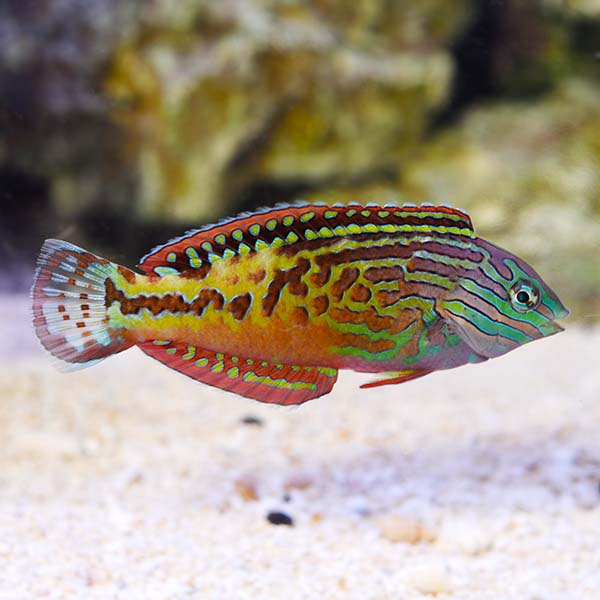
The Blue Star Leopard Wrasse (Macropharyngodon bipartitus) is one of the most beautiful fish you can add to a marine aquarium. It has bright blue spots across its body and a personality that keeps you watching. But this fish is not for beginners. It needs specific care, a well-prepared tank, and most importantly, a healthy specimen from a trusted source.
If you have been looking for a Blue Star Leopard Wrasse for sale, this guide covers everything you need to know before you buy.
What Is the Blue Star Leopard Wrasse?
The Blue Star Leopard Wrasse comes from the coral reefs of the Indo-Pacific, including the Red Sea, East Africa, and the Maldives. In the wild, it spends most of its day swimming close to the sandy bottom, hunting small invertebrates, copepods, and tiny shrimp.
Males and females look quite different from each other. Females have a white or cream body with black-edged blue spots. Males are more colorful, showing a mix of orange, green, and blue as they mature. Both are stunning to watch in a reef tank.
Why This Fish Is Best for Experienced Aquarists
The Blue Star Leopard Wrasse is known for being a challenging fish to keep. Here is why:
Feeding can be difficult. In the wild, this fish hunts live prey all day long. Getting it to accept frozen foods in captivity takes time and patience. If the fish has not been trained to eat prepared foods before you receive it, survival becomes much harder.
It needs a deep sand bed. This fish buries itself in the sand to sleep and when it feels scared. You need at least 3 to 4 inches of fine, soft sand. Without it, the fish gets stressed and can injure itself.
It is sensitive to water changes. Even small shifts in salinity, temperature, or pH can cause this fish to decline quickly. Stable water conditions are a must.
Shipping stress affects it badly. A fish that has not been properly cared for before shipping will often arrive weak and struggle to recover.
This is why buying a quarantined specimen from a specialist is so important.
Why Quarantine Matters So Much
When shopping for a Blue Star Leopard Wrasse for sale, always ask whether the fish has been quarantined. At Dr. Reef’s Quarantined Fish, every specimen goes through a careful quarantine process before it is offered for sale.
During this time, the fish is watched closely for signs of disease or parasites, which are not always easy to spot right away. More importantly, the fish is trained to eat frozen foods like mysis shrimp and enriched brine shrimp. This one step makes a huge difference in how well the fish settles into your tank.
Buying a fish that skips this process might seem like a way to save money, but it often leads to bigger problems and higher costs down the line.
Signs of a Healthy Specimen
When looking at a Blue Star Leopard Wrasse for sale, here is what a healthy fish looks like:
Bright, vivid colors. The blue spots should look sharp and rich. Faded coloring is a warning sign.
Active movement. The fish should be swimming around with confidence, not sitting still or hiding constantly.
Clear eyes. Cloudy or sunken eyes are a sign of poor health.
Eating prepared foods. Ask the supplier if the fish is already eating frozen mysis or copepods. This is one of the most important things to confirm.
Full body shape. The belly should not look pinched or hollow.
Tank Setup You Need Before Buying
Make sure your tank is ready before you search for a Blue Star Leopard Wrasse for sale.
Tank size should be at least 50 gallons. 75 gallons or more is even better, as this fish needs room to swim and explore.
Deep sand bed of 3 to 4 inches with fine-grade sand is essential. This lets the fish bury itself safely when it sleeps or feels threatened.
Stable water parameters are critical. Keep salinity at 1.025 to 1.026, temperature between 76 and 80 degrees Fahrenheit, and pH between 8.1 and 8.3.
A refugium with live copepods gives the fish a natural food source and helps it settle in more easily.
A sealed lid is a must. This fish is known to jump, especially when it is new to a tank. Cover all gaps and openings.
Peaceful tank mates work best. Avoid aggressive fish or fast feeders that will compete for food.
How to Feed Your Blue Star Leopard Wrasse
Feed your wrasse 2 to 3 small meals a day. Good food options include frozen mysis shrimp, enriched brine shrimp, small copepods, and finely chopped seafood.
Use a turkey baster or feeding pipette to place food directly near the fish. This helps it eat without competition from other tank mates.
A refugium stocked with live copepods and amphipods acts as a natural food supply between feedings and helps reduce stress during the first few weeks.
What Does a Blue Star Leopard Wrasse Cost?
Prices typically range from $80 to $200 or more, depending on size, whether it is male or female, and how much care the supplier has put into quarantine and conditioning. Males usually cost more because of their brighter coloration.
A quarantined fish costs more upfront, but it is far better value. Treating disease, buying a replacement fish, or dealing with a tank outbreak will cost you much more in the long run.
The Dr. Reef’s Quarantined Fish Advantage
Dr. Reef’s Quarantined Fish takes the guesswork out of buying a Blue Star Leopard Wrasse. Every fish is quarantined individually, checked for health issues, treated for parasites, and trained to eat prepared foods before it ships to you.
By the time the fish arrives, the hardest part of keeping this species has already been handled. You are not starting from scratch with a stressed, wild-caught fish. You are starting with an animal that is already eating, already stable, and already adjusted to captive life.
This also protects the other fish and corals in your tank. An untreated fish is one of the most common ways disease enters a display tank. Quarantined livestock removes that risk.
Final Thoughts
The Blue Star Leopard Wrasse is a remarkable fish. The colors are stunning, the personality is engaging, and watching it explore a well-set-up reef tank is genuinely rewarding. But it needs the right environment, the right care, and the right start.
If your tank is ready and you are committed to doing things properly, this fish will be one of the highlights of your reef. When you are ready to find a Blue Star Leopard Wrasse for sale, trust Dr. Reef’s Quarantined Fish to give you the best possible start.