
Blog
What Fish Eat Aiptasia?

What Fish Eat Aiptasia? Your Complete Guide to Natural Pest Control
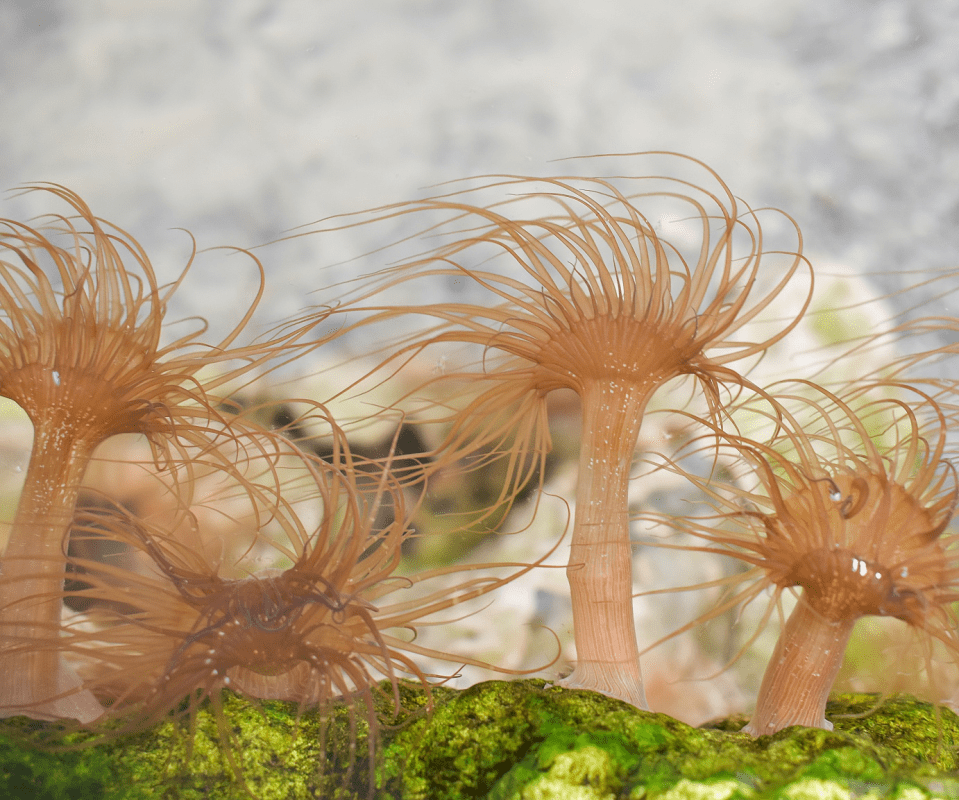
You spot it one day, a small, innocent-looking anemone on your live rock. “That’s kind of cute,” you think. Fast forward two weeks, and that one Aiptasia has become five. Then ten. Then you stop counting because they’re everywhere, and you’re considering setting the whole tank on fire.
Aiptasia are the cockroaches of the reef aquarium world. But before you reach for the nuclear option, there’s a more natural solution. Fish that actually eat these pests.
Let’s talk about which fish will turn your aiptasia problem into lunch.
Understanding the Enemy
Why Aiptasia Are Aquarium Menaces:
- Reproduce asexually (one becomes many, fast)
- Release larvae when threatened (killing one can create dozens)
- Sting and damage corals
- Multiply faster when you try to kill them manually
- Nearly impossible to eradicate once established
- Thrive on the exact conditions that corals need
- You can’t starve them out. You can’t outcompete them. They laugh at your kalkwasser injections. They’re survivors in the worst possible way.
How They Invade:
- Hitchhike on live rock
- Hide on coral frags
- Come in with macroalgae
- Arrive as microscopic larvae, you’ll never see
- One moment, your tank is pristine. Next, you’re hosting an Aiptasia convention.
The Top Fish That Eat Aiptasia
Nature has provided predators specifically evolved to eat anemones. Let’s meet your potential saviors.
- Scientific Name: Chelmon rostratus
- Effectiveness: Excellent
- Reef Safe: With caution
- Difficulty: Advanced
The Copperband Butterflyfish is the poster child for aiptasia control. At Dr. Reef’s Quarantined Fish, the Copperband is specifically noted as “highly effective at controlling Aiptasia anemones; often added specifically for this purpose.”
Why They’re Effective:
- That elongated snout is designed to probe crevices
- Natural diet includes small invertebrates and anemones
- Will methodically hunt down aiptasia throughout the tank
- Can reach aiptasia in spots you can’t access
Dr. Reef’s Advantage: Here’s where buying from Dr. Reef’s makes all the difference. Their Copperbands are “conditioned to accept prepared foods before sale. This dramatically increases your chances of long-term success.” The Copperband is effective but demanding. Success stories exist, but so do failures.
2. Aiptasia-Eating Filefish
- Scientific Name: Acreichthys tomentosus
- Also Known As: Matted Filefish, Bristletail Filefish
- Effectiveness: Very Good
- Reef Safe: With caution
- Difficulty: Moderate
- At Dr. Reef’s Quarantined Fish, the Aiptasia-Eating Filefish is available.
Why They’re Popular:
- Actually eat aiptasia
- Hardier than Copperbands
- Entertaining personality and behavior
- Swim like little helicopters (forwards, backwards, upside down)
- Change color to match surroundings
- Generally peaceful
- Scientific Name: Lysmata wurdemanni
- Effectiveness: Good
- Reef Safe: Yes
- Difficulty: Easy
Why They Work:
- Cruise around eating aiptasia, especially small ones
- Reef safe
- Inexpensive
- Easy to care for
- Work 24/7
The Problem: There are multiple shrimp sold as “peppermint shrimp,” and only the true Lysmata wurdemanni reliably eats aiptasia. Others might ignore them completely.
- Scientific Name: Chaetodon kleini
- Effectiveness: Moderate
- Reef Safe: With extreme caution
- Difficulty: Moderate
Some aquarists report success with Klein’s Butterflyfish eating aiptasia, though it’s less reliable than Copperbands.
5. Yellow Pyramid Butterflyfish
- Scientific Name: Hemitaurichthys polylepis
- Effectiveness: Reported success
- Reef Safe: Nearly completely
- Difficulty: Moderate
6. Threadfin Butterflyfish
- Effectiveness: Excellent
- Also Known As: Auriga Butterflyfish
- Reef Safe: NO (after aiptasia are gone)
- Difficulty: Moderate
This is the temporary solution: introduce it to eliminate aiptasia, then rehome before it turns on your corals.
- Effectiveness: Moderate
- Reef Safe: With caution
- Difficulty: Moderate
Less documented than Copperbands or filefish.
Aiptasia didn’t take over your tank overnight, and they won’t disappear overnight either. Patience and the right biological control can save you months of chemical warfare and frustration.
Ready to add a natural aiptasia-control solution to your reef? Dr. Reef’s Quarantined Fish offers both Copperband Butterflyfish (conditioned to eat prepared foods) and Aiptasia-Eating Filefish (often in stock, quarantined). Both arrive healthy, parasite-free, and ready to work.