
Blog
What Do Queen Angelfish Eat?

What Do Queen Angelfish Eat? The Complete Diet Guide for These Majestic Caribbean Beauties
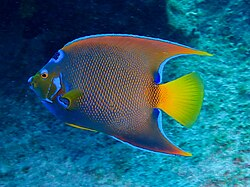
The Queen Angelfish is pure underwater royalty, and if you’re thinking about adding one to your tank, you need to know exactly what it takes to keep Her Majesty well-fed and thriving.
Feeding a Queen Angelfish properly is both fascinating and challenging. These aren’t your typical “toss in some flakes and call it a day” kind of fish. They’ve got specialized dietary needs that change dramatically from juvenile to adult, and understanding what they eat could literally mean the difference between life and death.
Let’s dive into everything you need to know about feeding these spectacular Caribbean jewels.
What Queen Angelfish Eat
The diet of a Queen Angelfish (Holacanthus ciliaris) depends entirely on its life stage.
Juvenile Queen Angelfish Diet (The Cleaner Stage)
In the wild, juvenile Queens are actually cleaner fish, which means their diet consists primarily of ectoparasites that they remove from larger fish. They also consume loose scales and debris picked from their “clients” at cleaning stations. Beyond their cleaning duties, juveniles supplement their diet with algae and plankton, along with whatever organic matter they can find while servicing fish at their established cleaning stations.
Adult Queen Angelfish Diet (The Sponge Eater)
Here’s where it gets serious. Adult Queen Angelfish have dramatically different dietary needs. Their primary diet consists of sponges, which make up a whopping 90% of their natural diet. This sponge-heavy consumption is supplemented with tunicates, jellyfish, corals, and hydroids. They also consume bryozoans for additional nutrition, along with algae and plankton to round out their dietary requirements.
Yes, you read that right, 90% sponges. This is exactly why adult Queen Angelfish are so challenging to keep long-term in captivity.
Why Juveniles Are Easier (But Still Not Easy)
The good news is that juveniles are in their “cleaner stage,” which makes them significantly more flexible feeders than their adult counterparts. They’ll readily pick at food particles, parasites, and debris, showing natural curiosity about various food items in their environment. This adaptability allows them to adjust to prepared aquarium foods much better than adults, whose dietary requirements have become highly specialized.
Dr. Reef’s advantage: “Our quarantined juvenile Queen Angelfish are acclimated, monitored, and conditioned before being offered for sale.”
This training during quarantine is huge. It means the fish arrives at your door already eating prepared foods, not refusing everything and slowly starving like many wild-caught specimens.
Why Adults Are Extremely Challenging
“Juveniles have a significantly higher survival rate in aquariums than adults because they can adapt to typical aquarium foods, whereas adults require specialized sponge-heavy diets that are extremely difficult to replicate in captivity.”
The adult challenge is multifaceted and daunting. Sponges are both difficult to source and expensive to obtain regularly. Most adult Queen Angelfish refuse prepared foods entirely, having become highly specialized in their nutritional requirements over their lifetime. Without access to proper sponge matter in adequate quantities, these magnificent fish slowly decline in health despite being in an otherwise suitable environment.
Dr. Reef emphasizes: “The biggest challenge in captivity is replicating their natural sponge-based diet.”
What to Feed Queen Angelfish in Your Aquarium
For Adult Queen Angelfish:
Meaty Foods (High Priority):
- Mysis shrimp (large portions)
- Chopped clams
- Mussels
Plant Matter (Essential):
- Marine algae
- Nori sheets
- Spirulina flakes and pellets
Commercial Foods:
- Large angelfish pellets
- Frozen angel and butterfly formulas
- Herbivore foods
For Juvenile Queen Angelfish:
Juveniles are more forgiving but still need variety:
- Same frozen meaty foods as adults (smaller portions)
- Picking at tankmates (cleaning behavior)
How Much and How Often to Feed
Adult Queen Angelfish:
Feeding Schedule: “Feed 2–3 times daily in generous portions.”
Notice the word “generous.” These are large, active fish with “high metabolic demands and robust appetites.” Generous portions are necessary because adults can reach 18 inches in length, though they typically grow to 12-16 inches in aquarium settings. As powerful swimmers, they burn lots of calories navigating their territory and maintaining their active lifestyle.
Juvenile Queen Angelfish:
Feeding Schedule: “Feed small portions 3 times daily.”
Remove uneaten food promptly to maintain water quality. Juveniles need frequent small meals for several important reasons. They’re growing rapidly and need consistent nutrition to support their development. Their metabolism runs high, burning through nutrients quickly. As active cleaners constantly on the move, they expend significant energy throughout the day. Multiple feedings also help prevent aggression that can develop when hungry juveniles compete for limited food resources.
Feeding These Underwater Royals
Queen Angelfish are absolutely magnificent. It is one of the most spectacular and iconic marine species in the aquarium hobby, featuring a brilliant blue to blue-green body with vibrant yellow highlights, distinctive crown-like markings on the forehead, and elegant, flowing fins. But magnificence comes with responsibility.
The feeding reality:
This isn’t a beginner fish suitable for those new to the hobby. The diet is specialized and demanding, requiring commitment and expense. Sponge-based foods are essential, not optional extras you can skip. Feeding generously 2-3 times daily is required for their health and longevity. Water quality maintenance becomes critical when providing the necessary feeding amounts. The long-term commitment extends for potentially 10-15 years of dedicated care.
The reward:
You’ll have a fish so stunning it stops people in their tracks when they see your aquarium. Watching natural cleaning behavior in juveniles is fascinating and educational. An interactive fish that recognizes you and begs for food creates a genuine bond. The pride of successfully keeping an advanced species is immensely satisfying. Most importantly, you’ll enjoy 10-15 years of underwater royalty in your home, a living masterpiece that rewards your dedication.
If you’re up for the challenge, start with a quarantined juvenile from Dr. Reef’s Quarantined Fish. You’ll get a fish that’s already eating well, is acclimated to aquarium life, and has the best chance of long-term success.
Just remember: every time you feed your Queen Angelfish, you’re not just providing nutrition, you’re maintaining the health and stunning beauty of one of the Caribbean’s most majestic creatures.
Feed them well, and they’ll reward you with a display worthy of true royalty.