
Blog
What Do Pom Pom Crabs Eat?

What Do Pom Pom Crabs Eat? Everything You Need to Know About These Charming Little Reef Stars
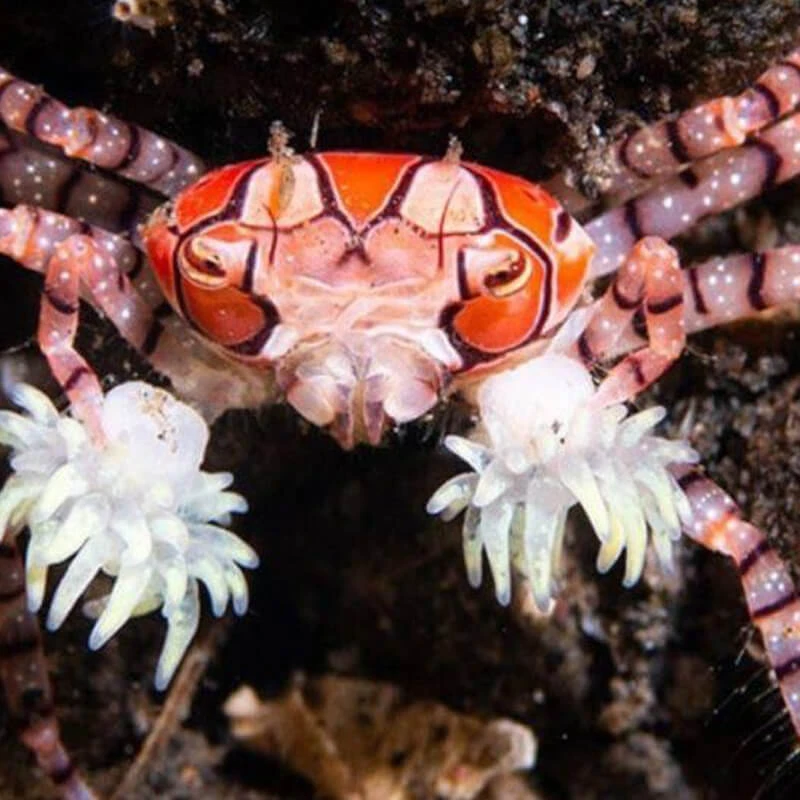
If you’ve ever watched a Pom Pom Crab (Lybia tesselata) waving its tiny anemone “pom poms” across the rockwork in a reef tank, you already know the magic these little creatures bring to an aquarium. Beyond their irresistible appearance, one of the most common questions we hear from reef enthusiasts is: what exactly do Pom Pom Crabs eat? The answer is both fascinating and wonderfully practical for the home aquarist.
Natural Diet in the Wild
In their native Indo-Pacific habitat, Pom Pom Crabs are opportunistic omnivores with a very clever feeding strategy. Those pom poms, which are actually tiny boxing anemones (Triactis producta) held in each claw, aren’t just for show. The crab uses them as both a defense mechanism and a feeding tool. When organic matter, detritus, or tiny planktonic particles drift by, the crab sweeps its anemones through the water column and then carefully licks the captured food off the tentacles. It’s one of the most endearing feeding behaviors in the entire marine world!
In the wild, their diet consists primarily of:
- Microscopic algae and phytoplankton swept from the water column using their anemone poms
- Detritus and organic debris scavenged from the substrate and rock surfaces
- Zooplankton, tiny animals floating in the water column
- Bacterial films and biofilm grazed from live rock and sandy substrate
- Meaty micro-particles, small fragments of decaying organic material
Feeding Pom Pom Crabs in a Reef Aquarium
Here’s the great news for reef keepers: Pom Pom Crabs are remarkably easy to feed and thrive in a well-established reef environment. A mature tank with healthy live rock provides a continuous supply of the biofilm and microfauna these crabs naturally graze on throughout the day.
To keep your Pom Pom Crab in peak condition, supplement their natural foraging with:
Liquid and powdered reef foods: Products like phytoplankton, rotifers, or reef roids broadcast into the water column are perfect. Your crab will enthusiastically wave its pom poms to catch every particle.
Meaty frozen foods: Finely chopped mysis shrimp, brine shrimp, or coral food placed near the crab’s favorite hiding spot will be eagerly accepted.
Nori and algae sheets: Small pieces wedged into rockwork give the crab something to graze on between feedings.
General reef feeding: One of the joys of keeping Pom Pom Crabs is that when you feed your corals and other invertebrates, your crab benefits too!
Feeding every other day is usually sufficient in an established reef. These crabs are active foragers and will happily supplement their diet by exploring every nook and cranny of your rockwork.
A Peaceful Addition to Your Reef Community
Pom Pom Crabs are not just charming; they’re genuinely reef-safe. Unlike some opportunistic crabs, they won’t bother your fish, corals, or other invertebrates. They stay small (typically under an inch), mind their own business, and bring extraordinary personality to any system.
This is why sourcing healthy, properly acclimated specimens matters so much. At Dr. Reef’s Quarantined Fish, every invertebrate, including our Pom Pom Crabs, goes through a rigorous quarantine and health observation process before arriving in your tank. That means you’re getting animals that are eating well, free of pathogens, and ready to thrive from day one. No guesswork, no stress, no introducing disease to your prized reef.
Your Next Favorite Reef Resident Awaits
Pom Pom Crabs are low-maintenance, endlessly entertaining, and a genuine conversation starter in any reef aquarium. Feed them a varied diet of fine meaty foods and phytoplankton, keep them in a mature tank with plenty of live rock, and they will reward you with years of cheerful, pom-pom-waving joy.
Ready to add one of these delightful little performers to your reef? Browse the current livestock availability at Dr. Reef’s Quarantined Fish — where healthy, happy marine life is always our promise.