
Blog
What Do Copperband Butterflyfish Eat?

What Do Copperband Butterflyfish Eat? A Complete Feeding Guide
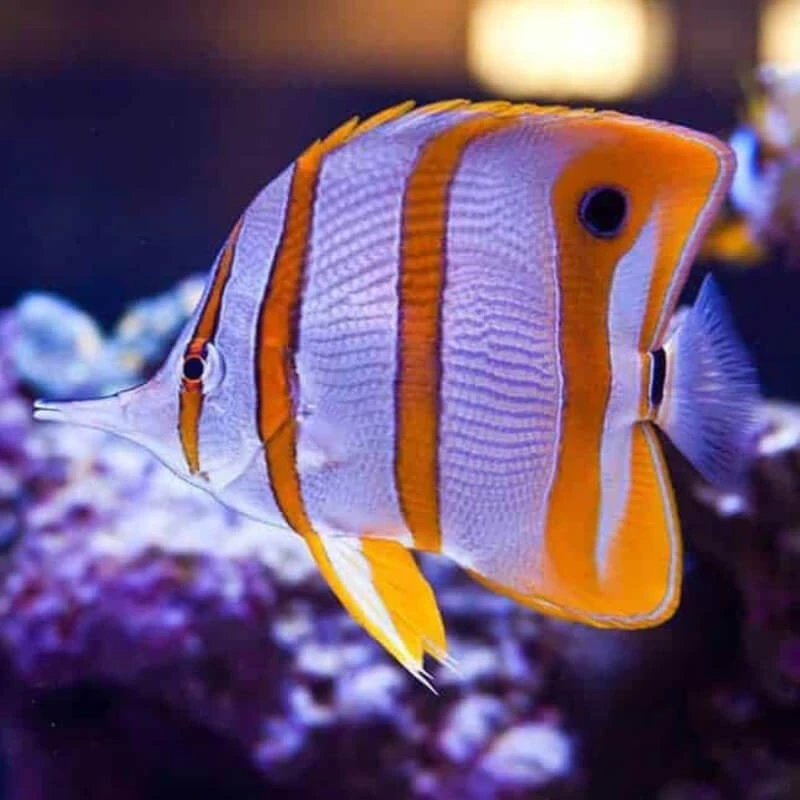
Few fish in the saltwater hobby command as much admiration as the Copperband Butterflyfish (Chelmon rostratus). With its luminous silver-white body, bold copper-orange vertical bands, and extraordinarily long beaked snout, it is the kind of fish that stops you in your tracks the moment you see it. For those willing to invest the time and care this species deserves, the reward is a graceful, fascinating display animal that brings genuine personality to any mature reef system. And at the heart of keeping a Copperband successfully is understanding what it eats.
How the Copperband Feeds in the Wild
Everything about the Copperband Butterflyfish is shaped by its feeding strategy. That remarkable elongated snout is a precision tool, evolved specifically to probe deep into crevices, coral rubble, and live rock in search of prey that other fish simply cannot reach. In the wild, the Copperband’s diet consists of small worms, shrimp, amphipods, and Aiptasia anemones. It is a deliberate, methodical hunter that grazes continuously throughout the day, working every nook and cranny of the reef with focused purpose.
This natural feeding behavior is one of the reasons the Copperband is such a captivating fish to observe in the home aquarium. Given a well-aquascaped tank with mature live rock, it will spend hours gliding purposefully from rock to rock, investigating every surface and gap with that magnificent snout.
What to Feed a Copperband Butterflyfish in Captivity
In a home aquarium, the Copperband thrives on a varied, meaty diet. Copperband Butterflies readily accept a wide range of frozen and live foods, including brine shrimp, mysis shrimp, krill, and chopped seafood. Here are the foods that form the foundation of a healthy captive diet:
Clams on the half shell are one of the most reliable foods for Copperbands and a favorite among experienced keepers. The soft, accessible flesh is irresistible to them and closely mimics the natural prey they seek in the reef. A fresh or frozen clam wedged into the rockwork encourages natural foraging behavior and is an excellent way to get a new specimen eating confidently.
Live and frozen black worms are another outstanding choice. The movement of live worms triggers the Copperband’s natural hunting instinct powerfully and is often the key to convincing a newly arrived fish to begin feeding.
Mysis shrimp is a nutritious staple that most Copperbands will accept once they are comfortably settled in. Target feeding near the rockwork, away from more competitive tank mates, ensures the Copperband gets its fair share.
Brine shrimp, both live and frozen vitamin-enriched varieties, round out the diet nicely and can be used to encourage initial feeding responses in new specimens.
Aiptasia anemones deserve a special mention. The Copperband Butterflyfish likes to eat meaty invertebrates like featherduster worms, clams, and mollusks, and will also eat Aiptasia. For reef keepers battling an Aiptasia outbreak, a well-fed Copperband is one of the most elegant natural solutions available, making it both a beautiful display fish and a genuinely useful member of the tank crew.
Feeding Frequency and Tips
Feed at least three times per day, with young specimens requiring more frequent feeding. Small, regular meals suit the Copperband’s natural grazing style far better than a single large feeding. Because this species can be shy and slow to feed in the presence of boisterous tank mates, target feeding using a feeding stick or a small clip placed near the rockwork is highly recommended. Offering food several times daily in small amounts, and trying soaking food in garlic or fish attractants, can help stimulate appetite in newly introduced fish.
Why a Quarantined Copperband Changes Everything
Here is the most important thing any prospective Copperband keeper should know: feeding is the single greatest challenge this species presents in captivity. Many keepers report that malnutrition is the number one reason this species fails in home aquariums. A Copperband that has never transitioned to prepared foods, or that arrives stressed and uninterested in eating, faces a genuinely difficult road.
This is exactly why the team at Dr. Reef’s Quarantined Fish approaches this species with such care. Every Copperband Butterflyfish in our inventory goes through an extended quarantine period where feeding is closely monitored. We confirm that each fish is actively eating prepared foods, responding well to target feeding, and maintaining healthy body condition before it ever ships to your door. You are not receiving a fish that has been grabbed from a holding system and bagged the same day. You are receiving a fish that has been patiently conditioned, observed, and confirmed ready for life in your display tank.
For a species where feeding success is everything, that difference is not just meaningful. It is the difference between a long, rewarding relationship with one of the hobby’s most extraordinary fish and a heartbreaking experience that puts you off trying again.
Ready to Add a Copperband to Your Reef?
If you have a mature, established system of at least 75 gallons, peaceful tank mates, and a passion for keeping something truly special, the Copperband Butterflyfish will repay your investment with years of graceful, fascinating behavior. Browse the current Copperband availability at Dr. Reef’s Quarantined Fish and bring home a fish that is already eating, already thriving, and ready to become the star of your reef.