
Blog
The Yellow Eye Kole Tang

The Yellow Eye Kole Tang: What It Is and How It Stands Apart
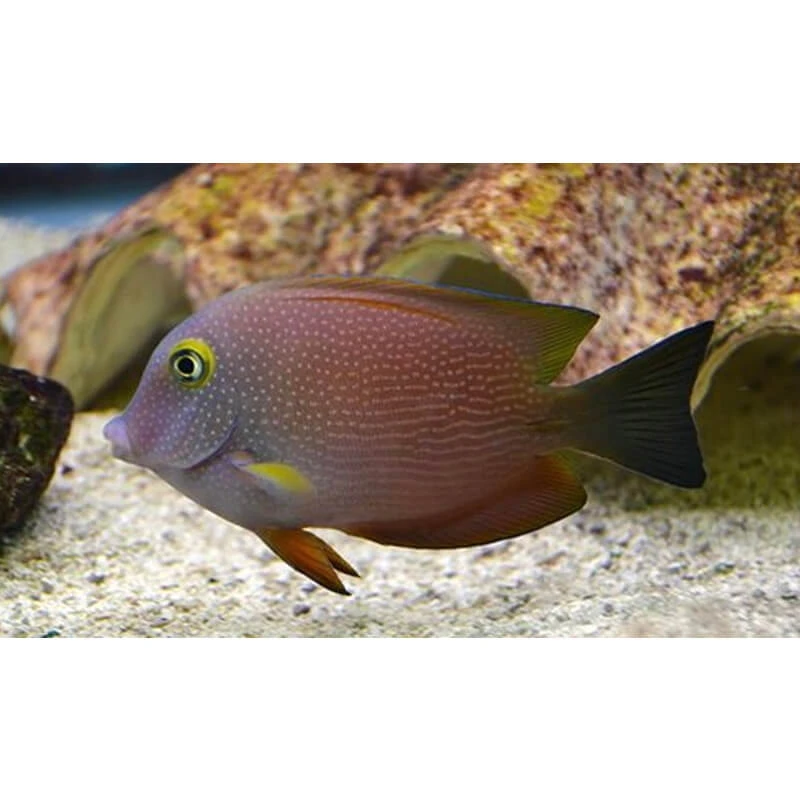
The Yellow Eye Kole Tang (Ctenochaetus strigosus) is a small to mid-sized surgeonfish native to the Hawaiian Islands and surrounding Pacific waters. It is one of the most popular and practical tangs in the marine hobby, valued not just for its appearance but for the genuine functional role it plays in a reef system.
Appearance
The Kole Tang has a deep brown body covered in fine horizontal lines of orange and yellow that give it a richly textured appearance under good aquarium lighting. Its most distinctive feature is the bright yellow ring that encircles the eye, the trait responsible for its common name. Under reef lighting, the combination of its intricate body patterning and vivid eye ring makes it a far more visually compelling fish than it appears in standard photographs.
How It Differs from Other Tangs
The most meaningful difference between the Kole Tang and most other surgeonfish comes down to feeding behavior. While tangs like the Yellow Tang and Scopas Tang primarily graze on filamentous and macroalgae, the Kole Tang uses its specialized comb-like teeth to feed on detritus, diatoms, and film algae that accumulate on rock surfaces and substrate. This makes it uniquely effective at cleaning surfaces that most other grazers ignore entirely.
In terms of size, the Kole Tang stays smaller than most commonly kept surgeonfish, reaching only 5 to 7 inches at adulthood. This makes it accessible to hobbyists with mid-sized systems where larger tang species would be inappropriate.
Its temperament is also notably calmer than many surgeonfish. It is considered one of the more peaceful tang species and integrates into community reef systems with less conflict than more assertive species like the Powder Blue or Achilles Tang.
Why It Earns Its Place
The Kole Tang is one of the few fish in the hobby that is both visually attractive and genuinely useful as a biological maintenance tool. It earns its place in a reef not just by looking good but by actively contributing to the cleanliness and balance of the system it inhabits. That combination of beauty, function, and manageable size is exactly why it remains one of the most recommended reef fish among experienced hobbyists and aquarium professionals alike.