
Scopas Tang

Scopas Tang Size: Growth Rate and Tank Requirements
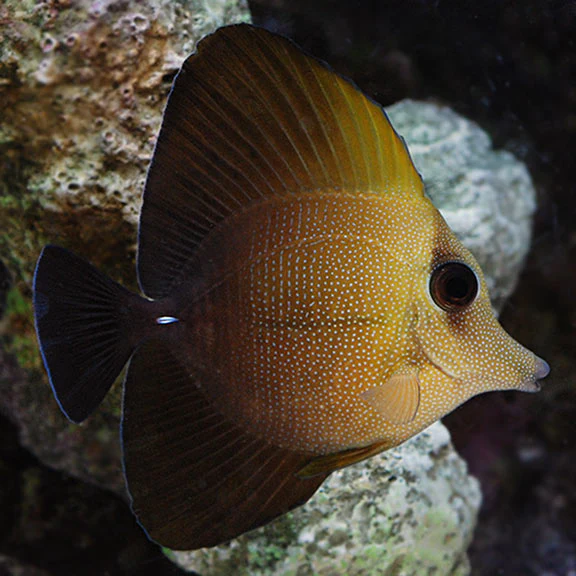
The Scopas Tang doesn’t always get the recognition it deserves. It lacks the electric blue of a Powder Blue or the deep purple of a Purple Tang, but spend some time watching one work its way through a reef aquarium, and you start to understand why experienced hobbyists keep coming back to it. It’s hardy, it’s active, it grazes constantly, and in the right lighting, those subtle brown-to-olive tones with fine pale blue-green lines across the body are genuinely beautiful in a quiet, understated way. If you’re wondering whether the Scopas Tang fits your tank and how big it’s actually going to get, this guide covers everything you need to know.
How Big Does a Scopas Tang Get?
The Scopas Tang (Zebrasoma scopas), also known as the Brown Tang, Brown Scopas Tang, or Twotone Tang, is a medium-sized surgeonfish that grows steadily to around 7 to 9 inches in a home aquarium, though some individuals in very large, well-established systems can push closer to their maximum wild size. As Dr. Reef’s Quarantined Fish notes in their listing, juveniles are typically 2 to 3 inches when purchased and grow steadily to the 7 to 9-inch adult range.
The growth rate is moderate. This isn’t a fish that doubles in size overnight. A juvenile Scopas Tang purchased at 2 to 3 inches will likely take a year or more to reach 5 to 6 inches under normal reef conditions, with adult size achieved gradually over several years depending on diet, water quality, and tank size. Juveniles look noticeably different from adults; they sport a slightly purplish body with larger dorsal and anal fins and faint yellowish markings, which smooth out into the classic two-tone brown pattern as the fish matures.
Tank Size Requirements
Because the Scopas Tang will grow to nearly 9 inches and spends virtually every daylight hour swimming back and forth across the tank, it needs a serious horizontal swimming room. A minimum tank size of 125 gallons is the standard recommendation, and this figure comes with an important caveat: the tank needs to be long, not just large. A tall, narrow 125-gallon tank is less suitable than a wide, horizontal one with at least 60 inches of front-to-back or side-to-side swimming space.
In the wild, Scopas Tangs roam wide expanses of reef and lagoon, grazing almost continuously. A tank that doesn’t give them room to express this behavior creates stress, and stressed tangs get sick. This is one species where being generous with space pays real dividends in fish health and longevity.
The tank should have abundant live rock to provide grazing surfaces and caves where the fish can shelter when they want to. Open swimming space matters just as much as rockwork, so the aquascape should be arranged to allow clear swimming lanes rather than blocking the middle of the tank.
Feeding
The Scopas Tang is a dedicated herbivore. Its long, slightly pointed snout, a hallmark of the Zebrasoma genus, lets it reach into crevices in the rockwork to graze filamentous algae that other surgeonfish simply can’t access. In the aquarium, nori sheets on a clip should be available throughout the day so the fish can graze as naturally as possible. Spirulina-based flakes and pellets, dried seaweed blends, and algae-based frozen herbivore preparations are all excellent dietary staples.
Offering small amounts multiple times a day works better than one or two large feedings. A well-fed Scopas Tang is a more peaceful, more colorful, and healthier fish. Underfed specimens can develop pinching along the dorsal musculature, a sign of starvation that, if caught early, can be reversed with aggressive feeding of dried macroalgae over several days. This is also why vitamin-enriched foods help: they support the immune system and reduce the risk of HLLE (Head and Lateral Line Erosion), a common health issue that’s largely diet and water quality driven.
Temperament and Reef Compatibility
The Scopas Tang is one of the calmer surgeonfish in the hobby, peaceful toward most tankmates and genuinely reef-safe with corals and invertebrates when kept well-fed. Where it can be territorial is with other tangs, especially those of the same Zebrasoma genus. Two Scopas Tangs in the same tank will almost always clash. Similarly-shaped tangs should only be housed together in very large systems with a careful introduction strategy.
It coexists comfortably with gobies, blennies, wrasses, anthias, clownfish, and most other reef-safe community fish. Adding the Scopas Tang last or among the last fish to the tank reduces the chance of it establishing overly strong territorial behavior before other fish settle in.
Why a Quarantined Scopas Tang Is Worth It
Like all tangs, the Scopas is susceptible to marine ich and HLLE, particularly when stressed from shipping or poor acclimation. Wild-caught tangs introduced directly to a display tank without quarantine can carry parasites that spread quickly through an established reef. Quarantined Scopas Tangs settle faster, eat readily, and adapt to aquarium life more efficiently, which is exactly what Dr. Reef’s provides.
The Scopas Tang at Dr. Reef’s Quarantined Fish is priced at $89.99, rated 5 stars, and sold in small (1-2.5″), medium (2.5-3.75″), and large (4-5″) sizes to suit different stages of your setup. Every fish goes through a proper quarantine and conditioning period before sale, observed for health, treated as needed, and trained to accept prepared foods, making the transition into your display tank as smooth as possible.