
Potter’s Angelfish

Potter’s Angelfish for Sale: Hawaiian Dwarf Angelfish Care
Hawaii is famous for producing some of the most beautiful marine fish in the world, and the Potter’s Angelfish is one of its most prized exports. With its stunning combination of orange, blue, and black patterning, this small but spectacular Dwarf Angelfish is a dream fish for many reef keepers. At Dr. Reef’s Quarantined Fish, we take the extra care required to properly condition Potter’s Angelfish so that they arrive at your home healthy, eating, and ready to thrive.
What Makes the Potter’s Angelfish So Special?
The Potter’s Angelfish, known scientifically as Centropyge potteri, is endemic to the Hawaiian Islands, meaning it is found naturally only in that specific region of the Pacific Ocean. This limited natural range makes it a more exclusive species compared to Dwarf Angelfish found across wider areas of the Indo-Pacific.
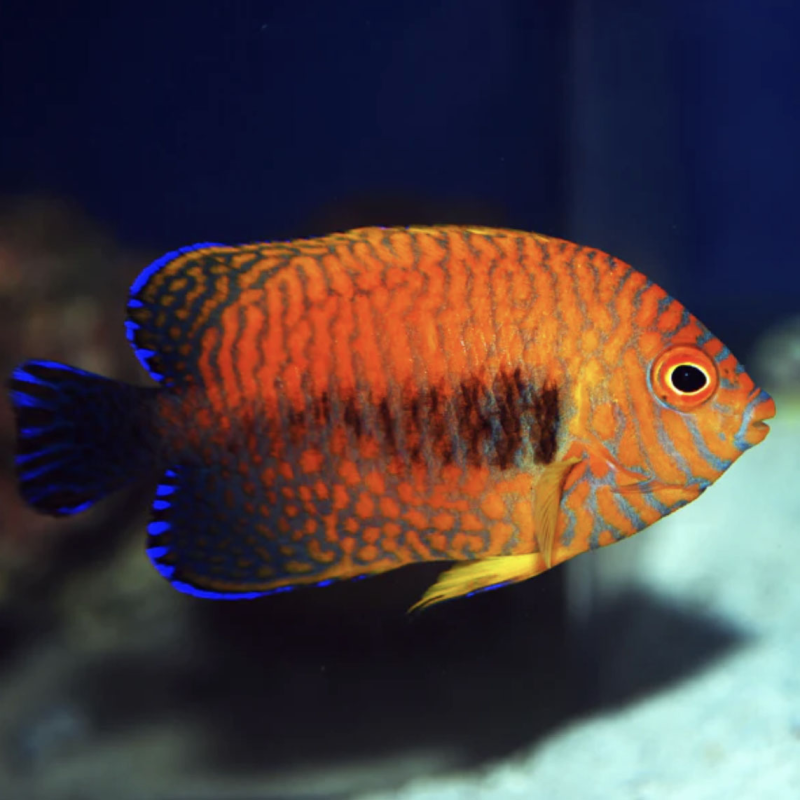
Its coloration is genuinely stunning. The base color is a warm, rusty orange that transitions into a complex pattern of blue and black reticulations across the rear half of the body and fins. The contrast between the warm orange tones and the cool blue patterning creates a visual effect that looks almost painted. Under good aquarium lighting, the colors intensify dramatically and make the fish look like a living work of art.
Potter’s Angelfish are relatively small, typically reaching around four inches in length at full maturity. This makes them suitable for medium-sized reef tanks, which adds to their appeal for hobbyists who want a visually dramatic fish without needing an enormous system to house it.
The Challenge of Keeping Potter’s Angelfish
Potter’s Angelfish have a well-earned reputation for being one of the more challenging Dwarf Angelfish species to keep in captivity. They are sensitive to water quality changes, can be reluctant to accept prepared foods initially, and often take longer to settle into aquarium life than hardier species like the Coral Beauty or Flame Angelfish.
This is precisely why buying a properly quarantined and conditioned Potter’s Angelfish from Dr. Reef’s Quarantined Fish makes such an enormous difference in your chances of long-term success. The most difficult and critical period of a Potter’s Angelfish life in captivity is the first 30 to 60 days after collection. During this time, the fish must transition from wild prey items to prepared aquarium foods, adjust to artificial lighting and flow, and build back any immune resilience lost during transport.
Dr. Reef’s full quarantine and conditioning process addresses every one of these challenges before the fish reaches your tank. Each Potter’s Angelfish is given time to decompress, offered a wide variety of foods until it is eating confidently, and monitored daily for any signs of health issues. By the time your fish ships, the hardest part of the transition is already behind it.
Reef Safety Considerations
Like most Dwarf Angelfish, Potter’s Angelfish are considered reef safe with caution. The majority of individuals kept in well-fed, properly maintained systems show little to no interest in corals. However, some individuals may occasionally pick at soft corals, large polyp stony corals, or clam mantles. The risk is generally considered low, especially in a tank where the fish receives adequate and varied feedings throughout the day.
Keeping your Potter’s Angelfish well fed is the single most effective way to minimize any potential nipping behavior. A satisfied fish with access to plenty of natural grazing opportunities and regular prepared food offerings has little reason to bother your coral investments.
Tank Setup and Care Requirements
A tank of at least 70 gallons is recommended for a Potter’s Angelfish, with larger systems preferred. They need extensive live rock with natural algae growth, caves, overhangs, and varied textures that mimic the complex reef structures of their Hawaiian home. Good water quality with stable parameters is non-negotiable for this species.
Feed a varied diet that includes frozen mysis shrimp, enriched brine shrimp, high-quality angelfish preparations containing sponge material, and dried seaweed sheets for grazing. Feed at least twice daily and supplement with a refugium producing natural copepods and amphipods if possible.
Potter’s Angelfish are a true gem of the Hawaiian reef, and with the right care and a properly quarantined specimen from Dr. Reef’s Quarantined Fish, they can be a breathtaking long-term resident in your display tank.