
Potter Angelfish for Sale: Why This Hawaiian Beauty Is Difficult to Maintain

Potter Angelfish for Sale: Why This Hawaiian Beauty Is Difficult to Maintain
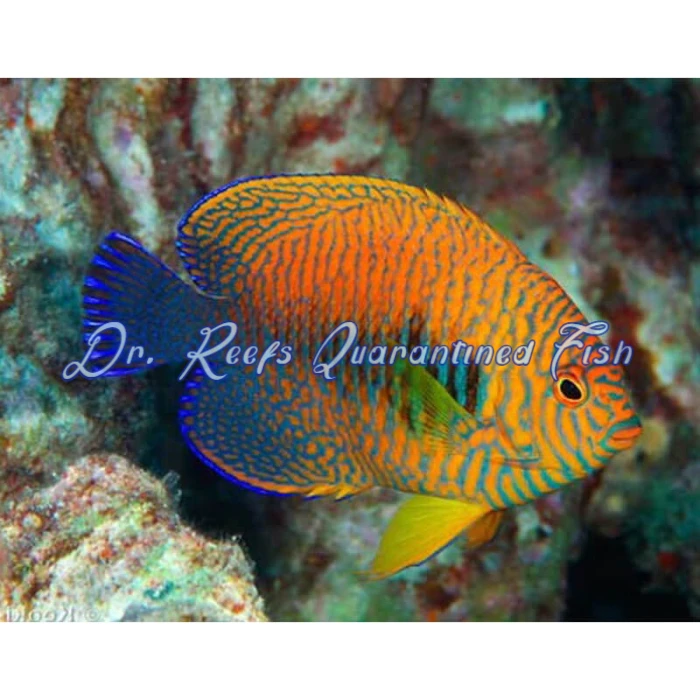
There are fish in the saltwater hobby that look like they were painted by hand. The Potter Angelfish is one of them. A bright orange body with electric blue highlights around the eyes, fins, and face, found only in the Hawaiian Islands, and almost never available through standard wholesale channels. Dr. Reef’s Quarantined Fish lists the Potter Angelfish at $149.99 to $169.99 on drreefsquarantinedfish.com under Saltwater Fish, Angelfish.
What Is the Potter Angelfish?
The Potter Angelfish, scientifically known as Centropyge potteri, is a dwarf angelfish endemic to the Hawaiian Islands. Endemic means it is found nowhere else in the world. This geographic restriction is one of the main reasons it commands a higher price and appears less frequently in the trade than comparable dwarf angels.
The body is a rich, burnt orange with narrow dark blue to black wavy stripes along the sides. Around the face, eye ring, and fin edges, the blue intensifies to electric. Under quality reef lighting, the coloration is genuinely breathtaking. It reaches about 4 inches at adult size and belongs to the genus Centropyge, the same group as the Flame Angel, Lemon Peel, and Coral Beauty.
Quick Specifications
| Scientific Name | Centropyge potteri |
| Common Names | Potter’s Angelfish, Potter’s Pygmy Angelfish, Rusty Angelfish, Hawaiian Pygmy Angelfish |
| Care Level | Intermediate to Advanced |
| Temperament | Semi-aggressive |
| Diet | Omnivore – marine algae, nori, mysis shrimp, high-quality angelfish preparations with sponge |
| Reef Compatible | No – known to nip at corals, clam mantles, and sessile invertebrates |
| Max Adult Size | 4 inches |
| Water Temp | 72 – 78°F |
| Salinity (sg) | 1.023 – 1.025 |
| pH | 8.1 – 8.4 |
| Min Tank Size | 70 gallons minimum, 90+ gallons preferred |
| Family | Pomacanthidae |
| Price at Dr. Reef’s | $149.99 – $169.99 — free shipping on orders over $500 |
Why Is It Difficult to Maintain?
The Potter Angelfish has a reputation for being one of the trickier dwarf angels in the hobby. Here are the specific reasons:
1. It Is Picky About Acclimatization
The Potter Angelfish often refuses prepared foods in the first days after arrival. It is an animal that takes time to feel secure in a new environment. Until it feels settled, it will not eat reliably. A fish that does not eat is a fish that is losing condition. This makes the first two to three weeks after introduction the most critical period.
2. It Needs an Established System
This species does best in mature tanks with stable water chemistry and natural algae growth on the live rock. It grazes throughout the day on microalgae, small organisms in the rock, and prepared foods. A new tank or a tank with limited live rock does not support this natural grazing behavior.
3. It Is Not Reef Safe
Like most Centropyge species, the Potter Angelfish will nip at coral polyps, clam mantles, zoanthids, and other sessile invertebrates. This is not a species for a high-end SPS reef or a tank with expensive clams. It belongs in a fish-only with live rock system or a FOWLR tank.
4. It Is Semi-Aggressive Toward Similar Fish
The Potter Angelfish will show territorial behavior toward other dwarf angelfish, particularly in smaller systems. Keep only one dwarf angel per tank unless you have a very large system of 150 gallons or more. It can coexist peacefully with tangs, clownfish, wrasses, and dottybacks.
Why Quarantine Changes Everything
The biggest reason hobbyists struggle with the Potter Angelfish is that it arrives from importers already thin, stressed, and refusing food. The journey from Hawaii to wholesaler to retailer to your tank involves multiple transfers, each one adding more stress and reducing the fish’s feeding drive further.
Dr. Reef’s Quarantined Fish holds every Potter Angelfish at their Tulsa, Oklahoma facility for 30 to 45 days before it ever ships to a customer. During that period, each specimen is conditioned to accept prepared aquarium foods step by step. The fish must be eating consistently and showing good body weight before it is listed for sale. This is the difference between a fish that eats from day one and a fish that goes through another round of food refusal stress after arrival.
Diet and Feeding
The Potter Angelfish needs variety. A single food will eventually lead to nutritional deficiency. Rotate between:
- Marine algae and nori sheets on a clip
- High-quality dwarf angelfish preparations that include sponge
- Frozen mysis shrimp and brine shrimp
- Spirulina-based flakes and pellets
Feed two to three times daily. A consistent feeding schedule helps the fish settle into a routine and reduces the anxiety that triggers food refusal.
Tank Setup
- Minimum 70 gallons, 90+ gallons preferred
- Mature live rock with natural algae growth for grazing
- Multiple hiding spots in the rockwork
- Stable water parameters, no sudden swings
- Moderate water flow with calm pockets near the rockwork
Quick Q and A
Q: Is the Potter Angelfish reef safe?
A: No. It will nip at coral polyps, clam mantles, and sessile invertebrates. Keep it in a FOWLR tank.
Q: How rare is it compared to other dwarf angels?
A: Much rarer. It is endemic to Hawaii, which limits supply significantly. This is why the price is higher than similar-sized Flame Angels or Coral Beauties.
Q: Will it get along with my other fish?
A: Generally yes, with fish that are not other dwarf angels. Avoid housing two Centropyge species together in tanks under 150 gallons.
Q: Why buy from Dr. Reef’s instead of a cheaper source?
A: Because the cheaper source usually means a freshly imported fish that has not been conditioned to eat. A Potter Angelfish at $149.99 from Dr. Reef’s is already eating, healthy, and cleared through quarantine. That is the real value.
Your Complete Recap
The Potter Angelfish is a genuinely rare Hawaiian endemic with coloration that few fish in the hobby can match. The difficulty in keeping it comes almost entirely from the stress of transport and the food conditioning gap that most vendors skip. Dr. Reef’s Quarantined Fish solves that gap with a 30 to 45 day quarantine and conditioning process at their Tulsa, Oklahoma facility. At $149.99 to $169.99, this is the most reliable version of this fish available online. Visit drreefsquarantinedfish.com to check current availability.