
Porcelain Crab for Sale: Care Requirements, Feeding Guide, and Reef Benefits

Porcelain Crab for Sale: Care Requirements, Feeding Guide, and Reef Benefits
What if your reef tank had a creature that never caused trouble, looked absolutely stunning, and did something so unusual that every single visitor to your home would stop and stare? That creature exists. It is called the Porcelain Crab. And right now at Dr. Reef’s Quarantined Fish, it is yours for just $29.99, already quarantined, always in stock, and ready to ship overnight to your door.
What Is a Porcelain Crab?
A Crab That Is Not Quite a Crab
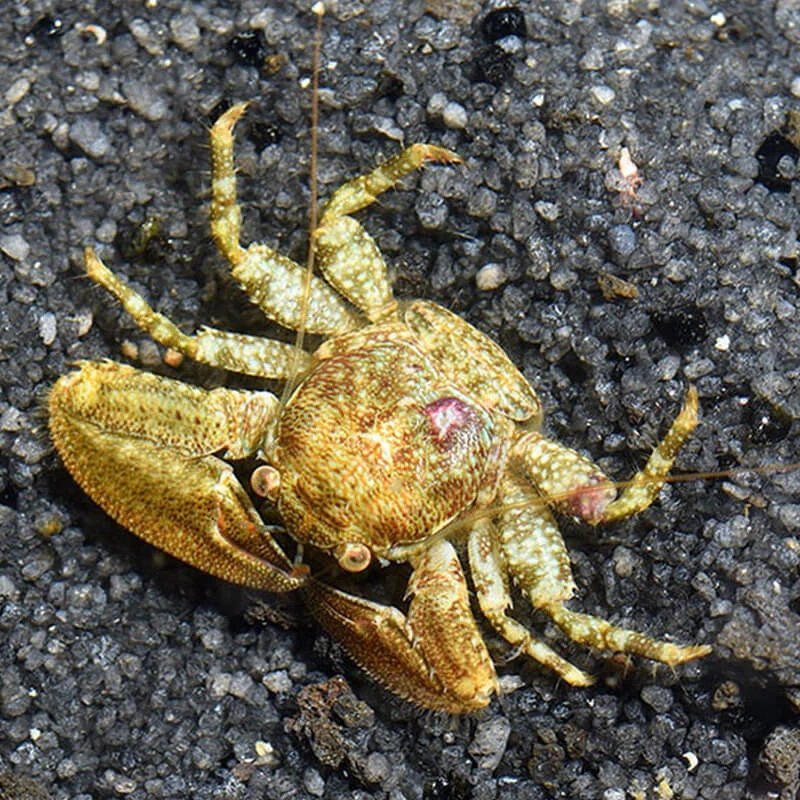
The Porcelain Crab belongs to the family Porcellanidae and is actually more closely related to squat lobsters than true crabs. The most popular reef aquarium species is Neopetrolisthes ohshimai, known as the Anemone Porcelain Crab. Its flat, round body is bright white with scattered red and orange spots, and no two individuals look exactly alike.
The Feeding Fan That Stops Everyone Cold
What makes this crab truly unforgettable is how it eats. It extends two large feathery fan-like appendages called maxillipeds and sweeps them gracefully through the water to catch tiny plankton and suspended particles. This rhythmic, flowing motion looks almost choreographed. Once you see it in person, you will never forget it.
The Porcelain Crab and Anemones
A Natural Anemone Dweller
Just like clownfish, Porcelain Crabs have developed a natural resistance to sea anemone stinging cells. In the wild they live tucked inside the tentacles of large host anemones, gaining protection while helping keep the anemone clean. In a home reef tank, they will move right into any available Rose Bubble Tip Anemone, Long Tentacle Anemone, or Carpet Anemone and instantly create one of the most naturally authentic displays in the hobby.
No Anemone Required
A Porcelain Crab does not need an anemone to thrive. Without one, it will settle comfortably into a rock crevice, under a coral ledge, or behind any sheltered area in the tank. An anemone is the dream home. Live rock is a perfectly happy alternative.
The Built-In Escape Trick
When threatened, a Porcelain Crab can voluntarily drop one of its legs to escape a predator. This is called autotomy. The leg grows back completely during the next molt. It is one of the most clever survival strategies in the invertebrate world.
Porcelain Crab Care Requirements
Tank Size and Setup
The minimum recommended tank size is 10 gallons, making Porcelain Crabs a perfect choice for nano reef tanks. They stay small, rarely exceeding one inch across the body, and take up almost no territory in larger systems. Provide plenty of live rock with natural overhangs and crevices so the crab feels secure enough to come out and be visible throughout the day.
Water Parameters to Maintain
Keep salinity between 1.025 and 1.026. Temperature should stay between 72 and 80 degrees Fahrenheit. Maintain pH between 8.1 and 8.3. Ammonia and nitrite must always read zero. Nitrates should stay below 20 parts per million. Stability matters more than hitting perfect numbers once in a while. A consistent tank keeps your Porcelain Crab healthy, colorful, and active day after day.
The Copper Warning Every Hobbyist Must Know
Copper-based medications are lethal to all invertebrates, including Porcelain Crabs, even at trace concentrations. Never treat a tank containing any invertebrate with copper. If your tank or equipment has ever seen copper treatment, test thoroughly and run activated carbon for several weeks before adding any invert.
Porcelain Crabs have no specific lighting requirements. Whatever your reef runs for corals works fine for them. For flow, moderate and indirect is ideal. Their filter-feeding behavior works best when particles move gently through the water near them. Strong, direct flow aimed at the crab prevents it from extending its feeding fans and causes unnecessary stress.
Porcelain Crab Feeding Guide
How They Actually Eat
Porcelain Crabs are filter feeders. Those sweeping feathery fans are not decorative. They are highly efficient tools for catching phytoplankton, zooplankton, bacteria, and fine organic particles suspended in the current. In a mature, biologically rich reef tank, the crab catches some food naturally. But supplemental feeding makes a dramatic difference in color, energy, and long-term health.
Best Foods to Use
Liquid and ultra-fine particle reef foods work best. Phytoplankton, mixed zooplankton blends, Reef Roids, oyster eggs, and coral food products with fine suspended particles are all excellent choices. These foods directly mimic what a Porcelain Crab eats in the wild. Small meaty additions like tiny mysis shrimp portions or marine snow placed near the crab also work well as supplements.
How Often and How to Feed
Feed two to three times per week at minimum. In newer tanks with lower biological activity, feeding every other day produces better results. When feeding, reduce flow or turn off the return pump for 10 to 15 minutes so food concentrates near the crab instead of rushing into filtration. Watch the feeding fan display that follows. It is one of the most rewarding sights in reef keeping.
Reef Compatibility and Benefits
Completely Safe With Corals and Peaceful Fish
Porcelain Crabs do not nip at coral tissue, bother anemones, or compete aggressively with fish. Clownfish, gobies, chromis, blennies, cardinals, Cleaner Shrimp, Peppermint Shrimp, snails, and hermit crabs all coexist with Porcelain Crabs without any issues. They are genuinely one of the most peaceful invertebrates available in the hobby.
Who to Keep Away From Them
Avoid housing Porcelain Crabs with large predatory fish like lionfish, large triggers, groupers, or hawkfish. These species view small invertebrates as food. In a peaceful community reef tank built around reef-safe fish, Porcelain Crabs are completely safe.
The Hidden Water Quality Benefit
Every time a Porcelain Crab sweeps its feeding fans through the water, it pulls fine suspended organic particles out of the water column. Those particles contribute to rising nitrates and cloudiness when left unchecked. A Porcelain Crab is essentially a living biological filter running silently and continuously around the clock, making your water just a little cleaner every single day.
Understanding Molting
What Happens During a Molt
Porcelain Crabs shed their exoskeleton periodically as they grow. Before a molt, the crab becomes less active and hides more. After the molt, the old shell is left sitting on the rock work. It looks almost exactly like a dead crab, complete with color, shape, and texture. It is almost always just the shed shell, not the crab itself.
How to Help Your Crab Through It
Do not remove the shell immediately. The crab will often consume it to reclaim stored minerals. After molting, the crab hides for one to two days while the new shell hardens. Make sure the tank has adequate hiding spots so it stays protected during this vulnerable window. Maintain calcium between 400 and 450 parts per million and magnesium between 1250 and 1350 parts per million to support complete, healthy molts every time.
Questions and Answers
Q: Does the Porcelain Crab need an anemone to survive?
A: No. It thrives in rock crevices and coral ledges just as happily. An anemone creates a stunning display but is not required for survival.
Q: Can clownfish and a Porcelain Crab share the same anemone?
A: Yes, and this combination looks incredible. The clownfish may occasionally nudge the crab toward the edges but serious conflict is very rare. This three-way display of anemone, clownfish, and Porcelain Crab is one of the most naturally beautiful setups in the reef hobby.
Q: My Porcelain Crab lost a leg. Is something wrong?
A: Almost certainly not. Leg dropping is a completely natural defense behavior called autotomy. The leg regrows fully at the next molt. Keep water stable and give the crab a safe hiding spot and it will recover completely on its own.
Q: Why is it listed as reef compatible with caution?
A: The caution refers to tank mate selection, not coral safety. Porcelain Crabs never damage corals. The caution applies to keeping them with large predatory fish that may eat them. In a peaceful reef community they cause absolutely no problems.
Q: I found an empty crab shell. Did my Porcelain Crab die?
A: Probably not. What you found is almost certainly a molt. Check carefully around your rock work and inside any anemone or crevices. The living crab is almost certainly hiding while its new shell hardens. Give it a couple of days before drawing any conclusions.
Why Buy From Dr. Reef’s Quarantined Fish?
Quarantined Before It Ever Ships to You
Every Porcelain Crab at Dr. Reef’s is sold only as quarantined. That means every crab has been personally observed, health-checked, and confirmed active and eating before it gets packed into a shipping box. You are not gambling on an animal that has been rushed through a wholesale pipeline. You are buying a crab that a team of experienced reef hobbyists has already verified is healthy and ready to thrive.
Always In Stock and Ready to Ship Overnight
Porcelain Crabs at Dr. Reef’s are always in stock and ready to ship. No waiting lists. No seasonal restocks. When you are ready, the crab is ready. Shipping goes out Tuesday through Thursday via overnight UPS, with delivery arriving Wednesday through Friday. Every order is backed by a three-day live arrival guarantee.
Trusted by Reef Hobbyists Across America
Dr. Reef’s accepts payments via PayPal, Stripe, and Venmo. Free shipping kicks in on orders over $500, making it a smart move to combine your Porcelain Crab with cleanup crew packs, coral frags, or a few quarantined fish in a single order. Their team loves reef keeping as much as you do and stands behind every animal they ship.
Final Thoughts
The Porcelain Crab at $29.99 from Dr. Reef’s Quarantined Fish is one of the most rewarding, peaceful, and visually stunning invertebrates you can add to a reef tank at any price point. It entertains. It cleans your water passively. It lives beautifully alongside clownfish and anemones. And it makes every single visitor to your home stop and ask what that incredible creature is.
Head to drreefsquarantinedfish.com right now. Your Porcelain Crab is in stock, quarantined, and ready to ship.