
Blog
Pistol Shrimp and Goby Pair

Pistol Shrimp and Goby Pair for Sale – A Fascinating Symbiotic Duo for Reef Aquariums
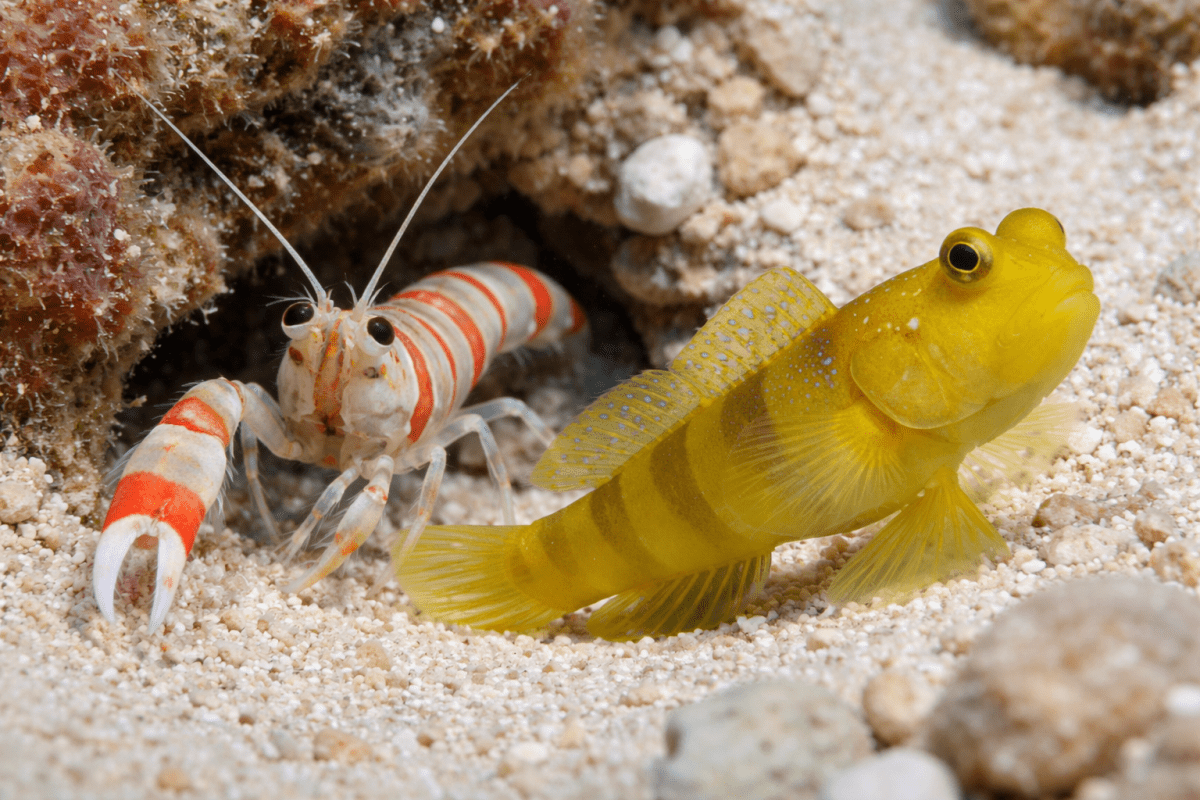
Few relationships in the natural world translate as beautifully to the home aquarium as the partnership between a pistol shrimp and a watchman goby. This remarkable symbiotic pairing, in which two entirely different animals cooperate for mutual benefit, is one of the most captivating behavioral displays available to reef aquarists. At Dr. Reef Quarantined Fish, every Pistol Shrimp and Goby pair is carefully observed and confirmed healthy before it ships to you.
A Partnership Built on Trust
In the wild, pistol shrimp and watchman gobies share a burrow that the shrimp constructs and maintains while the goby stands guard at the entrance. The shrimp, which has very limited vision, maintains constant physical contact with the goby through its antennae. When the goby detects danger and darts into the burrow, that movement signals the shrimp to follow immediately. In return the shrimp provides the goby with a safe, well-maintained shelter it could not construct on its own. This arrangement is so finely tuned that the two animals can spend years together in the same burrow, functioning as a coordinated unit with a level of interspecies cooperation that is genuinely remarkable to observe.
Species in the Pairing
The most commonly available and reliably compatible pairings in the hobby bring together a Tiger Pistol Shrimp (Alpheus bellulus) and either a Randall’s Watchman Goby (Amblyeleotris randalli) or a Yellow Watchman Goby (Cryptocentrus cinctus). Each pairing has its own visual character. The Tiger Pistol Shrimp brings bold red and white striping and an impressively enlarged snapping claw, while the Randall’s Goby displays vivid orange and white banding and the Yellow Watchman offers a warm golden-yellow body with characteristic blue spotting. All combinations produce the full symbiotic behavior that makes this pairing so rewarding.
Aquarium Requirements
A Pistol Shrimp and Goby pair is well suited to reef aquariums of 30 gallons and above. A sand bed of at least 3 to 4 inches in depth is essential, as the pistol shrimp requires adequate substrate to excavate and maintain its burrow. Fine to medium grade sand is ideal. The aquarium should be stable and well established with consistent water parameters and low nitrate levels. Live rock arranged around the sand bed gives the shrimp additional material to incorporate into the burrow structure and helps both animals feel secure in their new environment. A secure lid is important, as gobies are capable jumpers, particularly in the initial settling period after introduction.
Feeding
Both members of the pair are carnivores that accept a variety of meaty frozen foods in captivity. Frozen mysis shrimp, copepods, and small meaty marine preparations are excellent dietary staples for the goby, which feeds actively in the water column above the burrow entrance. The pistol shrimp is an opportunistic omnivore that forages within and around the burrow, scavenging organic material and benefiting from food dropped near the burrow entrance during feeding. Target feeding close to the burrow entrance ensures both animals receive adequate nutrition, particularly in systems with lower organic loads.
Temperament and Tank Compatibility
The goby is peaceful and compatible with a wide variety of reef fish, posing no threat to tank mates beyond mild territorial behavior around the immediate vicinity of the burrow. The pistol shrimp is similarly non-aggressive toward fish and larger invertebrates, though its snapping claw produces a distinctive loud pop that can occasionally startle more timid tank inhabitants. Both animals are considered reef safe and pose no meaningful threat to corals or sessile invertebrates. The pair coexists well in community reef systems and adds a layer of natural behavioral complexity that enriches the overall aquarium experience.
Why Buy from Dr. Reef
At Dr. Reef Quarantined Fish, every Pistol Shrimp and Goby pair is carefully observed and confirmed healthy before being offered for sale. Purchasing a pair that has been properly acclimated and held under stable, controlled conditions significantly reduces the stress of shipping and gives both animals the best possible foundation for establishing their partnership in your aquarium. For a display as behaviorally rich as this one, starting with animals in strong condition makes all the difference.