
Picasso Clownfish for Sale: Care Requirements, Breeding, and Designer Traits

Picasso Clownfish for Sale: Care Requirements, Breeding, and Designer Traits
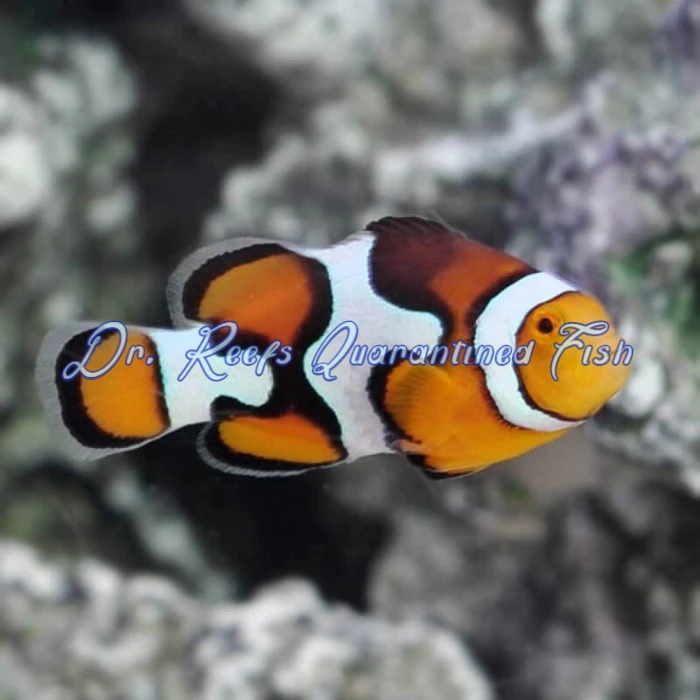
If you have ever seen a Picasso Clownfish in person, you already understand why they stop people in their tracks. No two look exactly alike. The bold, irregular white patterns that splash across their bright orange bodies look less like nature and more like something a talented artist designed by hand. Which is exactly why they carry the name they do. At Dr. Reef’s Quarantined Fish, every Picasso Clownfish is fully quarantined, parasite-treated, and eating prepared foods before it ships to your door. Here is everything you need to know.
What Is a Picasso Clownfish?
The Picasso Clownfish is a designer variant of the Ocellaris Clownfish, Amphiprion ocellaris, produced through selective captive breeding programs. Unlike wild-caught clownfish that display consistent, predictable stripe patterns, Picasso Clownfish are selectively bred to express exaggerated, irregular, and highly unique white patterning across their bodies.
The name comes from Pablo Picasso, the legendary artist famous for his abstract, boundary-breaking visual work. The comparison is perfect. A Picasso Clownfish displays white markings that do not follow any predictable rule: wide patches, irregular blotches, connected stripes, and asymmetrical designs that make every single fish a one-of-a-kind living work of art.
Picasso Clownfish grow to around 3 to 4 inches, are completely reef-safe, and carry all the hardiness and adaptability that make the Ocellaris Clownfish the most popular marine aquarium fish in the world. The designer patterning is purely aesthetic and does not affect their health, lifespan, or behavior in any way.
Designer Traits: What Makes a Picasso a Picasso
Understanding the grading and designer traits of Picasso Clownfish helps you appreciate exactly what you are getting and why quality and price vary between specimens.
Standard Picasso
A Standard Picasso displays noticeably irregular white patterning compared to a normal Ocellaris, but with some recognizable stripe structure still present. The white areas are wider or more connected than normal, but do not yet cover large portions of the body. Standard Picassos are beautiful fish with clear designer character at a more accessible price point.
Premium Picasso
A Premium Picasso displays dramatically irregular, heavily modified white patterning with large white sections, asymmetrical designs, and minimal resemblance to normal Ocellaris stripe structure. Each Premium Picasso is genuinely unique. No two fish from the same breeding pair look identical. Premium Picassos are among the most visually striking clownfish available in the hobby.
High Grade Picasso
The highest expression of the Picasso trait. High Grade Picassos display massive white coverage, extreme pattern irregularity, and the kind of bold, abstract markings that make them true collector specimens. These fish are rare even within designer clownfish programs because the most extreme pattern expressions do not breed predictably.
Color Base Variations
Picasso Clownfish also come in black and white designer variations called Black Picasso or Midnight Picasso, where the orange base is replaced with deep black coloration combined with the same irregular white patterning. These variants are even rarer and more visually dramatic than the standard orange Picasso.
Care Requirements
Tank Size
Picasso Clownfish are comfortable in tanks as small as 20 to 30 gallons for a single fish or bonded pair. They do not need large amounts of swimming space and adapt well to nano reef setups. A 40-gallon or larger tank provides better stability and more flexibility for adding an anemone host and additional reef inhabitants.
Water Parameters
- Temperature: 74 to 79 degrees Fahrenheit
- Salinity: 1.023 to 1.026 specific gravity
- pH: 8.1 to 8.4
- Ammonia and Nitrite: 0 ppm
- Nitrate: Under 10 ppm for best long-term health
Anemone Hosting
Picasso Clownfish carry the same anemone-hosting instincts as their Ocellaris parents. They are most commonly associated with Magnificent Sea Anemones and Carpet Anemones in the wild, but in captivity, they readily host in Bubble Tip Anemones, which are the most practical and commonly kept host anemone in the hobby. Many Picasso Clownfish will also adopt coral heads, powerheads, or corners of the tank as their home base if no anemone is present, which is completely normal and healthy behavior.
Lighting and Flow
Standard reef lighting and moderate flow work perfectly. Picasso Clownfish are not demanding in terms of lighting or water movement and adapt well to whatever conditions suit the rest of your reef community.
Feeding
Picasso Clownfish are enthusiastic, easy feeders that accept virtually everything offered.
- Frozen mysis shrimp
- Frozen brine shrimp
- High-quality marine pellets
- Finely crushed marine flake food
- Frozen cyclops or other fine zooplankton
Feed two to three times daily in small amounts. Because every Picasso Clownfish from Dr. Reef’s Quarantined Fish is already conditioned to eat prepared foods before shipping, your fish will eat confidently from its very first feeding in your tank.
Breeding Guide
One of the most exciting aspects of keeping Picasso Clownfish is their breeding potential. Designer clownfish breeding is one of the fastest-growing segments of the reef hobby, and Picasso Clownfish produce some of the most sought-after offspring in the entire clownfish world.
Pairing
Like all Ocellaris Clownfish, Picassos are born as males, and the dominant individual in a pair becomes female over time. Purchase two Picasso Clownfish of different sizes and introduce them simultaneously. The larger fish will become the female, and the smaller will become the breeding male. A bonded pair from Dr. Reef’s Quarantined Fish shortens this process and eliminates the uncertainty of the pairing period.
Spawning
A bonded pair of Picasso Clownfish typically spawns every 10 to 14 days under stable tank conditions. The male cleans a flat rock surface near their territory before spawning. The female deposits 100 to 400 eggs, and the male fertilizes and guards them continuously until they hatch in 6 to 10 days, depending on temperature.
What Makes Picasso Breeding Special
Here is the most exciting part. When two Picasso Clownfish breed, their offspring carry the designer gene but express it unpredictably. Some offspring display standard Ocellaris patterns, some display mild Picasso traits, and occasionally a fish with extreme, high-grade patterning appears that is more valuable and more stunning than either parent. Breeding Picasso Clownfish is genuinely exciting because you never know exactly what the next batch of fry will produce.
Raising the Fry
Newly hatched Picasso Clownfish larvae require a dedicated rearing tank with gentle filtration, stable temperature, and enriched rotifers as a first food. After 10 to 14 days, transition fry to freshly hatched baby brine shrimp. Juvenile coloration and designer patterning begin appearing at 3 to 5 weeks of age, which is one of the most thrilling moments in the entire breeding process.
Compatibility
Picasso Clownfish are peaceful toward almost all reef fish. Good tank mates include Tangs, Gobies, Firefish, Blennies, Wrasses, Cardinalfish, and Dartfish. They can be territorial around their chosen home base, but are rarely a problem for fish that respect their space. Avoid housing them with very aggressive fish that might bully or injure them.
Frequently Asked Questions
Are Picasso Clownfish natural or dyed?
Completely natural. Picasso patterning is produced through selective captive breeding, not dye injection or artificial treatment. The coloring is genetic and permanent.
Do Picasso Clownfish lose their pattern as they age?
No. The designer patterning is a permanent genetic trait that remains consistent throughout the fish’s life. Some patterns may appear slightly different as the fish grows, but the core design stays the same.
How long do Picasso Clownfish live?
With proper care, 10 to 20 years or longer. Designer variants have the same lifespan as standard Ocellaris Clownfish.
Does Dr. Reef offer a live arrival guarantee?
Yes. Dr. Reef’s Quarantined Fish stands behind every animal they ship. Visit the website for current guarantee and shipping policy details.
Final Thoughts
The Picasso Clownfish is a living work of art. It is reef-safe, beginner-friendly, long-lived, and capable of producing some of the most exciting offspring in the hobby if you choose to breed them. At Dr. Reef’s Quarantined Fish, every Picasso Clownfish arrives fully quarantined, healthy, and eating, giving your fish the best possible start in your reef.
Check availability today. Designer clownfish of this quality do not stay in stock for long.