
Blog
Orange Shoulder Tang

Orange Shoulder Tang for Sale: A Vibrant and Active Tang for Reef Aquariums
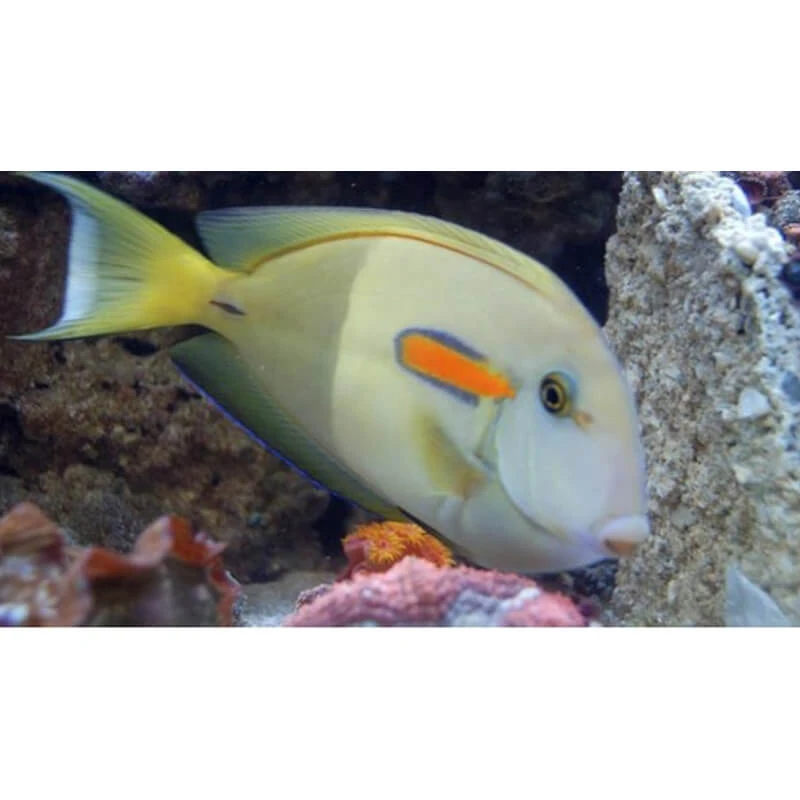
If you’ve been looking for a tang that combines striking color, active personality, and genuine reef compatibility, the Orange Shoulder Tang (Acanthurus olivaceus), also known as the Orangeband Surgeonfish, is one of the most rewarding surgeonfish an experienced hobbyist can add to a large reef system. With its dramatic orange shoulder patch, sleek olive-toned body, and constant energetic movement, this fish brings a level of visual dynamism that few other tangs can match.
At Dr. Reef’s Quarantined Fish, every Orange Shoulder Tang we offer has completed our full quarantine protocol, is eating confidently, and is ready for the display tank of a prepared reef keeper.
What Makes the Orange Shoulder Tang So Special?
The Orange Shoulder Tang is immediately recognizable by the vivid orange and yellow band that runs behind its eye, a marking so distinctive that it defines the fish entirely. Juveniles begin life with a bright yellow body before transitioning into their dramatic adult coloration, making the growth journey itself a rewarding experience to witness. This species is a constant, purposeful grazer that works the rockwork and open substrate with tireless energy, contributing both beauty and function to the reef systems it inhabits.
The Size Reality: A Tang That Grows Into a Showpiece
Orange Shoulder Tangs are a large species. Adults in the wild regularly reach 12 to 14 inches, and well-maintained aquarium specimens commonly achieve 10 to 12 inches at full maturity. This is a fish that grows steadily and needs a system planned around its adult size from the very beginning. That size translates directly into presence. A mature Orange Shoulder Tang moving through a large display reef is a centerpiece-level fish that anchors the entire visual composition of the tank.
Growth Timeline: A Transformation Worth Watching
Orange Shoulder Tangs grow at a consistent pace over three to five years. A juvenile brought home at 2 to 3 inches will approach 5 to 6 inches within the first year under quality care and nutrition. By years two to three, most specimens reach 8 to 9 inches and begin displaying full adult coloration. Complete adult size and the deepest expression of their signature orange shoulder marking develops by years four to five, rewarding patient hobbyists with a fish that only improves with time.
Tank Requirements: Space and Flow Are Essential
A minimum 180-gallon aquarium is recommended for a single adult Orange Shoulder Tang, with larger systems always being preferable for long-term health and natural behavior. This is an open-water swimmer that needs unobstructed lanes to move freely throughout the day. Strong, consistent water flow that mimics the surge and current of its natural reef crest habitat is essential. Temperature between 72 and 82 degrees Fahrenheit, salinity at 1.020 to 1.025 SG, and stable, high-quality water conditions must be maintained consistently.
Feeding and Nutrition
The Orange Shoulder Tang is a dedicated herbivore and grazer. Provide generous amounts of nori sheets, spirulina-enriched frozen foods, and quality herbivore pellets as dietary staples. Natural algae growth on established live rock gives this fish constant grazing opportunities throughout the day, contributing to both its nutrition and its behavioral health. A well-fed Orange Shoulder Tang displays the deepest coloration, the most confident behavior, and the strongest long-term health of any specimen in the hobby.
Temperament and Tank Mates
The Orange Shoulder Tang is generally peaceful toward non-tang species but can show territorial behavior toward other surgeonfish, particularly in systems that do not offer adequate space. In properly sized aquariums it coexists comfortably with a wide range of robust reef fish. Choose tank mates of similar size and temperament, avoid housing it with passive or small species that may be stressed by its active nature, and introduce it thoughtfully into established reef communities for the smoothest transition.
The Smart Start: Why Quarantine Changes Everything
When you are investing in a fish of this beauty and long-term value, the health of your specimen at the point of purchase is the foundation everything else is built on. Wild-caught Orange Shoulder Tangs travel significant distances before reaching a hobbyist’s system, and that journey creates stress conditions that leave even visually healthy fish vulnerable to ich, flukes, and other common marine parasites.
Professionally quarantined specimens have already navigated the most dangerous window of captive life. They have proven they can eat prepared foods, remain stable under observation, and display the confident, active behavior that predicts long-term success. You are not introducing uncertainty into your carefully maintained reef. You are welcoming a fish that has already demonstrated it can thrive.
Why Dr. Reef’s Is the Right Choice
Dr. Reef’s Quarantined Fish holds every fish to the same uncompromising standard, and the Orange Shoulder Tang is no exception. Every specimen completes a minimum 4 to 6 week quarantine, receives preventative treatment for ich, flukes, and common marine parasites, and is confirmed eating a variety of prepared foods before being offered for sale.
We document the process, share feeding videos and health updates on request, and never rush a fish to availability before it has completed the full benefit of our protocol. When your Orange Shoulder Tang arrives from Dr. Reef’s, it is healthy, settled, and ready to become the vibrant centerpiece your reef system deserves.
Your Reef Deserves a Tang That Delivers at Every Stage
The Orange Shoulder Tang grows from a bright yellow juvenile into one of the most visually commanding surgeonfish in the hobby. Every stage of that journey is worth experiencing, and it all begins with the quality of the fish you start with.
Start with adequate space, stable water, and a varied diet. Most importantly, start with a healthy, quarantined specimen from a source that holds itself to the highest standard.