
Mimic Tang

Mimic Tang for Sale: The Fish That Wears a Disguise
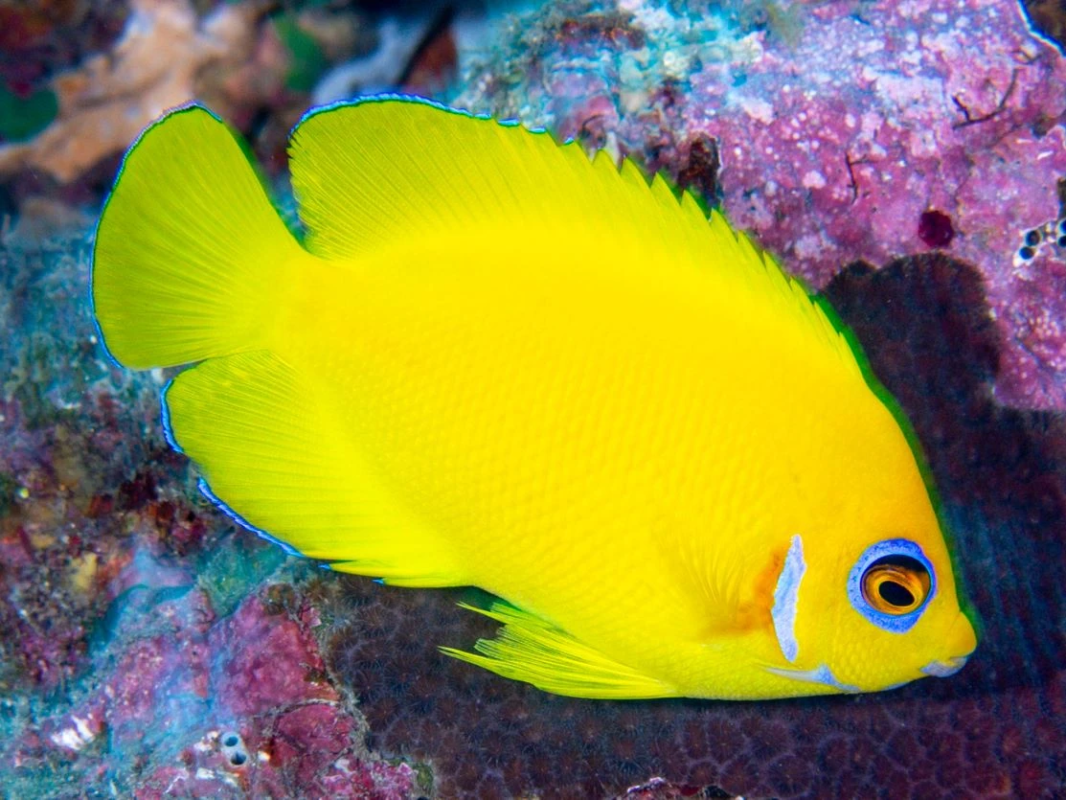
If you have spent any time in the saltwater hobby, you have probably done a double take looking at a Mimic Tang. At first glance, it looks like a Lemonpeel Angelfish. Same bright yellow body, same blue outline around the eye, same striking color pattern. Then you realize it is not an angelfish at all. It is a tang, and it is one of the most fascinating fish you can add to a reef tank.
That is exactly why Dr. Reef’s Quarantined Fish is proud to offer Mimic Tangs to hobbyists who want something truly special in their display tanks.
What Is a Mimic Tang?
The Mimic Tang, known scientifically as Acanthurus pyroferus, earns its name honestly. As a juvenile, it mimics the appearance of Centropyge angelfish, most commonly the Lemonpeel Angel or the Flame Angel, depending on the region it comes from. Scientists believe this mimicry is a survival strategy. Juvenile angelfish are generally left alone by larger predators, so looking like one gives the young Mimic Tang a layer of protection while it is small and vulnerable.
As the fish grows into adulthood, the mimicry fades and it takes on a more subdued brownish tan color with subtle highlights. Some hobbyists specifically seek out juveniles for their bright yellow coloration, while others enjoy watching the fascinating transformation unfold over time in their own tank.
How the Mimic Tang Behaves in a Reef Tank
The Mimic Tang is an active swimmer and a personable fish that tends to become one of the centerpieces of any tank it lives in. It grazes throughout the day, picking at algae along the rockwork and glass, which makes it genuinely useful as a natural cleanup crew for nuisance algae.
Like other tangs, the Mimic Tang can be territorial toward fish that look similar to it or share its general body shape. It does best when introduced to the tank before other tang species, or at the same time, to avoid conflict over territory. In a large enough tank with plenty of open swimming space, many hobbyists keep Mimic Tangs alongside other tang species without any major issues.
The Mimic Tang is considered reef safe, meaning it will not pick at your corals or bother your invertebrates. It is a grazer focused on algae, not on the animals you have worked hard to keep.
Tank Requirements for a Mimic Tang
The Mimic Tang needs room to move. A minimum tank size of 100 gallons is a good benchmark, and larger is always better for a fish that loves to swim. Strong water flow and excellent water quality are important, as tangs in general are sensitive to poor conditions and can be among the first fish to show signs of stress when water parameters drift.
A well-established tank with natural algae growth gives a Mimic Tang the grazing opportunities it loves, but supplementing with dried seaweed on a clip several times a week is also a great idea. Nori sheets are an affordable and widely available option that tangs go absolutely crazy for.
Like all tang species, Mimic Tangs are susceptible to ich and other external parasites, which is one of the most important reasons to quarantine any new fish before adding it to your display tank.
Why Quarantine Matters So Much for Tangs
Tangs have a reputation in the hobby for being ich magnets, and that reputation is not entirely undeserved. Their thin mucus layer and active nature make them more vulnerable to parasites than many other fish. Introducing an unquarantined tang directly into a reef tank that already has corals and established livestock is a risk that can turn into a very costly and stressful situation fast.
This is where Dr. Reef’s Quarantined Fish makes a real difference. Every fish available through Dr. Reef’s goes through a full quarantine and treatment process before it is ever offered for sale. That means the Mimic Tang you receive has already been observed, treated, and cleared before it reaches your hands. You are not rolling the dice on a fish that was pulled from a holding tank at a fish store and bagged the same day.
For a fish as ich-prone as the Mimic Tang, starting with a quarantined animal is not just a nice bonus. It is genuinely one of the smartest decisions you can make.
What Makes Dr. Reef’s Quarantined Fish Different
There is no shortage of places to buy saltwater fish online, but not all of them treat the fish the same way. Dr. Reef’s Quarantined Fish was built around a simple idea: every animal deserves proper care before it goes to a new home, and every hobbyist deserves a fish that actually has a real chance of thriving.
The quarantine process at Dr. Reef’s is thorough. Fish are not simply held and observed. They go through a full treatment protocol designed to catch and address the issues that commonly devastate reef tanks when new fish are added without proper preparation. The team genuinely cares about the animals they work with and about the hobbyists they sell to.
Beyond that, Dr. Reef’s is a resource. When you have questions about how to acclimate your Mimic Tang, what to feed it, how to introduce it alongside fish you already have, or what to do if you see something concerning, the support is there. That kind of real, informed guidance from people who actually know the hobby is not something you find everywhere.
Ready to Add a Mimic Tang to Your Tank?
If you want a fish that is striking as a juvenile, fascinating to watch develop, genuinely useful in the tank, and backed by a team that takes animal health seriously, the Mimic Tang from Dr. Reef’s Quarantined Fish is an excellent choice.
Check current availability on the Dr. Reef’s Quarantined Fish website and take the guesswork out of adding one of the most unique tangs in the hobby to your reef.
Your display tank deserves fish that arrive healthy and ready to thrive. Dr. Reef’s Quarantined Fish is here to make that happen.
Dr. Reef’s Quarantined Fish specializes in fully quarantined saltwater fish and marine life. Every animal goes through a comprehensive care and treatment process before being made available for purchase.