
Blog
How Long Do Yellow Tangs Live in Captivity?

How Long Do Yellow Tangs Live in Captivity? The Honest Answer Every Reefer Needs
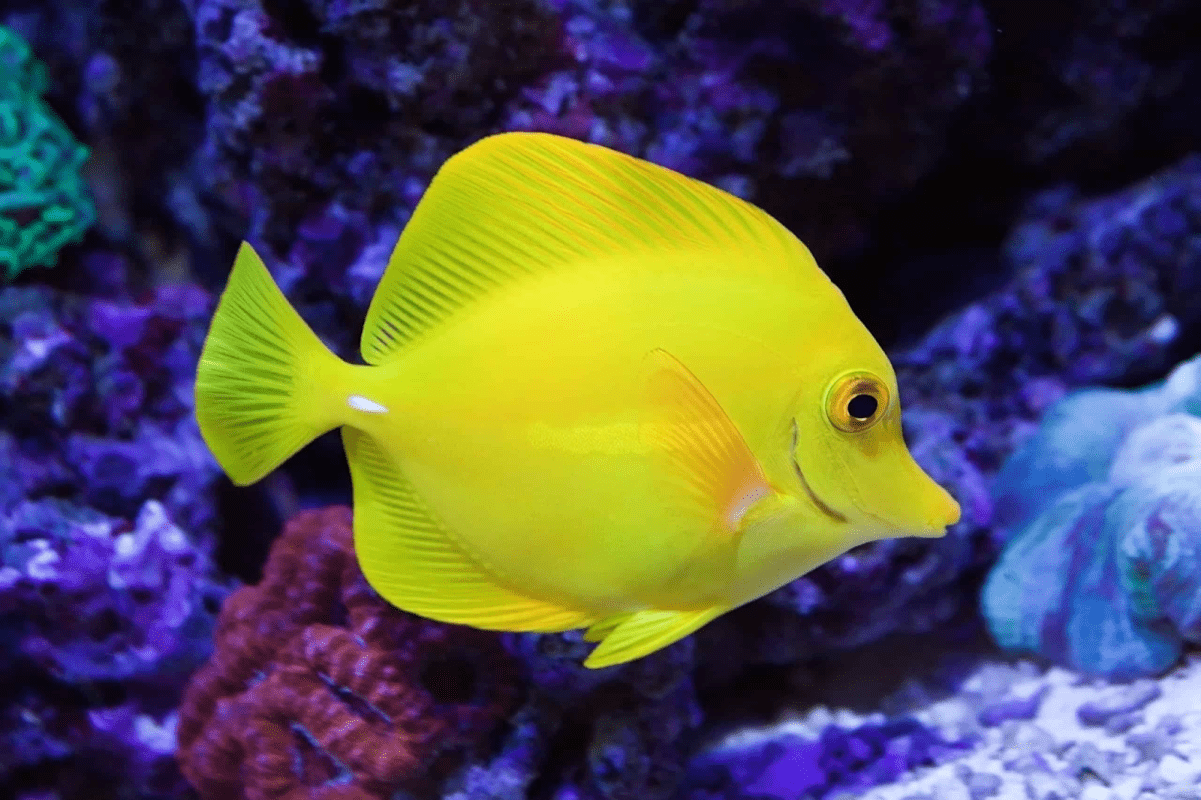
There’s a moment every new reef hobbyist goes through, you spot a Yellow Tang gliding through a display tank, all electric yellow and confident energy, and you think: I need that fish.
Yellow Tang (Zebrasoma flavescens) isn’t just pretty. It’s one of the most iconic, personality-packed, hardworking fish in the entire saltwater hobby. But before you bring one home, there’s a question worth asking seriously: how long do yellow tangs actually live in captivity?
Let’s get into it, the real numbers, the real reasons, and exactly what it takes to help your Yellow Tang hit its full potential lifespan.
Wild vs. Captivity: Why the Gap Exists
Before diving into what extends lifespan, it helps to understand why captive fish sometimes fall short of their potential.
In the wild, a Yellow Tang has everything dialed in by nature: perfect water chemistry maintained by the ocean’s buffering capacity, unlimited algae to graze on 24/7, natural currents to swim against, sunlight cycling predictably, and a vast reef to explore and establish territory in.
In an aquarium, every one of those things requires active management by you. The ocean doesn’t need a protein skimmer. It doesn’t need someone to clip nori every morning. It doesn’t need 10–15% water changes every week. But your tank does.
The good news is that modern reef keeping has advanced to the point where captive lifespans close the gap with the wild significantly, especially when you start with a captive-bred, quarantined specimen from a trusted source like Dr. Reef’s Quarantined Fish.
According to Dr. Reef’s Quarantined Fish, Yellow Tangs (Zebrasoma flavescens) have a lifespan of 8–12+ years with excellent care in captivity. A Yellow Tang is a long-term commitment, closer to a dog or a cat in terms of how many years it might be part of your life.
In the wild off the reefs of Hawaii and the Central Pacific, Yellow Tangs can live even longer; some estimates put wild individuals at 20+ years. The gap between wild longevity and captive lifespan comes down almost entirely to the quality of care. The ceiling is high. Whether your fish reaches it depends on you.
Signs Your Yellow Tang Is on Track for a Long Life
Healthy signs to look for:
- Active, continuous grazing on live rock and nori
- Vibrant, uniform yellow coloration with no fading or gray patches
- Clear, bright eyes
- Smooth fins without fraying or erosion
- Confident swimming behavior, not hiding or pressing into corners
Early warning signs to watch:
- Fading color or darkening, especially around the head
- Loss of appetite or disinterest at feeding time
- Hiding more than usual
- Small white spots
- Pitting or erosion along the face and lateral line
Catching warning signs early means you can address the issue before it becomes a life-threatening situation. A tang showing early symptoms treated quickly with appropriate medication in a hospital tank is a tang that can recover fully and go on to live many more healthy years. The same tang ignored for a week becomes a much harder situation to reverse.
Why Starting with Dr. Reef Makes a Real Difference
When you buy a captive-bred Yellow Tang from Dr. Reef’s Quarantined Fish, you’re not just buying a fish. You’re buying the best possible starting point for a 10-plus-year relationship with one of the reef hobby’s most beloved species.
Every Yellow Tang from Dr. Reef is:
- Captive-bred – born in an aquarium environment, disease history known, no wild collection stress
- Quarantined – observed, preventatively treated, conditioned to eat prepared foods, stabilized before shipment
- Actively eating on arrival – customer after customer mentions feeding within minutes or hours of introduction
- Available in small and medium sizes – typically 0.75–1.25″ small and 1.25–1.75″ medium, giving you years of growth ahead
If you’re serious about building a long-term relationship with this iconic species, there’s really no more important first step than starting with a healthy, quarantined, captive-bred specimen from a seller who knows the fish before it ships.
Because the yellow glow of a thriving tang in a mature reef tank, year after year, is something worth investing in properly from the very beginning.