
Blog
Geometric Pygmy Hawkfish

Geometric Pygmy Hawkfish for Sale – A Rare and Captivating Hawkfish for Reef Aquariums
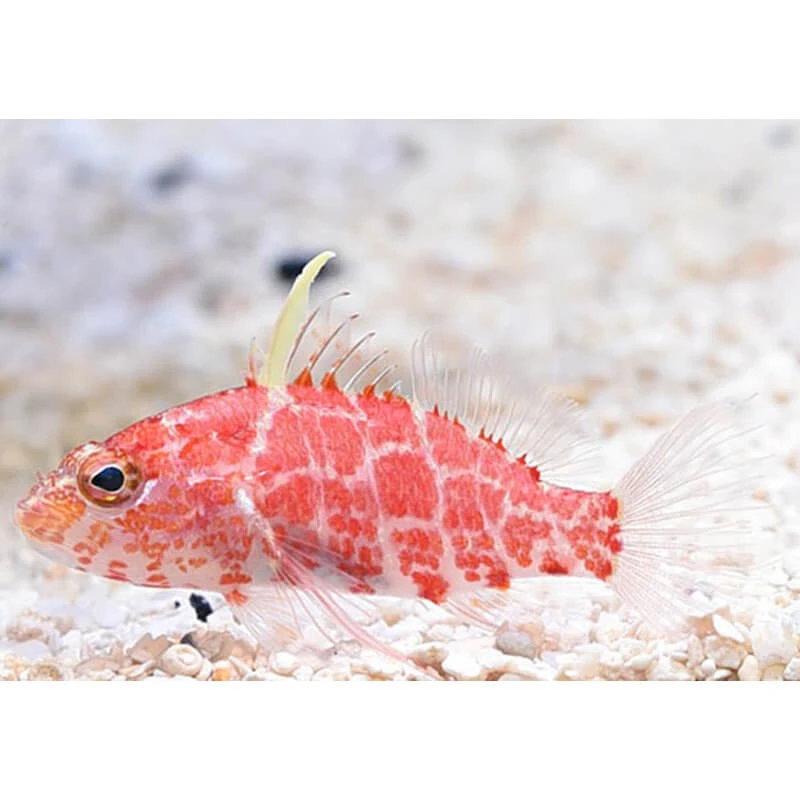
Few small fish in the reef hobby combine rarity, striking appearance, and fascinating behavior quite like the Geometric Pygmy Hawkfish (Plectranthias inermis). With its vivid pattern of red, orange, and white geometric markings and its characteristic perching behavior, this diminutive and sought-after species is a genuine prize for reef aquarists who appreciate the exceptional. At Dr. Reef Quarantined Fish, every Geometric Pygmy Hawkfish is carefully observed and confirmed eating before it ships to you.
A Rare Find in the Marine Hobby
The Geometric Pygmy Hawkfish is not a species commonly encountered in the marine trade. It inhabits deeper reef environments across the Indo-Pacific, where it lives among coral rubble, low-profile reef structures, and sheltered areas away from high-energy zones. Its preference for deeper water makes collection more difficult than for many commonly available species, and the relative scarcity of healthy, well-prepared specimens in the hobby makes sourcing one from a trusted quarantine operation particularly important. For aquarists who have been searching for something genuinely rare and visually exceptional, this species represents a meaningful find.
Appearance and Size
The Geometric Pygmy Hawkfish is immediately striking. The body is covered in a bold pattern of red to orange geometric blotches and spots on a pale white to cream background, creating a mosaic-like appearance that is unlike almost anything else available in the reef hobby. The fins carry similar patterning and the overall impression is of a fish that looks almost hand-painted. Adults are small, typically reaching only 2 to 3 inches in length, making them well suited to reef systems of moderate size where their intricate patterning can be appreciated up close.
Aquarium Requirements
The Geometric Pygmy Hawkfish is well suited to reef aquariums of 30 gallons and above, making it one of the more accessible species in terms of space requirements. It prefers a system with plenty of low-profile live rock, coral rubble, and open perching spots where it can rest and survey its surroundings in the characteristic hawkfish style. Strong water quality, stable parameters, and a mature biological filter are important, as this species originates from clean, clear reef environments and does not tolerate declining water conditions well. A secure lid is advisable, as small hawkfish can occasionally find their way out of open aquariums.
Feeding
The Geometric Pygmy Hawkfish is a carnivore that feeds on small crustaceans and zooplankton in the wild. In captivity it readily accepts a variety of meaty frozen foods once settled. Frozen mysis shrimp, copepods, and finely chopped marine seafood are excellent dietary staples. Target feeding near its preferred perching spots encourages a reliable feeding response and allows you to monitor intake closely. Offering small amounts multiple times per day suits the natural feeding style of this species and helps maintain its condition and coloration over time.
Temperament and Tank Compatibility
The Geometric Pygmy Hawkfish is generally peaceful toward fish that are not small enough to be considered prey. It may show aggression toward other small hawkfish or similarly shaped species, so it is best kept as the sole hawkfish in the system unless the aquarium is large enough to provide distinct territories. It is considered reef safe with caution, as it may occasionally pick at very small ornamental shrimp. It coexists well with corals and most larger invertebrates and is a compatible choice for a community reef system stocked with appropriately sized tank mates.
Why Buy from Dr. Reef
The rarity and value of the Geometric Pygmy Hawkfish make the source of purchase more important than it is for common, readily available species. At Dr. Reef Quarantined Fish, every Geometric Pygmy Hawkfish is carefully observed, held under stable conditions, and confirmed eating before being offered for sale. That preparation gives this exceptional and hard-to-find species the best possible start in your reef system and protects the investment you are making in a genuinely rare animal.