
Chocolate Tang for Sale: Why This Fish Changes Color Over Time

Chocolate Tang for Sale: Why This Fish Changes Color Over Time
$109.99 – $126.99 — Free Shipping on Orders Over $500
The Chocolate Tang is one of the more unusual fish in the surgeonfish family, and not just because of its coloration. It is also one of the few tangs that dramatically mimics other fish species as a juvenile before transitioning to its adult appearance. This behavioral adaptation makes it one of the most biologically interesting tangs available in the hobby today. Dr. Reef’s Quarantined Fish lists the Chocolate Tang starting at $109.99 on drreefsquarantinedfish.com under Saltwater Fish, category Tangs.
Confirmed Specifications
| Field | Details |
| Scientific Name | Acanthurus pyroferus |
| Common Names | Chocolate Tang, Brown Tang, Mimic Tang, Spotfin Tang |
| Care Level | Intermediate |
| Temperament | Peaceful; may show mild territorial behavior toward conspecifics |
| Diet | Herbivore — algae-based pellets, nori, spirulina, marine algae |
| Reef Compatible | Yes — completely reef safe |
| Max Adult Size | 6–8 inches |
| Water Temperature | 74–82°F |
| Salinity (sg) | 1.023–1.025 |
| pH | 8.1–8.4 |
| Minimum Tank Size | 125 gallons |
| Family | Acanthuridae |
| Quarantine Duration | 30–45 days at Dr. Reef’s Tulsa facility |
| Price | $109.99 – $126.99 — free shipping on orders over $500 |
What Is the Chocolate Tang?
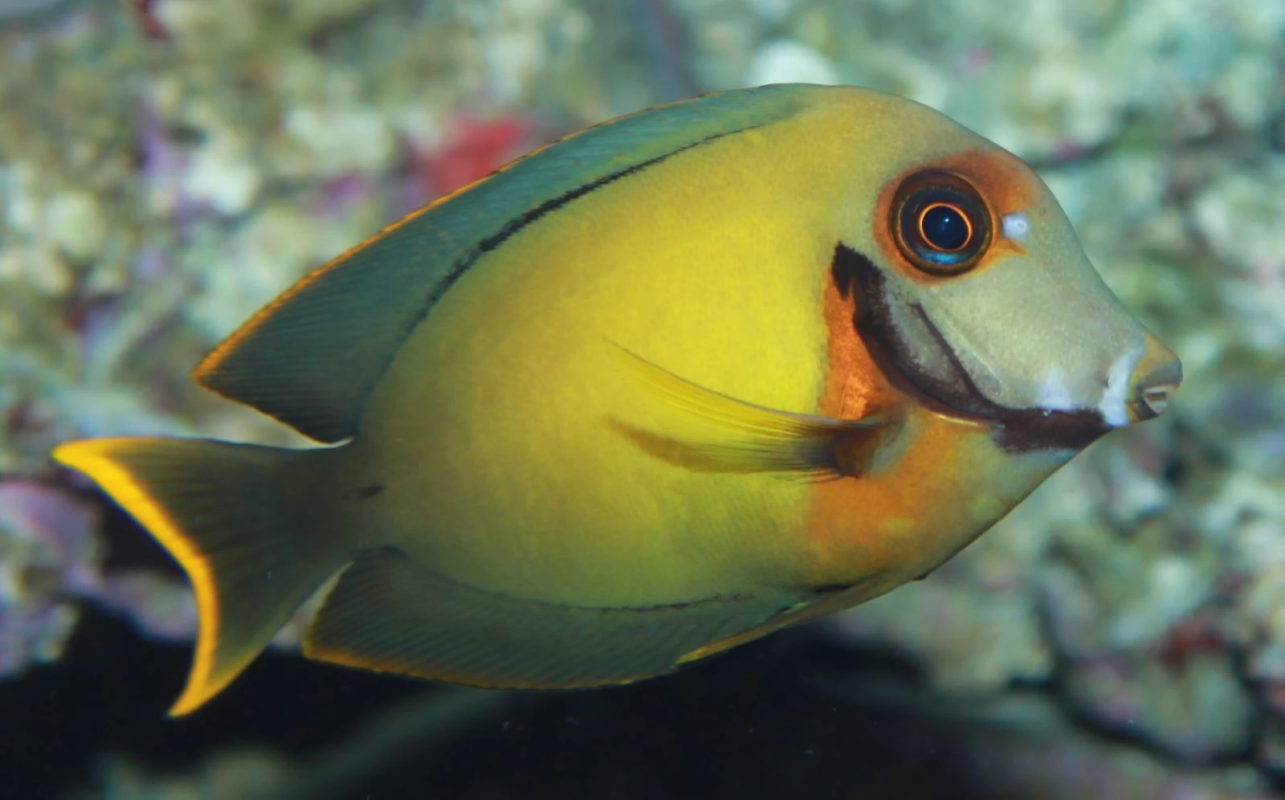
The Chocolate Tang is a reef-safe surgeonfish native to the Indo-Pacific, including the waters around the Great Barrier Reef, Indonesia, and the Philippines. Adults display a warm, rich brown body with subtle lighter markings along the lateral line and faint yellow edging on the fins. It is not a flashy fish. It is an understated one, and hobbyists who appreciate natural coloration over neon hues find it extremely appealing.
It belongs to the genus Acanthurus, which includes some of the most popular tangs in the hobby, including the Powder Blue and Achilles Tang. Compared to those more demanding species, the Chocolate Tang is notably more forgiving and accessible for intermediate hobbyists.
Why Does the Chocolate Tang Change Color Over Time?
This is the part that surprises most people when they first learn about it. Juvenile Chocolate Tangs do not look like their parents at all. They are mimics.
Young Acanthurus pyroferus closely resemble juvenile dwarf angelfish species. They mimic the coloration and body pattern of Centropyge flavissima (the Lemon Peel Angelfish) and, in different parts of their range, Centropyge vrolikii (the Halfblack Angelfish). The juvenile Chocolate Tang will closely match the orange and blue-ringed eye pattern of its model species, making it difficult to distinguish the two at first glance.
This mimicry serves a protective purpose. Dwarf angelfish are recognized and generally tolerated by other reef inhabitants because of their established territorial behavior. By impersonating them during a vulnerable juvenile stage, the young Chocolate Tang benefits from that social reputation without earning it.
As the fish matures, this coloration fades. The bright oranges and false angelfish patterning gradually transition into the warm, uniform brown of adult coloration. This change can take months and is a fascinating process to watch in your own tank.
Adult Coloration and How to Maintain It
Once the Chocolate Tang reaches adulthood, its coloration is driven primarily by diet, lighting, and stress levels. Here is what influences color intensity:
- Diet quality: An algae-heavy diet with spirulina, nori, and herbivore blends keeps the brown tones rich and even
- Lighting spectrum: Proper reef lighting enhances the subtle patterning that is often missed under poor lighting
- Stress levels: A Tang that is harassed by tankmates or kept in a crowded environment will show washed-out, pale coloration
- Water quality: Elevated nitrate or phosphate levels can cause color fading over time
Tank and Care Requirements
Water Parameters
- Temperature: 74–82°F (23–28°C)
- Salinity: 1.023–1.025 specific gravity
- pH: 8.1–8.4
- Ammonia and Nitrite: 0 ppm
- Nitrate: Below 20 ppm
- Alkalinity: 8–12 dKH
Tank Setup
Minimum tank size of 125 gallons is recommended for adult specimens. The Chocolate Tang is an active swimmer that needs open water space. Provide plenty of live rock for grazing surfaces and hiding spots, with open swimming lanes in the middle and upper water column. Moderate to strong water flow replicates the reef currents this species prefers.
Diet and Feeding
The Chocolate Tang is a dedicated herbivore and needs algae-based foods as the primary component of its diet. Feed two to three times daily. Recommended foods include:
- Algae-based pellets and spirulina flakes
- Nori sheets attached to a clip in the tank
- Frozen marine algae and phytoplankton
- Herbivore-formula frozen blends
A tang that does not receive adequate plant matter in its diet will develop head and lateral line erosion (HLLE) over time, a condition that creates pitting and discoloration around the head. This is entirely preventable with the right diet.
Tankmates and Compatibility
The Chocolate Tang is peaceful toward most fish species and an excellent community reef fish. It can generally be kept with:
- Gobies and blennies of any size
- Wrasses of moderate size
- Clownfish and other peaceful species
- Tangs of different genera in sufficiently large systems
Use caution with other Acanthurus tangs in smaller tanks, as mild territorial behavior can develop. Avoid housing with large, aggressive species like Sohal Tangs, which will dominate the tank.
Why Dr. Reef’s Quarantine Matters for Tangs
Tangs are among the most disease-susceptible fish in the hobby. They are particularly prone to marine ich (Cryptocaryon irritans) and marine velvet (Amyloodinium ocellatum) during transport and acclimation. A newly imported tang that goes straight from wholesaler to your display tank carries a significant disease risk, no matter how healthy it appears.
Dr. Reef’s holds every tang, including the Chocolate Tang, for 30 to 45 days in sterile quarantine tanks at the Tulsa facility. During that period the fish is observed for disease, conditioned to prepared aquarium foods, and confirmed eating before it is invoiced for shipping. Customers are not charged until the fish is ready to ship.
Shipping and Payment
Livestock ships via FedEx Priority Overnight from Tulsa, Oklahoma. Dispatch runs Tuesday through Thursday with Wednesday through Friday delivery. Free shipping on orders over $500. The Chocolate Tang at $109.99 to $126.99 qualifies for free shipping when combined with other livestock.
Contact Dr. Reef’s
- Phone: (918) 964-3333
- Email: support@drreefs.com
- Website
Frequently Asked Questions
Will the Chocolate Tang change color in my tank?
If you purchase a juvenile, yes. You will be able to observe the mimic coloration fade and the adult brown develop over a period of weeks to months. Adults purchased already in mature coloration will hold their color with a proper herbivore diet and stable water parameters.
Is the Chocolate Tang reef safe?
Yes. It is one of the cleanest reef-safe tangs in the hobby. It will not harm corals, clams, or ornamental invertebrates.
How does it behave with other tangs?
Peacefully in most cases. It is less aggressive than many other Acanthurus species. In tanks of 180 gallons or more, it can coexist with tangs of different genera without significant conflict.
What size tank does it actually need?
125 gallons is the practical minimum for a single adult. Larger is always better for long-term health and coloration.
The Bottom Line on the Chocolate Tang
The Chocolate Tang from Dr. Reef’s Quarantined Fish is one of the most biologically interesting tang species in the hobby, combining accessibility for intermediate keepers with a genuine natural history story that plays out live in your tank. From juvenile mimic to rich-brown adult, this fish earns its place in any serious reef system. At $109.99 to $126.99 with a 30 to 45 day quarantine protocol and confirmed feeding status, you are getting a fish that has already cleared the hardest part of the acclimation process before it even ships.
Order or inquire: drreefsquarantinedfish.com | (918) 964-3333 | support@drreefs.com