
Cherub Angelfish for Sale: Size, Personality, and Everything You Need to Know

Cherub Angelfish for Sale: Size, Personality, and Everything You Need to Know
Some fish earn their reputation through sheer size and spectacle. The Cherub Angelfish earns it in a completely different way. It is one of the smallest dwarf angels in the hobby, yet it carries enough personality, color, and attitude to hold its own in any discussion about standout reef fish. If you have been underestimating it because of its size, here is everything you need to know before buying one.
What Is the Cherub Angelfish?
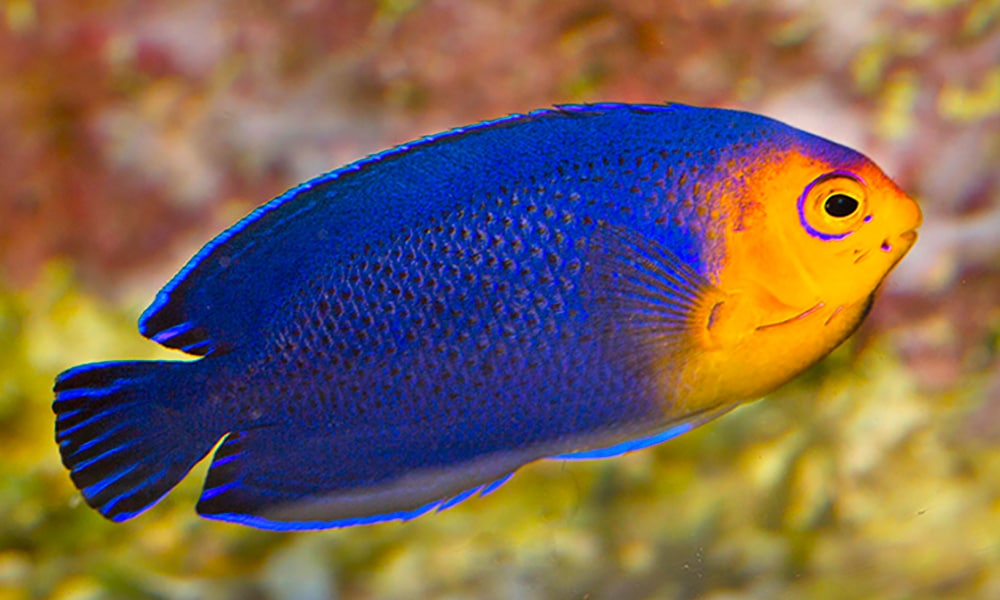
The Cherub Angelfish, known scientifically as Centropyge argi, is one of the smallest dwarf angelfish available in the saltwater hobby. It is also commonly called the Pygmy Angelfish. Adults typically reach just 3 inches in length, making it genuinely compact compared to most angelfish species. Native to the Western Atlantic and Caribbean, it features a deep blue body with vivid orange to yellow facial markings and fin accents that create a striking contrast, particularly under reef lighting. The whole package, tiny, colorful, and perpetually active, makes it a genuinely eye-catching fish despite its small footprint in the tank.
What Does the Cherub Angelfish Look Like?
Unlike larger marine angelfish that undergo dramatic juvenile-to-adult transformations, the Cherub Angelfish looks largely the same throughout its life. The deep blue body and the warm orange-yellow facial markings are present from an early stage and remain consistent as the fish matures. What develops over time is the intensity of the coloration. A well-fed, well-settled adult in a stable reef environment will display richer blues and more vivid facial accents than a recently arrived juvenile still adjusting to captivity.
How Big Does the Cherub Angelfish Get?
This is one of the most appealing facts about the species. Adults top out at around 3 inches. Occasionally, an exceptionally well-kept specimen will push slightly past that, but 3 inches is the reliable upper limit for this species. That small adult size is precisely what makes it viable for aquariums that could never support a larger angelfish.
Tank Size and Setup
One of the biggest practical advantages of the Cherub Angelfish is that it does not demand a large system.
Minimum Tank Size
A 30-gallon tank is workable for a single specimen. It gives the fish enough space to establish its territory and move freely without crowding. That said, 55 gallons is a more comfortable and recommended size, particularly if other fish are present.
Tank Setup
The setup matters considerably for this species. Providing ample live rock with caves, crevices, and natural hiding spots is not just about aesthetics. Cherub Angelfish naturally graze on microalgae and detritus that grow on rock surfaces throughout the day, so a well-established rockscape actively supports their nutritional needs. The more natural and layered the environment, the more settled, active, and visible the fish will be. A bare or sparse tank tends to produce a shy, stressed specimen. A properly aquascaped one produces a confident, constantly visible fish that works the rockwork all day long.
Is It Reef Safe?
Reef-safe with caution is the honest answer. The Cherub Angelfish may occasionally nip at coral polyps and clam mantles, but it is generally considered less destructive than most other Centropyge species. Many hobbyists keep them successfully in mixed reef tanks, and they tend to do particularly well in SPS-dominant setups where tempting soft coral polyps are less abundant.
The practical advice is to watch how your individual fish behaves in the first few weeks. Some specimens are model citizens that show no interest in coral. Others develop a nipping habit that requires intervention. Observing behavior during that initial period gives you an accurate, fish-specific answer rather than relying on a generalisation.
Feeding the Cherub Angelfish
What Does It Eat?
Cherub Angelfish are omnivores that require a varied diet, drawing from both plant and meaty food sources. Frozen foods such as mysis shrimp and vitamin-enriched brine shrimp, nori sheets, spirulina, and foods formulated with sponge material are all beneficial for long-term health and coloration. Variety is the operative word here. Feeding the same food repeatedly produces a less vibrant fish with a compromised immune response over time.
Compatibility and Temperament
Temperament With Other Fish
Toward most other species, the Cherub Angelfish is peaceful and manageable. Its aggression is directed primarily at fish it perceives as competitors for the same territory or food sources, particularly other small angelfish or dwarf angels. Tankmates that occupy different zones of the tank and eat different food types generally coexist without issue. Good companions from the saltwater fish collection include most basslets, cardinalfish, and clownfish, all of which occupy different ecological niches and are unlikely to trigger territorial behavior.
Can You Keep Two Cherub Angelfish Together?
Not recommended in most home aquariums, particularly smaller ones. Two individuals will compete persistently for territory, and the aggression rarely resolves itself into a stable hierarchy. Only attempt a pair in a large, heavily aquascaped system with abundant live rock where the fish can genuinely establish separate territories and avoid constant contact.
Why Quarantine Still Matters for a Hardy Fish
The Cherub Angelfish has a well-earned reputation for toughness. It is genuinely one of the more forgiving dwarf angels to keep, and its hardiness is a real advantage for hobbyists who are newer to the species. But hardy does not mean immune to parasites or to the stress-related illness that often develops during collection and transport. That post-collection adjustment window is the period when even tough fish are most vulnerable, and introducing an unquarantined specimen to an established tank during that window puts everything in the system at risk.
At Dr. Reef’s Quarantined Fish, Cherub Angelfish are carefully health-screened, confirmed free of parasites, and established on a feeding routine before they are ever offered for sale. That means the most vulnerable period is already behind the fish before it reaches your tank. You are not managing a stressed, freshly-collected specimen. You are introducing a fish that has already made the transition to captive life.
You can find the Pygmy Cherub Angelfish and the full dwarf angelfish collection at Dr. Reef’s Quarantined Fish, which also carries other popular dwarf species like the Flameback Angelfish, Rusty Angelfish, and Multicolor Angelfish, all quarantined and shipped overnight via UPS.
Quick Q and A
Q: Is the Cherub Angelfish reef safe?
A: Reef-safe with caution. It may occasionally nip at coral frags and clam mantles, but it is generally less destructive than most other Centropyge species. Observe behavior closely during the first few weeks to understand how your individual fish responds to corals.
Q: Can I keep two Cherub Angelfish together?
A: Not recommended in most home aquariums. Two individuals will compete aggressively for territory. Keep only one per tank unless your system is large and heavily aquascaped enough to support genuine separate territories.
Q: What do I feed a newly arrived Cherub Angelfish?
A: Start with frozen mysis shrimp and spirulina-enriched foods. Give the fish two to three days to settle before expecting consistent feeding responses, and ensure there is established live rock in the tank for natural grazing between feedings.
Q: Is the Cherub Angelfish suitable for beginners?
A: Yes. It is considered one of the most beginner-friendly dwarf angels available, combining manageable size, relative hardiness, and a peaceful temperament toward most tankmates. The main rule to observe is one per tank.
Make Your Cherub Angelfish Thrive
The Cherub Angelfish is one of those species that rewards the hobbyist who gives it the right environment from the start. A well-aquascaped tank with quality live rock, a varied feeding routine using frozen foods and nori, and a quarantined specimen from a reputable source are the three elements that determine whether this fish thrives or merely survives. Get those right, and you will have an active, vivid, personality-filled fish that makes its presence felt every single day despite being only 3 inches long. Shop the Cherub Angelfish at Dr. Reef’s Quarantined Fish and start with a healthy, professionally quarantined specimen from day one.