
Canary Blenny Care: Diet, Tank Setup, and Personality Traits

Canary Blenny Care: Diet, Tank Setup, and Personality Traits
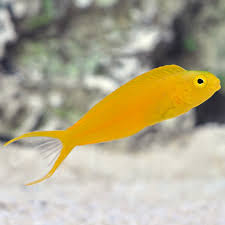
If you are looking for a saltwater fish that combines striking color with a bold personality, the Canary Blenny (Meiacanthus oualanensis) is a species worth serious consideration. Solid, bright yellow from nose to tail, this small Indo-Pacific fish is reef safe, relatively hardy, and endlessly entertaining to watch. Here is a complete care guide to help you keep one thriving.
What Is the Canary Blenny?
The Canary Blenny is also known as the Canary Fang Blenny or Oualan Forktail Blenny. It is native to the shallow lagoons and reef environments of the Western Pacific including Fiji, Tonga and the Solomon Islands. Adults typically reach 4 to 5 inches in length and are easily identified by their uniform bright yellow coloration and elegant forked tail. Males tend to be slightly larger than females and may undergo color changes during breeding.
One of the most unique traits of this species is that it belongs to the Meiacanthus genus, a group of blennies that possess small venomous fangs in the lower jaw. These fangs are used purely as a defensive tool when the fish is threatened or swallowed by a predator. The venom is not dangerous to humans but delivers a painful sting similar to a bee or wasp bite. For this reason hand feeding is strongly discouraged and care should be taken during tank maintenance.
Tank Setup for the Canary Blenny
The Canary Blenny requires a minimum tank size of 30 gallons though larger systems are always better for stability and swimming space. The aquarium should be well established with plenty of live rock for the fish to perch on, graze from and retreat into when it feels threatened. Unlike many other blenny species that spend most of their time sitting on the substrate, the Canary Blenny is an active mid-water swimmer that hovers in the current and darts through the water column throughout the day.
A tight-fitting lid is essential. These fish are known jumpers and can exit an open tank very quickly if startled. Moderate water flow is ideal and standard reef water parameters apply: temperature 72 to 78°F, specific gravity 1.020 to 1.025, pH 8.1 to 8.4.
It is best to keep only one Canary Blenny per tank unless you have a confirmed mated pair. They can become territorial toward fish of similar shape, size and color such as other blennies, gobies and dartfish. With dissimilar tankmates including clownfish, chromis, peaceful wrasses and royal grammas they are generally calm and compatible.
Diet and Feeding
The Canary Blenny is an omnivore that in the wild feeds primarily on zooplankton drifting through the water column. The aquarium offers a varied diet of mysis shrimp, vitamin-enriched brine shrimp, copepods, amphipods, finely chopped krill and high-quality marine pellets or flakes formulated for carnivores and omnivores. Spirulina-based and herbivore foods should also be offered regularly as part of a balanced diet. Feed two to three times per day in small amounts to match their high metabolisms. A mature tank with abundant live rock helps provide natural feeding opportunities between scheduled feedings.
Personality Traits
The Canary Blenny is one of the most personable fish in the saltwater hobby. Unlike many shy or reclusive blennies, this species is bold and self-assured. It regularly swims out in the open and will often position itself where it can observe activity outside the tank. Many hobbyists report that their Canary Blenny quickly learns to recognize feeding time and will swim actively at the front of the glass in anticipation.
Its confidence comes largely from its venomous defense mechanism. In the wild other fish learn very quickly to leave Canary Blennies alone. Even certain non-venomous species have evolved to mimic the Canary Blenny’s coloration as a form of protection.
If you are sourcing a Canary Blenny, Dr. Reef’s Quarantined Fish ensures every specimen is quarantined before sale so you receive a healthy fish that is already acclimated to aquarium foods and free from common parasites