
Blue Face Angelfish for Sale: Care Requirements, Diet, and Tank Size Guide

Blue Face Angelfish for Sale: Care Requirements, Diet, and Tank Size Guide
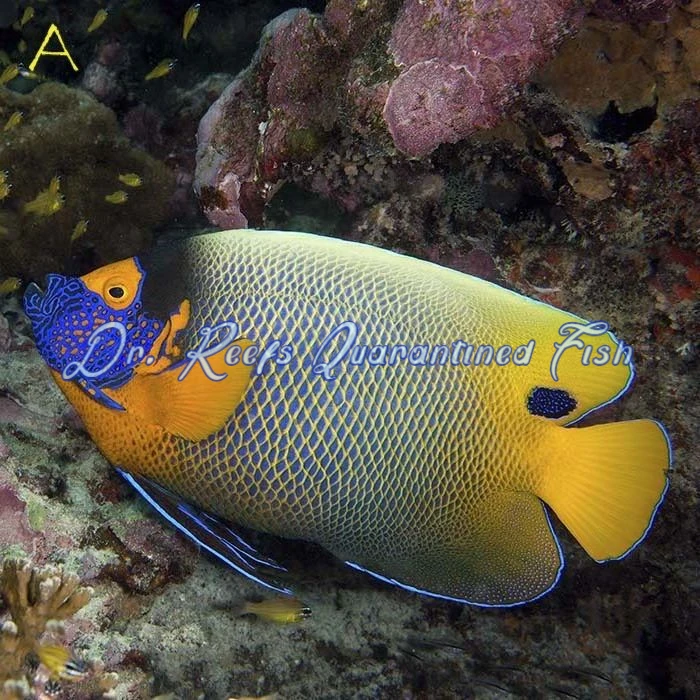
There are fish that make a reef tank look impressive. And then there are fish that make a reef tank look absolutely breathtaking. The Blue Face Angelfish belongs firmly in the second category. With one of the most stunning color patterns in the entire ocean, this is a fish that commands attention the moment it enters a room. Grand, graceful, and genuinely awe-inspiring, the Blue Face Angelfish is the kind of centerpiece fish that serious reef keepers dream about. Dr. Reef’s Quarantined Fish has healthy, quarantined Blue Face Angelfish available right now. Here is your complete care guide.
What Is a Blue Face Angelfish?
The Blue Face Angelfish, known scientifically as Pomacanthus xanthometopon, is a large marine angelfish found across the Indo-Pacific region from the Maldives to Vanuatu. It is also commonly called the Yellow Face Angelfish or the Yellowface Angelfish, though the vivid blue mask that covers the face of adult specimens makes the Blue Face name far more fitting and far more memorable.
Adult Blue Face Angelfish are genuinely spectacular. The body is a mosaic of blue and yellow scales that create an intricate, almost iridescent pattern. The face is covered in a rich blue mask edged with yellow, and the dorsal fin extends into a flowing, elegant point. Adults grow to about 15 inches in length in the wild, and aquarium specimens regularly reach 12 inches or more with proper care. This is not a small fish, and everything about its care needs to reflect that.
Juvenile Blue Face Angelfish look completely different from the adults. They display the classic Pomacanthus juvenile pattern of white and blue curved stripes on a dark body. This juvenile coloration serves as a signal to adult fish that they are not a competition or a threat. As the fish matures over a period of one to two years, it transitions through intermediate coloration phases before arriving at the full adult pattern. Watching this transformation happen in a home aquarium is one of the most rewarding long-term experiences in the hobby.
Tank Size Requirements
This is the most important starting point for anyone considering a Blue Face Angelfish. This fish needs space. A lot of it. A minimum tank size of 180 gallons is recommended for a single adult specimen, and larger is always better. A tank that is too small for this fish does not just limit its growth. It creates chronic stress that suppresses the immune system, dulls the coloration, and shortens the lifespan significantly.
The tank should be long rather than tall to give the fish room to swim freely in the open water column. Blue Face Angelfish are active swimmers that cover a large territory in the wild, and they need the physical space in captivity to express that natural behavior.
Beyond size, the tank needs a mature, stable biological system. This is not a fish for a new setup. A tank that has been running for at least six months to a year with established biological filtration, consistent water parameters, and a healthy microbial community gives the Blue Face Angelfish the stable foundation it needs to thrive.
Maintain water temperature between 72 and 78 degrees Fahrenheit, salinity at 1.025, pH between 8.1 and 8.4, and keep nitrates as low as possible through regular water changes and efficient nutrient export. Excellent water quality is absolutely non-negotiable with this species.
Diet and Feeding
The Blue Face Angelfish is an omnivore with a diet that in the wild includes sponges, tunicates, algae, and various small invertebrates. In captivity, diet variety is one of the most important factors in keeping this fish healthy and maintaining the vibrancy of its coloration.
A high-quality angelfish-specific frozen food should form the backbone of the diet. These foods are formulated to include sponge material, which is a critical nutritional component for large Pomacanthus angels. Without adequate sponge in the diet, large angelfish can develop nutritional deficiencies over time that manifest as color fading and increased disease susceptibility.
Supplement the frozen diet with a variety of additional foods, including mysis shrimp, brine shrimp, nori sheets, spirulina-based foods, and high-quality marine pellets. Feeding variety twice daily keeps the fish engaged, well-nourished, and displaying its best possible coloration.
A fish that is eating well and receiving a nutritionally complete diet will show rich, saturated color throughout the body and maintain the striking intensity of the blue facial mask that makes this species so desirable.
Reef Compatibility
The Blue Face Angelfish is generally considered reef safe with caution. That phrase requires explanation because it means different things to different fish. In the case of the Blue Face Angelfish, the risk is primarily to large polyp stony corals, clam mantles, and soft corals. Individual fish vary considerably in their tendency to nip at corals. Some specimens live peacefully in mixed reef systems for years without touching a coral. Others develop a persistent nipping habit that is difficult to eliminate.
The risk increases when the fish is underfed or not receiving adequate sponge material in its diet. A well-fed Blue Face Angelfish with a nutritionally complete diet is far less likely to graze on corals out of nutritional need.
Hard corals like Acropora and Montipora are generally at lower risk than soft corals and large polyp stony corals. If a mixed reef is the goal, introducing the fish as a juvenile and providing exceptional nutrition from the beginning gives the best chance of a peaceful reef coexistence.
The Blue Face Angelfish does best as the single large angelfish in a tank. It can show significant aggression toward other large angelfish, particularly members of the same genus. With other non-angelfish species of appropriate size, it is typically non-aggressive and coexists without issue.
Why Buy Your Blue Face Angelfish from Dr. Reef?
Large, premium angelfish are a significant investment. The last thing any serious reef keeper wants is to invest in a fish that arrives stressed, refuses food, or carries disease into an established system. Dr. Reef solves this problem directly.
Every Blue Face Angelfish at Dr. Reef goes through a thorough quarantine and observation period before it is ever listed for sale. Each fish is confirmed to be eating, observed for any signs of health issues, and given the time it needs to recover fully from the stress of collection and transport. When your Blue Face Angelfish arrives from Dr. Reef, it is in peak condition and ready to begin its life in your aquarium from a position of health and stability.
That level of preparation is what makes Dr. Reef the right source for a fish of this significance.