
Australian Stripey Fish for Sale: Care Guide, Diet, and Aquarium Compatibility

Australian Stripey Fish for Sale: Care Guide, Diet, and Aquarium Compatibility
Looking for Australian Stripey fish for sale? Discover the full care guide, feeding tips, tank size requirements, and compatibility details for Microcanthus strigatus at $195.99 from Dr. Reef’s Quarantined Fish.
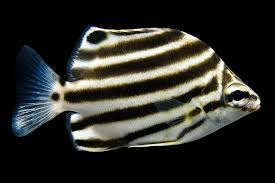
Some fish blend into the background. The Australian Stripey does the exact opposite. The moment a small school of these bold black and yellow striped fish moves through the water column together, your entire aquarium becomes something different. Something alive with energy, contrast, and the kind of natural schooling behavior that most hobbyists only see in nature documentaries.
The Australian Stripey is one of the most underrated and hardest-to-find fish in the saltwater hobby. It is rare in the trade, full of personality, genuinely peaceful, and easy to care for. Dr. Reef’s Quarantined Fish has one available right now at $195.99, quarantined and confirmed healthy before it ships to your door.
If you have been wondering whether this fish is the right fit for your tank, this guide answers every question you have.
What Is the Australian Stripey?
The Species Behind the Name
The Australian Stripey carries the scientific name Microcanthus strigatus. The genus name breaks down from Greek with micro meaning small and canthus referring to an angle or corner, a nod to the angular, slanting nature of the fish’s bold stripe pattern. It belongs to the family Kyphosidae, commonly known as Sea Chubs, though it is frequently and incorrectly grouped with Butterflyfish in stores and online catalogs because of its similar disc-like body shape and bold patterning.
It is also known in some regions as the Footballer Fish, the Convict Fish, and the Stripey. The first two nicknames reference the bold black and yellow banding that covers the body in distinctly diagonal lines from head to tail, a pattern that is unmistakable and genuinely striking under aquarium lighting.
Where It Comes From
This species lives across a wide range of the Indo-Pacific and Western Pacific. Its natural range includes the coastal and lagoon reefs of Australia, Japan, China, Hawaii, New Caledonia, and surrounding island groups. It inhabits rocky reef environments, sheltered coastal waters, and estuarine areas where it naturally forms dense schools during the day, moving together through the water column and foraging across rocky and coral-covered surfaces.
Appearance and Size
The body of the Australian Stripey is deep and laterally compressed, meaning it is wide when viewed from the front and narrow from the side. This disc-like shape combined with the bold diagonal black and yellow stripes running from the dorsal region down toward the belly creates the visual impression of a fish moving at a constant angle even when it is swimming straight. Maximum adult size reaches around six inches, making it a mid-sized marine fish that fits comfortably into larger community tank setups.
Care Guide
Experience Level and General Difficulty
The Australian Stripey is considered easy to care for. It adapts well to aquarium life, accepts a wide variety of prepared foods without difficulty, and does not demand the kind of highly specific water chemistry that more sensitive marine species require. Both newer hobbyists with some saltwater experience and advanced reef keepers can keep this fish successfully as long as the tank setup meets its basic needs.
Tank Size Requirements
Minimum Tank Size
A minimum tank size of 120 gallons is the widely accepted standard for housing Australian Stripeys properly. This is not a small tank recommendation and it exists for a good reason. The Australian Stripey is an active, fast-moving schooling fish. It needs horizontal swimming space to move naturally, establish its daily patrol routes, and behave the way it does in the wild.
Why Larger Is Always Better
In smaller tanks, this fish becomes cramped, potentially stressed, and may show behavior that does not reflect its naturally peaceful temperament. A 120 to 180-gallon tank or larger gives this fish the open water it needs to move with confidence. Longer tanks with a substantial horizontal footprint suit this species far better than tall, narrow systems with the same water volume.
Tank Decoration and Structure
Provide scattered rockwork and reef structures throughout the tank that create shelter zones without blocking large areas of open swimming space. The Australian Stripey uses rockwork for refuge when startled but spends most of its active time in open water. A good balance of structure and open swimming lanes is the target. Fine substrate is preferred but not critical for this species since it is not a bottom dweller by nature.
Water Parameters
Temperature and Salinity
The Australian Stripey is a subtropical and tropical species comfortable in a temperature range of 72 to 78 degrees Fahrenheit. Salinity should stay between 1.020 and 1.025 specific gravity. These parameters overlap comfortably with most standard saltwater fish-only and FOWLR setups.
pH and Alkalinity
Maintain pH between 8.1 and 8.4 and alkalinity between 8 and 12 dKH. Stable water parameters are more important than hitting any single specific number. Fluctuations in pH or salinity create stress that affects feeding behavior and immune function over time. Consistent weekly water changes and reliable filtration keep those numbers stable with minimal effort.
Diet
What the Australian Stripey Eats
The Australian Stripey is an omnivore with a genuinely broad diet that makes feeding straightforward. In the wild it grazes on small crustaceans, zooplankton, macroalgae, and microalgae found across rocky reef surfaces. In the aquarium it mirrors that varied approach and accepts a wide range of prepared and frozen foods without the stubborn refusals that some marine species are known for.
What To Feed in the Aquarium
Frozen Foods
Frozen mysis shrimp and frozen brine shrimp enriched with vitamins make up the protein side of its diet and should be offered regularly. The vitamin enrichment matters. Plain frozen brine shrimp offers limited nutritional value on its own but serves as a useful vehicle for delivering nutrients when enriched before feeding.
Algae-Based Foods
Dried seaweed sheets, spirulina-based flakes or pellets, and algae wafers round out the plant-based side of the diet. The Australian Stripey naturally grazes on algae in the wild and providing regular access to algae-based foods keeps the diet balanced and supports long-term health.
Prepared and Flake Foods
High quality marine flake and pellet foods designed for omnivorous marine fish are accepted readily by this species. Rotating between flake, pellet, and frozen foods throughout the week provides nutritional variety that keeps the fish in peak condition over the long term.
Feeding Frequency
Feed two to three times per day in small amounts that the fish consume within a few minutes. Remove any uneaten food promptly to prevent it from breaking down in the water column and degrading water quality.
The Aiptasia Connection
One of the most talked-about and genuinely useful behaviors of the Australian Stripey is its appetite for Aiptasia. Aiptasia, also called glass anemones, is one of the most stubborn and difficult pest invertebrates in the reef hobby. These fast-spreading anemones sting corals, reproduce quickly, and are notoriously difficult to eliminate once established. The Australian Stripey, particularly younger specimens, will actively hunt and consume Aiptasia in the aquarium. That pest control behavior is a real and practical benefit that makes this fish attractive to hobbyists dealing with an Aiptasia problem in their system.
Aquarium Compatibility
Temperament and Community Behavior
The Australian Stripey is a non-aggressive, peaceful fish that coexists well with other non-aggressive saltwater species. It does not show territorial behavior toward other species, does not bully smaller tank mates, and does not compete aggressively for food in a way that disadvantages slower eating fish. In a properly stocked community tank this species adds active mid-water movement and visual contrast without introducing any behavioral problems.
Best Tank Mates
The Australian Stripey does well alongside other peaceful marine community fish of similar or larger size. Tangs, larger wrasse species, anthias, chromis, and similarly non-aggressive fish all make suitable companions. The key factor is tank size. In a 120 to 180-gallon or larger system, this fish integrates smoothly into a diverse community. In smaller setups the combination of its active swimming style and limited space creates the potential for stress across the entire tank population.
Keeping Groups Together
This fish is a natural schooler and it genuinely benefits from being kept in a group rather than as a solitary specimen. A group of three to five Australian Stripeys in a sufficiently large tank displays natural schooling behavior, moves through the water column together, and creates the kind of dynamic open-water activity that makes a large marine tank look truly alive. Solitary specimens do survive but tend to be more nervous and less visually active than those kept with companions of their own species.
Reef Compatibility
The honest answer on reef compatibility is that the Australian Stripey is best described as reef safe with caution. In a tank with only SPS corals and hard encrusting species it can often be kept without incident. However this fish may pick at the polyps of large polyp stony corals and some soft coral species, particularly when it is hungry or bored. Any tank housing this fish with LPS corals or soft corals should be monitored closely during the first weeks after introduction to determine whether the individual specimen shows any nipping behavior. Consistent and adequate feeding reduces opportunistic coral nipping significantly.
Questions and Answers
Q: Is the Australian Stripey hard to find?
Yes. This species is genuinely rare in the aquarium trade. Most hobbyists encounter it infrequently even when actively looking. Dr. Reef’s Quarantined Fish carries it at $195.99 as a quarantined, healthy specimen ready to ship, which makes it one of the most accessible and trustworthy sources for this hard-to-find fish.
Q: Can I keep just one Australian Stripey?
You can, but it will not display its most natural and visually rewarding behavior as a solo fish. This is a schooling species that thrives with companions of its own kind. A group of three to five in a 120-gallon or larger system gives you the schooling behavior that makes this fish genuinely special to watch.
Q: Will the Australian Stripey eat my coral?
It is reef safe with caution. It tends to do fine in tanks with SPS corals and does not typically bother encrusting species. It may pick at LPS and soft coral polyps, especially if underfed. Consistent feeding reduces that risk. Monitor closely after introduction if your tank contains LPS or soft corals.
Q: Will this fish really eat Aiptasia?
Yes, particularly younger specimens. The Australian Stripey has a documented appetite for Aiptasia glass anemones and is used by hobbyists as a natural pest control option for tanks dealing with established Aiptasia problems. It is not a guaranteed complete solution but it is a real and practical benefit.
Q: What do I feed an Australian Stripey?
Frozen mysis shrimp, enriched frozen brine shrimp, spirulina-based flakes, dried seaweed sheets, and quality marine pellet foods all work well. Rotate through a variety of these foods throughout the week to provide the nutritional balance this omnivore needs for long-term health.
Q: Why buy from Dr. Reef’s Quarantined Fish?
Because every fish sold through Dr. Reef’s goes through a full quarantine and observation period before shipping. This species is already rare in the hobby. Buying a quarantined specimen means you are getting a fish that has been observed, confirmed eating, and cleared of health issues before it ever reaches your tank. That process protects the fish and protects the system it is entering.
Add the Australian Stripey to Your Tank Today
The Australian Stripey is the kind of fish that experienced hobbyists search for specifically and beginners discover by accident and immediately fall in love with. Its bold striped coloration, active schooling behavior, peaceful temperament, and useful appetite for Aiptasia make it one of the most well-rounded and visually rewarding additions available in the saltwater hobby.
At $195.99 from Dr. Reef’s Quarantined Fish, you are getting a rare, hard-to-find species that has been quarantined, confirmed healthy, and prepared by people who genuinely care about what happens in your tank after the box arrives.
Visit Dr. Reef’s Quarantined Fish today and add the Australian Stripey your tank has been missing.