
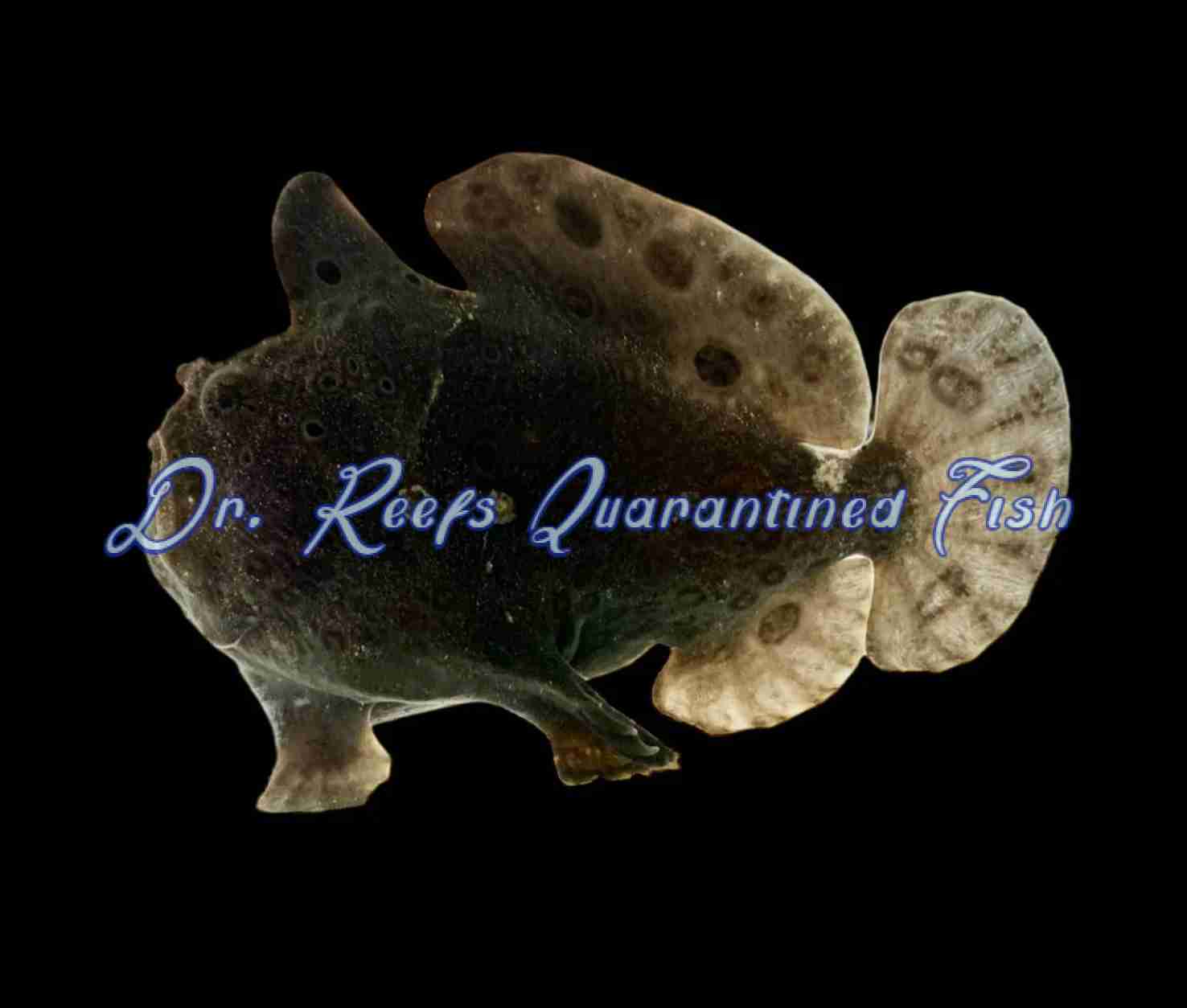

Black Angler
$129.99
Antennarius sp.
| Care Level | Moderate |
| Temperament | Semi Aggressive |
| Color Form | Black |
| Diet | Carnivore |
| Reef Compatible | No |
| Water Conditions | 72–78°F (22–26°C), Sg: 1.023–1.025, pH: 8.1–8.4, dKH: 8–12 |
| Max Size | 5″ |
| Minimum Tank Size | 50 gallons |
Approximate Purchase Size: Small: 1-2.5″; Medium: 2.5-3.75″; Large: 3.75-4.5″
Description
Setting Up a Shadow Tank: A Guide to Keeping the Black Anglerfish
The Black Anglerfish (Antennarius commersoni or Antennarius sp.), also known in the hobby as the Black Frogfish, is one of the most bizarre and rewarding predators you can keep in a marine aquarium. Rather than swimming dynamically, this ambush hunter spends its days mimicking a piece of volcanic rock or sponge, waiting to swallow prey whole. While they are fascinating to watch, their predatory nature and sedentary lifestyle mean they require a highly specialized aquarium setup.
┌────────────────────────────────────────────────────────┐
│               BLACK ANGLER TANK CHECKLIST              │
├───────────────────┬────────────────────────────────────┤
│ Tank Size         │ 30+ Gallons (Species-Only)         │
│ Water Flow        │ Low to Moderate                    │
│ Rockwork          │ Sturdy, cave-heavy scaping         │
│ Reef Safe?        │ Coral safe, NOT invertebrate safe  │
│ Diet              │ Live ghost shrimp / feeder fish    │
└───────────────────┴────────────────────────────────────┘
1. Tank Size and Environmental Design
Despite their potential to grow up to 8–10 inches depending on the exact species, Black Anglers are incredibly inactive. Because they rarely swim, a single specimen can comfortably thrive in a 30-gallon tank.
When designing the aquascape, keep the following in mind:
-
- Sturdy Rockwork: Provide plenty of live rock with flat ledges, caves, and overhangs. Anglers use their modified pectoral fins like hands to perch and secure themselves.
- Low to Moderate Flow: These fish are poor swimmers. Heavy powerheads will blow them around the tank, causing chronic stress.
- The Color-Shifting Trick: While your angler may start out jet-black, they possess a limited ability to slowly shift colors over several weeks to match their environment. If you want them to stay dark, use darker rocks, or provide colorful sponges if you want to see if they adapt.
2. Tank Mates: The “Species-Only” Rule
The single most important rule of keeping a Black Angler is that they must be kept alone. They possess an incredibly expandable stomach and a mouth that can stretch wide enough to swallow tank mates equal to or larger than their own body size.
-
- Fish: Clowns, tangs, and wrasses will eventually be viewed as food. Even larger fish run the risk of being attacked, which can result in both fish dying if the angler chokes.
- Invertebrates: Cleaners like peppermint or skunk shrimp will be eaten immediately. However, large, heavy-shelled snails and hermit crabs are generally safe and can serve as your clean-up crew.
- Corals: Anglers are completely reef-safe regarding corals. They will not eat or nip at them, though their heavy bodies may occasionally lounge on top of delicate soft corals.
3. Feeding and Nutrition
Feeding an anglerfish is both the most thrilling and challenging part of their care. They are strict carnivores that rely on live food when first introduced to a home aquarium.
-
- The Hunt: The angler will deploy its illium (fishing rod) and wiggle its esca (lure) to draw feeder shrimp or fish close before creating a vacuum with its mouth to inhale the prey in milliseconds.
- The Diet: Start by offering live, gut-loaded ghost shrimp or small feeder fish. Over time, you can use a long acrylic feeding stick to wiggle pieces of frozen silversides, squid, or krill to transition them to frozen foods.
- The Danger of Overfeeding: In the wild, meals are sporadic. In a home tank, overfeeding is a common cause of death. Their metabolism is incredibly slow. A large meal can sit in their stomach and rot before it digests, releasing lethal toxins. Feed your angler only 1 to 2 times a week.
4. Water Quality and Filtration
Because anglers eat massive, infrequent meals, they produce heavy biological waste loads all at once. Ensure your tank is equipped with an oversized filtration system or a high-quality protein skimmer to handle the sudden ammonia spikes. Regular weekly water changes are highly recommended to keep nitrates at bay.
Reviews (0)
You must be logged in to post a review.
Shipping & Delivery
Reviews
There are no reviews yet.