
Wasp Fish for Sale: The Rare Predator That Blends Into Any Aquarium

Wasp Fish for Sale: The Rare Predator That Blends Into Any Aquarium
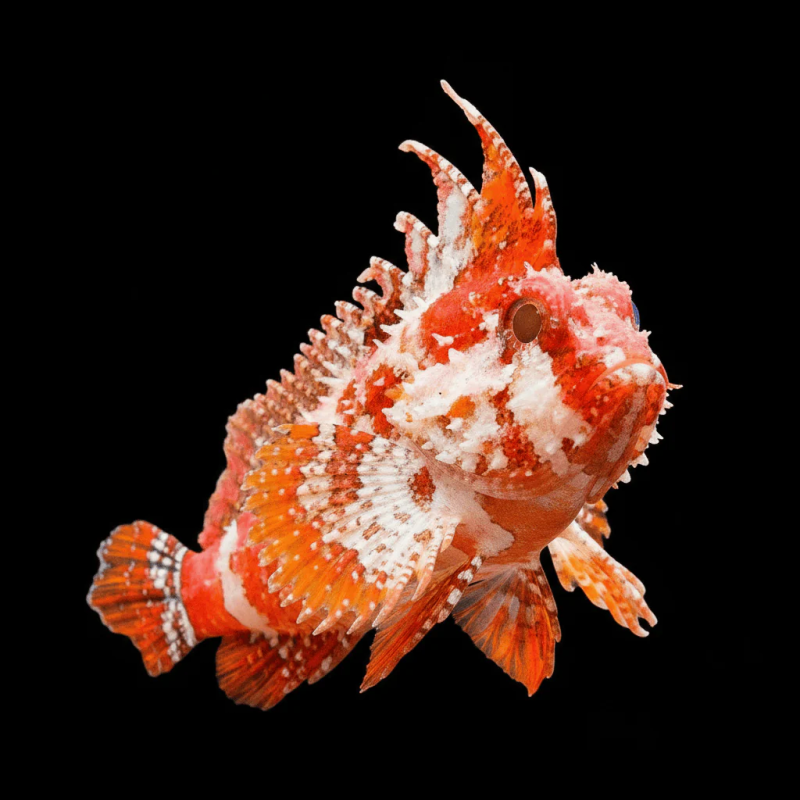
Most fish in the hobby want to be seen. They dart through open water, flash color under reef lighting, and compete for your attention at feeding time. The Pygmy Red Rooster Waspfish does the exact opposite. It finds a spot on the rockwork, settles in, and disappears. And that is precisely what makes it one of the most fascinating fish any experienced hobbyist can own.
If you have been searching for a Wasp Fish for sale from a source that actually knows how to prepare this species properly, Dr. Reef’s Quarantined Fish has the Pygmy Red Rooster Waspfish available at $129.99, fully quarantined and feeding-assessed before it ever ships to your door.
What Is the Pygmy Red Rooster Waspfish?
The Pygmy Red Rooster Waspfish (Hypodytes rubripinnis) is a member of the family Tetrarogidae, a group of venomous ambush predators native to the Indo-Pacific. It is found along coral reefs, rubble zones, and sandy bottoms from Indonesia through the Philippines and into Papua New Guinea, at depths ranging from about 10 to 100 feet. In the wild, it sits completely still on the substrate, relying on near-perfect camouflage to hunt. Nothing comes to find it. It waits for prey to come close enough to strike.
It also goes by the names Cockatoo Waspfish, Rooster Scorpionfish, and Pygmy Waspfish. Whatever you call it, the appearance is unlike anything else available in the hobby. The body is covered in highly variable cryptic coloration, shifting between shades of red, brown, orange, white, and mottled combinations that allow each individual to blend almost perfectly into its surroundings. The most striking feature is a set of elaborate fin extensions on the head that look genuinely like a rooster’s comb. Adults reach around three to four inches, making this a compact species that does not need a massive tank to thrive.
The Art of Disappearing
The camouflage ability of the Waspfish is not just a novelty. It is the entire foundation of how this fish lives. Once it settles onto a piece of live rock or rubble in your aquarium, it may become nearly invisible to anyone who does not know exactly where to look. Guests who see the tank will often walk right past it. Then it moves, and suddenly everyone in the room is paying attention.
What makes observing this fish so rewarding is watching its natural hunting behavior play out in a tank setting. It perches motionless, sometimes for hours at a time, and then makes a sudden explosive strike when a food item passes close enough. That whole sequence, the stillness, the patience, the precision of the strike is genuinely captivating to watch. It is the kind of fish that changes how you think about what an aquarium can be.
Tank Setup and Compatibility
The Pygmy Red Rooster Waspfish does not need a large system. A minimum of 30 gallons works for a single specimen, with 40 gallons or more being the more comfortable choice. The tank should have rockwork with plenty of perching spots, a sandy or rubble substrate, and moderate to subdued lighting. Low to moderate water flow keeps the fish comfortable. A secure lid is recommended since the species can be startled into jumping.
Water parameters should stay stable at 74 to 80 degrees Fahrenheit, salinity of 1.023 to 1.025, and a pH of 8.1 to 8.4. This fish is best suited for a fish-only with live rock system rather than a full reef setup. It will consume small fish and mobile invertebrates, so tankmates need to be carefully chosen. Fish six inches or larger that are not aggressive toward a slow-moving bottom dweller are the safest pairing. Species like lionfish, larger groupers, and eels can work in the right setup. Any fish small enough to fit in its mouth is at risk, and ornamental shrimp should not be kept with it. Consult Dr. Reef’s compatibility chart when planning your stocking list.
Feeding: The Most Important Thing to Get Right
Feeding is where the Waspfish becomes genuinely challenging, and it is also where the quarantine process at Dr. Reef’s makes the single biggest difference. In the wild, this fish hunts live prey exclusively. In captivity, most specimens will only accept live food initially, including live ghost shrimp, live grass shrimp, and live feeder fish. Weaning onto frozen foods is possible but requires significant patience, and many individuals require live foods throughout their lives.
The quarantine protocol at Dr. Reef’s for this species includes a minimum six to eight weeks of observation, with extended time devoted specifically to feeding assessment and establishment. A specimen that is not reliably feeding does not ship. That single requirement filters out the main reason Waspfish fail in home aquariums: arriving before they have learned to eat in a captive environment.
For ongoing feeding, using a feeding stick to present food directly in front of the fish is far more effective than hoping it will chase food across the tank. Feeding two to three times per week once a routine is established is generally sufficient. Any uneaten live food should be removed promptly to avoid stressing the fish or fouling the water.
An Important Safety Note
The Pygmy Red Rooster Waspfish is a venomous species. Its dorsal, pelvic, and anal spines can deliver a sting that causes intense pain, swelling, and in some cases allergic reactions. Direct handling should never happen. All tank maintenance should be done with tools rather than bare hands, and anyone else who has access to the tank needs to know a venomous fish is present. Medical attention should be sought immediately if a sting occurs. This is not a fish for households with young children who might reach into the tank unsupervised.
That said, a properly set-up system where good maintenance habits are already in place handles this requirement without difficulty. Experienced hobbyists who already work carefully around their tanks will find it an easy adjustment. For another venomous species with similar care considerations, Dr. Reef’s blog on the Dwarf Lionfish is worth reading as a useful comparison.
Pricing, Shipping, and What Comes Next
The Pygmy Red Rooster Waspfish is priced at $129.99 at Dr. Reef’s Quarantined Fish, with extended guarantee options of 7 days or 14 days available at checkout and see the full terms and conditions for details. Orders ship overnight via UPS with delivery available Wednesday through Friday. Free shipping applies on orders over $500, and payment is accepted through PayPal, Stripe, and Venmo.
Before your fish arrives, reviewing the acclimation guide on the Dr. Reef’s website will help you give it the smoothest possible transition into its new home. If you have questions about whether your setup is a good fit, the support team is available around the clock by email.
If you enjoy rare and unusual species, the full miscellaneous fish section and the broader saltwater fish shop at Dr. Reef’s are both worth browsing. There are very few places where you can find a properly quarantined, feeding-established Waspfish available and ready to ship. This is one of them.