
Marbled Cat Shark for Sale: What You Should Know Before Buying Your First Shark

Marbled Cat Shark for Sale: What You Should Know Before Buying Your First Shark
Keeping a shark is one of those goals that sits in the back of every serious saltwater hobbyist’s mind. Not for beginners, not for someone still figuring out their first reef tank, but for the keeper who has put in the years and is ready for something truly different. If that is you, and the Marbled Cat Shark has caught your eye, here is everything you need to know before placing that order.
What Kind of Shark Is This?
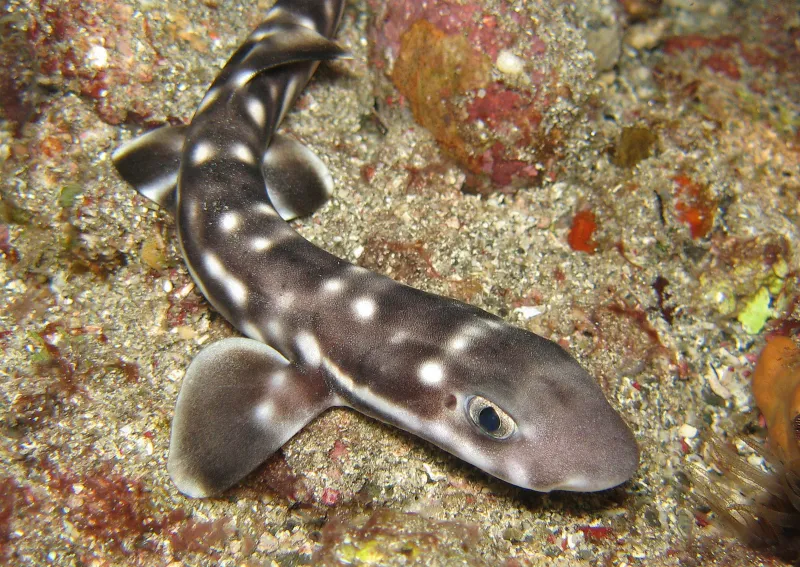
The Marbled Cat Shark (Chiloscyllium sp.) goes by a few names: Coral Cat Shark, Australian Marbled Cat Shark. It is native to Indo-Pacific coral reefs and spends most of its life near the bottom. Adults grow to about 24 to 28 inches, keeping it in a range that serious home aquarists can actually work with.
The look is what gets people. The body carries a swirling pattern of brown and cream, and no two sharks have the exact same markings. The one that ends up in your tank will be unlike any other.
The Tank Requirements Are Real
There is no softening this part. The Marbled Cat Shark needs a minimum of 500 gallons. Dr. Reef’s product page lists this clearly, and it makes sense for a fish that will eventually stretch close to two and a half feet and live on the floor of your tank for the next decade or more.
The substrate must be fine sand. This shark has no scales on its belly, just bare skin, and rough gravel or sharp rock edges will cause scrapes that lead to infection. Everything inside should be smooth: rounded caves, smooth live rock, no jagged surfaces anywhere the shark might rest.
Maintain these water parameters:
- Temperature: 72 to 78 degrees Fahrenheit
- Salinity: 1.023 to 1.026
- pH: 8.0 to 8.4
Filtration needs to be heavy. Sharks are messy eaters and produce a lot of waste. A high-capacity filter, a large protein skimmer, and strong water flow are the baseline. Also put a tight lid on the tank since sharks can jump when startled.
Feeding After Dark
This is a nocturnal species. During the day it rests in a cave and mostly ignores everything around it. That is not a health issue, that is just how this shark lives. When the lights go off in the evening, it wakes up.
Feed it then. Use tongs or a feeding stick to bring food directly to the shark so it does not have to compete with faster tank mates. Three to four times per week is enough. The diet is simple: whole frozen fish like silversides, shrimp, squid, and scallops. Vitamin-enriched foods a few times a week help fill nutritional gaps. Do not overfeed, as large uneaten portions spike ammonia levels fast.
Tank Mates and One Hard Rule
The Marbled Cat Shark is peaceful toward anything too large to swallow. Large groupers, eels, lionfish, and big wrasses make reasonable neighbors. Anything small, such as small fish, shrimp, crabs, or invertebrates, will eventually be eaten. Avoid triggerfish and puffers specifically since both species nip at fins and cause ongoing stress.
The one rule with no exceptions: never use copper-based medications in a tank housing this shark. Sharks cannot process copper. If another fish needs copper treatment, the shark must come out first.
Why a Quarantined Shark From Dr. Reef Makes a Difference
Most sharks sold online or at fish stores arrive wild-caught with zero quarantine. The stress of shipping breaks down their immune systems, and by the time the fish reaches a buyer, it is often already carrying parasites. Sharks are especially vulnerable here because the standard treatment for most fish diseases, copper medication, cannot be used on them at all.
Dr. Reef’s Quarantined Fish handles sharks differently. Copper-based treatments are skipped entirely in favor of methods safe for this species. Internal parasites are treated with Prazipro and Metro. Each shark is observed, conditioned to accept prepared foods, and fully acclimated before it ships. You can browse all available quarantined sharks to see what else is in stock alongside the Marbled Cat Shark.
The Marbled Cat Shark is listed at $499.99, with free overnight UPS shipping on orders over $500. Most stock is by request, so visit drreefsquarantinedfish.com to submit a quote.
When the Shark Arrives
Skip the drip method. Dr. Reef recommends following the acclimation guide — releasing the shark into a bucket and letting it sit for 15 to 20 minutes before moving it to the display tank. Using an airstone during this process can cause an ammonia spike by raising pH too quickly. The bucket method avoids that entirely. Release the shark into the tank with the lights off and leave it alone for the rest of the day.
Final Thought
This shark can live 10 to 15 years with proper care. It is a long commitment and a big tank, but for the hobbyist who is truly ready, the Marbled Cat Shark is one of the most rewarding animals in the marine hobby. If you are still researching which shark suits your setup, Dr. Reef’s blog post on the Zebra Horn Shark is worth reading for a side-by-side comparison of care requirements. If the setup is ready, reach out to Dr. Reef’s at drreefsquarantinedfish.com. Shipping runs Tuesday through Thursday with delivery Wednesday through Friday.