
Peacock Mantis Shrimp for Sale: Why This Colorful Predator Is Unlike Any Other Aquarium Creature

Peacock Mantis Shrimp for Sale: Why This Colorful Predator Is Unlike Any Other Aquarium Creature
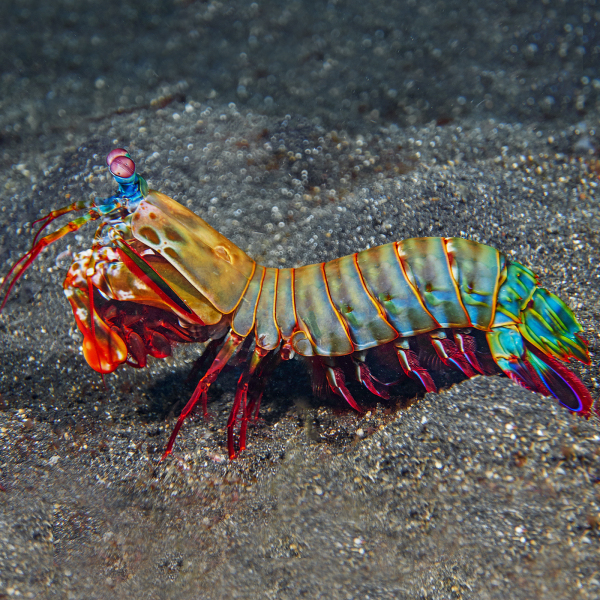
There is no creature in the saltwater aquarium hobby quite like the Peacock Mantis Shrimp (Odontodactylus scyllarus). It looks like something an artist dreamed up on their best day — a vivid burst of greens, reds, oranges, and blues packed into a body that ranges from three to seven inches. But the Peacock Mantis Shrimp is not just a pretty face. It is one of the most biologically remarkable animals on earth, and keeping one is an experience unlike anything else in the hobby.
At Dr. Reef’s Quarantined Fish, Peacock Mantis Shrimp go through a full quarantine period in fish-free invert tanks, giving you peace of mind and a healthy, active specimen ready for its new home.
What Makes It So Special
The Peacock Mantis Shrimp is a type of stomatopod, not a true shrimp, and it has been evolving separately from other crustaceans for over 400 million years. That gives it some truly jaw-dropping biological tools. Its club-like raptorial appendages strike with the acceleration of a .22 caliber bullet. It uses these clubs to smash through the shells of crabs, snails, and mollusks.
Then there are the eyes. While humans see color through three types of photoreceptors, the Peacock Mantis Shrimp has up to 16. Its eyes move independently in every direction, and it can see polarized light in ways no other animal can. Scientists believe this gives it a communication channel invisible to most other creatures.
It is also remarkably intelligent. Mantis shrimp can learn to recognize their owners, map their surroundings, solve problems, and remember encounters with potential threats. Many keepers report that their mantis shrimp will come to the front of the tank when they approach — recognizing them as the source of food.
Tank Setup
Because of their predatory and territorial nature, Peacock Mantis Shrimp should be kept as the sole inhabitant of their tank. They will eat fish, shrimp, crabs, and snails or anything they find in the tank. A species-only setup is the way to go.
The good news is that they do not need a giant tank. A 20-gallon aquarium works well for a single specimen, though larger is always better. Use acrylic rather than thin glass for larger individuals, as there are documented cases of mantis shrimp chipping glass panels with repeated strikes (though aquarium walls are rarely targeted). Provide plenty of live rock, caves, and crevices — these animals feel exposed and stressed without a secure retreat. They are burrowers and will rearrange your aquascape to their liking, so do not get too attached to your initial layout.
Maintain stable saltwater conditions with a specific gravity of around 1.025. Regular water changes and a good skimmer will handle waste. One important note: fumes from cleaning products and paints can be introduced through open filtration and are toxic to mantis shrimp. Keep the area around the tank clean of chemical sprays.
Diet
Peacock Mantis Shrimp are carnivores that prefer hard-shelled prey. Feed them crabs, snails, mussels, clams, and similar items. They can also be trained to accept frozen krill and thawed meaty foods offered with tongs. Many keepers keep one or two hermit crabs in the tank at all times to serve as natural enrichment.
Corals Are Safe
Here is one piece of good news for reef enthusiasts: Peacock Mantis Shrimp do not bother corals at all. If you want a species-only tank with some coral decoration, that is completely possible.
The Dr. Reef Quarantine Difference
Inverts at Dr. Reef’s go through a 76-day quarantine in completely fish-free, sterile tanks. No medication is used in the invert tanks, and they are fed daily on mysis, brine shrimp, and nori. By the time your Peacock Mantis Shrimp ships, it has been in a stable, clean environment for over two months. That kind of preparation is unheard of in the standard retail supply chain.