
Filefish for Sale: Reef-Safe Species, Care Guide, and Feeding Tips

Filefish for Sale: Reef-Safe Species, Care Guide, and Feeding Tips
Filefish are one of the best-kept secrets in the saltwater hobby. Quirky, intelligent, visually fascinating, and in some cases genuinely useful in a reef tank, they offer something completely different from the typical clownfish and tang community that fills most home aquariums. At Dr. Reef’s Quarantined Fish, every Filefish is fully quarantined, parasite-treated, and eating before it ships to your door. Here is everything you need to know about these underrated and remarkable fish.
What Is a Filefish?
Filefish belong to the family Monacanthidae, a diverse group of marine fish closely related to Triggerfish. They are found throughout tropical and subtropical oceans worldwide and come in an extraordinary variety of shapes, sizes, and color patterns. The name comes from the rough, sandpaper-like texture of their skin, which lacks traditional fish scales and instead has tiny, rough spines that give it a file-like quality.
What makes Filefish so interesting in the aquarium hobby is their combination of unusual body shape, remarkable camouflage ability, intelligent and curious behavior, and, in certain species, a genuinely useful role in reef tanks as biological control agents for problematic pests.
Popular Reef-Safe Filefish Species
Not all Filefish are reef-safe, and understanding the differences between species is essential before purchasing.
Matted Filefish (Acreichthys tomentosus)
The Matted Filefish is the most celebrated reef-safe Filefish in the hobby,y and for one very specific reason. It eats Aiptasia anemones, one of the most frustrating and persistent pests a reef keeper can face. Aiptasia are invasive glass anemones that sting corals, spread rapidly, and are notoriously difficult to eliminate through chemical treatments alone.
The Matted Filefish actively hunts and consumes Aiptasia with remarkable efficiency, making it one of the most practical and genuinely helpful biological control options available. Beyond its pest-control value, it is a small, peaceful, and attractive fish that displays subtle browns, tans, and greens that shift with its mood and environment. It grows to around 4 inches and is safe with most corals and invertebrates.
Tasseled Filefish (Chaetodermis penicilligerus)
One of the most visually extraordinary fish in the entire hobby. The Tasseled Filefish is covered in long, branching, weed-like appendages that make it look more like a piece of floating algae or sea grass than a fish. Its camouflage is so convincing that it is genuinely startling to realize you are looking at a fish when you first see one.
The Tasseled Filefish grows to around 12 inches and requires a larger tank than the Matted Filefish, but its visual impact is completely unmatched. It is peaceful, fascinating to observe, and safe with most corals.
Fantail Filefish (Pervagor spilosoma)
A smaller, more colorful Filefish species native to Hawaiian waters. The Fantail displays a vivid orange body with black spots and a bright yellow to orange tail. It grows to around 5 to 7 inches and is considered semi-reef-safe, as some individuals develop a habit of nipping at certain coral species. Best kept in reef tanks with monitoring or in FOWLR setups.
Longnose Filefish (Oxymonacanthus longirostris)
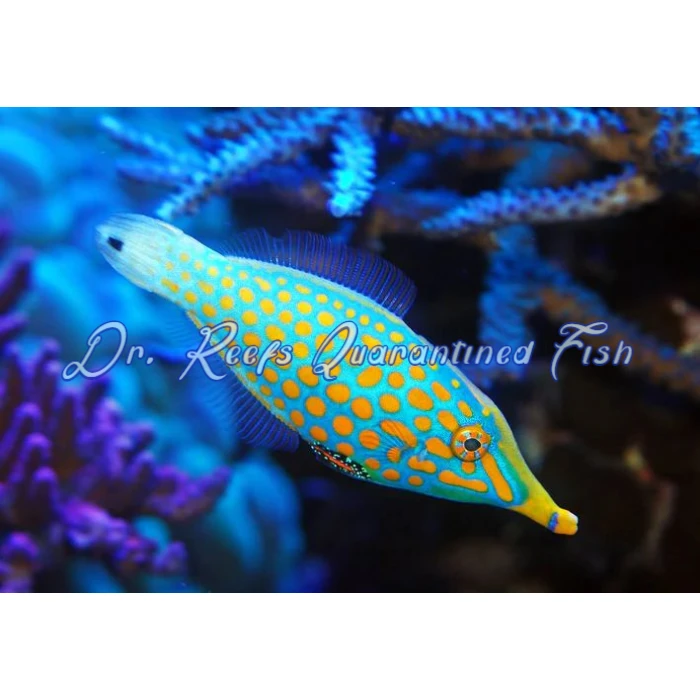
One of the most visually striking Filefish available, with a bright blue and orange spotted pattern and an elongated snout. In the wild, it feeds almost exclusively on Acropora coral polyps, which makes it extremely difficult to maintain in captivity and not reef-safe in a traditional SPS reef. It is included here as a species to be aware of rather than a recommended purchase for most hobbyists. Only very experienced keepers with specific feeding setups should attempt this species.
Care Guide
Tank Size
Care requirements vary by species. The Matted Filefish is comfortable in a 30-gallon reef tank. The Tasseled Filefish needs 75 gallons or more,e given its adult size. Always research the specific species you are purchasing before committing to a tank size.
Water Parameters
All Filefish species share similar water parameter requirements:
- Temperature: 72 to 78 degrees Fahrenheit
- Salinity: 1.023 to 1.026 specific gravity
- pH: 8.1 to 8.4
- Ammonia and Nitrite: 0 ppm
- Nitrate: Under 20 ppm, lower is better
Aquascape
Filefish appreciate a well-structured aquascape with rockwork, caves, and natural hiding spots. They are not fast, open-water swimmers and spend most of their time hovering near structure, investigating their environment with their curious, almost owl-like eyes. Provide a natural, complex aquascape, and they will reward you with constant interesting behavior throughout the day.
Flow
Moderate, indirect flow is ideal. Filefish are not strong swimmers and do not thrive in high-flow environments that push them around continuously. Aim for a gentle, randomized flow that creates natural water movement without making the fish work constantly to stay in position.
Feeding Tips
Feeding Filefish correctly is one of the most important aspects of their long-term care.
What to Feed
- Frozen mysis shrimp (the most reliable and universally accepted food)
- Frozen brine shrimp
- High-quality marine pellets
- Frozen copepods and amphipods
- Nori or marine algae sheets for species that graze on plant matter
- Live or frozen Aiptasia for Matted Filefish (they need actual reef pest prey or suitable alternatives when Aiptasia is exhausted)
Feeding the Matted Filefish
The Matted Filefish has a specialized diet in the wild, focused on Aiptasia and similar cnidarian prey. In tanks where Aiptasia is available, it will consume them enthusiastically. Once the Aiptasia population is controlled, transitioning the fish to frozen mysis, pellets, and other prepared foods is essential to prevent starvation. This transition requires patience and consistent offering of alternatives over several weeks.
Dr. Reef’s food conditioning process during quarantine significantly helps with this transition. A Matted Filefish from Dr. Reef that is already accepting prepared foods is far easier to maintain long-term than a wild-caught specimen that has never seen anything but live prey.
Feeding Schedule
Feed two to three times daily in small amounts. Filefish have continuous grazing instincts and do well with frequent small feedings rather than one large daily meal.
Compatibility
Most Filefish species are peaceful toward unrelated fish and reef inhabitants. Good tank mates for reef-safe Filefish include Clownfish, small Wrasses, Gobies, Firefish, Cardinalfish, Blennies, and Dartfish.
Avoid housing Filefish with aggressive species that may bully them, very small fish that timid Filefish might stress, or, in the case of the Matted Filefish, tanks with no Aiptasia and no prepared food transition plan in place.
A Note on Coral Safety
Even reef-safe Filefish can occasionally develop individual nipping habits toward certain coral species, particularly small polyp corals. Monitor any new Filefish closely during the first few weeks in a reef tank and be prepared to rehome if nipping behavior develops. The majority of Matted and Tasseled Filefish kept in reef tanks cause no coral issues whatsoever, but individual variation exists in any fish species.
Why Buy From Dr. Reef’s Quarantined Fish?
Filefish are sensitive to the stress of unquarantined shipping and are known to arrive in poor condition from sources that do not prioritize proper holding and preparation. At Dr. Reef’s Quarantined Fish, every Filefish goes through the same full quarantine and conditioning process applied to every other fish and invert. Parasite treatment, food conditioning, and health screening before shipping give you a fish that arrives ready to explore, eat, and thrive in your system from day one.
Frequently Asked Questions
Will a Matted Filefish definitely eat all my Aiptasia?
Most Matted Filefish are highly effective Aiptasia consumers, but individual variation exists. Some fish clear an entire tank of Aiptasia within weeks. Others are less aggressive about hunting them. The effectiveness also depends on how large and established the Aiptasia colony is before the fish is introduced.
What happens when my Matted Filefish runs out of Aiptasia?
This is the most important question for anyone keeping this species. Once Aiptasia is depleted, the fish must transition to prepared foods to survive. Start offering frozen mysis, pellets, and other alternatives well before the Aiptasia population is exhausted to ensure a smooth dietary transition.
Are Filefish related to Triggerfish?
Yes. Filefish and Triggerfish are closely related members of the order Tetraodontiformes. They share a similar body plan and general behavior, but Filefish are generally smaller, more peaceful, and more reef-compatible than most Triggerfish species.
Can Filefish be kept in pairs?
Some species can be kept in male and female pairs in larger tanks. Keeping two males together typically results in territorial conflict. If you want to keep more than one Filefish, research the specific species and ensure your tank is large enough to provide separate territories.
Is the Longnose Filefish reef-safe?
No. The Longnose Filefish feeds on Acropora coral polyps and will destroy an SPS reef. It is not recommended for most hobbyists and requires specialized care that makes it suitable only for expert keepers with very specific setups.
Does Dr. Reef offer a live arrival guarantee?
Yes. Dr. Reef’s Quarantined Fish stands behind every animal they ship. Visit the website for the most current guarantee and shipping policy details.
Final Thoughts
Filefish are genuinely special animals that bring something completely different to a saltwater aquarium. Whether you are drawn to the Aiptasia-eating practicality of the Matted Filefish, the jaw-dropping camouflage of the Tasseled Filefish, or the vivid color of the Fantail, there is a Filefish that belongs in your tank and a quarantined, healthy specimen waiting for you at Dr. Reef’s Quarantined Fish.
Check availability today and discover one of the most underrated and rewarding groups of fish in the entire marine hobby.