
Diamond Goby for Sale: Sand-Sifting Benefits, Care Guide, and Tank Setup

Diamond Goby for Sale: Sand-Sifting Benefits, Care Guide, and Tank Setup
A clean, bright, healthy sandbed is one of the things that separates a good-looking reef tank from a truly impressive one. And one of the most effective and natural ways to maintain a beautiful sandbed is to add a Diamond Goby. This hardworking, peaceful fish does something genuinely useful every single day while also being a pleasure to watch. Dr. Reef has healthy, quarantined Diamond Gobies ready for your tank right now. Here is your complete care guide.
What Is a Diamond Goby?
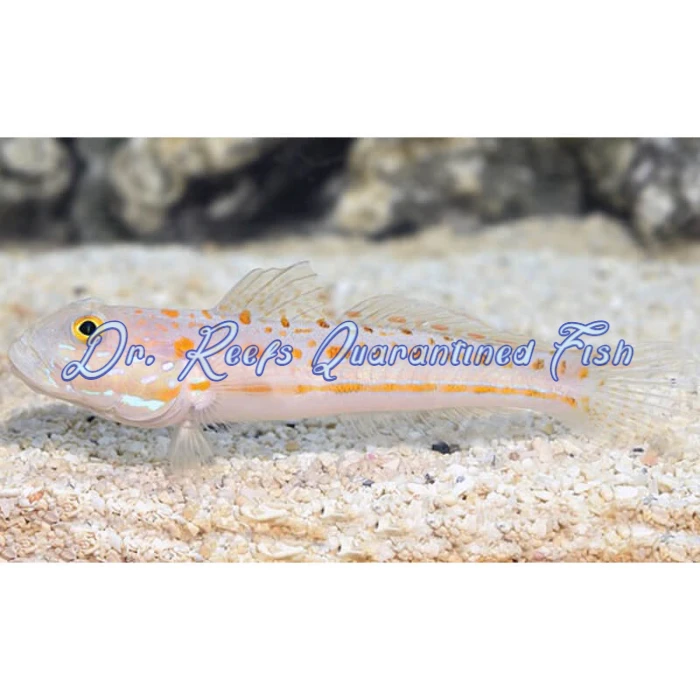
The Diamond Goby, known scientifically as Valencienna puellaris, is a marine fish native to the Indo-Pacific region. It is also called the Maiden Goby or Orange-Spotted Sleeper Goby. It grows to about five to six inches in length and has a sleek, elongated body that is pale white with rows of small orange and blue spots running along the sides. The pattern is subtle but genuinely pretty, especially under good reef lighting, where the spots catch the light in a way that makes the fish appear to shimmer slightly as it moves.
The Diamond Goby spends the vast majority of its time on and just above the sandbed, constantly sifting through the sand with its mouth in search of small organisms, copepods, and organic material to eat. This constant sifting behavior is where the real value of this fish lies, and it is what makes the Diamond Goby one of the most functionally useful fish you can add to a reef aquarium.
The Sand-Sifting Benefits of the Diamond Goby
A saltwater aquarium sandbed is a living ecosystem. A healthy sandbed is full of beneficial microfauna, including copepods, amphipods, small worms, and other tiny organisms that process organic waste and cycle nutrients. Over time, detritus and organic material settle into the top layer of the sand and can accumulate to levels that create water quality issues if not addressed.
The Diamond Goby naturally and continuously turns over the top layer of the sandbed as it feeds. It takes mouthfuls of sand, filters out the food particles, and expels the clean sand back through its gills. This constant gentle disturbance keeps the sand loose, prevents the formation of anaerobic dead spots in the upper sand layer, and creates a visibly cleaner, brighter, whiter sandbed that dramatically improves the overall appearance of the tank.
In tanks without a sand sifter, the sandbed often develops a grey or brown tint over time as organic material accumulates on the surface. A Diamond Goby keeps the surface layer consistently clean and bright, contributing both to water quality and to the visual impact of the entire aquarium.
It is worth noting that the Diamond Goby does consume a significant portion of the sandbed microfauna as part of its natural feeding process. In a mature tank with a well-established sandbed population, this is sustainable. In a newer tank or a smaller tank, the Goby can deplete the microfauna population faster than it recovers, which ultimately affects its own food supply. This is an important consideration covered in the feeding section below.
Tank Setup
The Diamond Goby is best suited to tanks of 30 gallons or more with a deep, fine-grained sandbed. A sandbed depth of at least two to three inches gives the fish adequate material to work with and supports a healthy microfauna population large enough to sustain regular sifting activity.
Use fine aragonite sand or a similar fine-grain substrate. Coarse gravel or crushed coral substrate does not support the natural sifting behavior of this fish and leaves it without the food source it depends on.
The Diamond Goby also needs a dedicated burrow. In the wild, it digs burrows under rocks where it retreats to rest and shelter. In a home aquarium, it will do the same, and providing suitable rock structure near the sandbed that it can burrow under gives it a secure home base that dramatically reduces stress. A fish with a good, established burrow is far more active and visible throughout the day than one without.
Maintain water temperature between 72 and 78 degrees Fahrenheit, salinity at 1.025, and pH between 8.1 and 8.4. The Diamond Goby is a hardy and adaptable species that handles a range of aquarium conditions well.
A secure lid is important. Like many Goby species, the Diamond Goby is capable of jumping and will occasionally launch itself from the water, particularly during the first few days in a new environment when it is still adjusting and exploring boundaries.
Care Guide and Feeding
Feeding the Diamond Goby properly is the most important and most frequently underestimated aspect of keeping this species successfully. The fish depends heavily on the live microfauna in the sandbed for its nutrition, but in most home aquariums, the sandbed alone cannot sustain a Diamond Goby indefinitely.
Supplemental feeding with frozen foods is essential for long-term success. Frozen mysis shrimp, brine shrimp, and finely chopped seafood should be offered daily. Use a pipette or turkey baster to deliver food directly to the sandbed in front of the fish. The Diamond Goby will often accept food delivered this way readily once it becomes comfortable in the tank.
Cultivating and regularly replenishing the sandbed microfauna population also helps significantly. Purchasing live copepod cultures and adding them to the tank regularly gives the Goby a renewable food source that supplements both its natural foraging and the frozen food offerings. In larger tanks with established deep sandbeds, the natural microfauna population recovers well between sifting sessions and provides a meaningful portion of the fish’s nutritional needs.
A Diamond Goby that is receiving adequate nutrition will be active throughout the day, maintain a healthy body weight without appearing sunken in the belly, and produce consistently bright, clean swathes of sand across the sandbed as it works.
Reef Compatibility
The Diamond Goby is one of the most completely reef-safe fish available in the hobby. It poses no threat whatsoever to corals, clams, or invertebrates. It is entirely focused on the sandbed and has no interest in anything growing on the rocks or in the water column.
It is peaceful toward all other fish and rarely engages in any kind of territorial behavior except in direct defense of its burrow. Even this burrow defense is mild and rarely causes problems in a community tank.
The Diamond Goby pairs beautifully with pistol shrimp in a natural symbiotic relationship. In the wild, Diamond Gobies and Alpheid pistol shrimp often share burrows, with the Goby acting as a lookout while the shrimp maintains and excavates the burrow. This relationship can be replicated in a home aquarium, and watching a bonded Goby and pistol shrimp pair work together is one of the most charming natural behaviors you can observe in reef keeping.
Why Buy Your Diamond Goby from Dr. Reef?
Dr. Reef quarantines and carefully observes every Diamond Goby before it ships. Each fish is confirmed to be eating, healthy, and in excellent physical condition before it is listed for sale. You receive a fish that has already cleared the stress of transport and is ready to get to work on your sandbed from the moment it enters your tank.
The care and preparation that goes into every fish at Dr. Reef is the reason customers consistently report better outcomes, faster settling, and healthier fish compared to other sources. The Diamond Goby is no exception to that standard.