
Dragonet Fish for Sale: Care Requirements, Live Food Needs, and Aquarium Setup

Dragonet Fish for Sale: Care Requirements, Live Food Needs, and Aquarium Setup
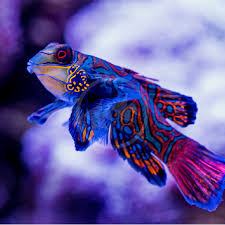
There is a fish in the saltwater hobby that stops people cold every single time. It does not matter how long someone has been keeping reef tanks or how many exotic species they have owned. The first time they see a Mandarin Dragonet gliding across a reef in person, they stare. They cannot help it.
The colors are almost unreal. Deep electric blue and vivid green swirls layered over a tangerine orange body, with fins that fan out like little wings. It looks like something an artist painted, not something that evolved naturally in the ocean. And the Red and Ruby Red variants? Just as jaw-dropping in a completely different way.
Dragonets are the most visually spectacular small fish in the entire marine hobby. But they are also one of the most misunderstood and most poorly cared for. Every year, thousands of dragonets are purchased by hobbyists who were not told what these fish actually need to survive. This guide changes that. If you read this before you buy, your dragonet will thrive.
What Are Dragonet Fish?
Dragonets belong to the family Callionymidae. They are small, bottom-dwelling marine fish found throughout the Indo-Pacific and beyond. They have flattened bodies, wide fan-shaped fins, and extraordinary coloration produced by chromatophores in their skin rather than reflective scales. That is why their colors look so vivid and so deep, unlike almost any other fish.
Most dragonets stay between 2 and 4 inches as adults. They are reef-safe across the board, spending their time slowly picking across live rock and sand in search of tiny prey. They do not bother corals. They do not chase other fish. But they do have one non-negotiable requirement that catches hobbyists off guard: they need a constant supply of live microscopic prey, primarily copepods, to survive.
Understanding and solving that feeding requirement is the entire game with dragonets. Get it right and you have one of the most rewarding fish in the hobby. Miss it and you will slowly watch a beautiful fish waste away no matter how healthy your tank looks.
The Dragonet Collection at Dr. Reef’s Quarantined Fish
Dr. Reef’s carries 7 dragonet species covering the full range from budget-friendly to captive-bred premium. Here is the complete lineup with live pricing from drreefsquarantinedfish.com:
- The Mandarin Spotted Dragonet at $49.99 and the Red Scooter Dragonet at $49.99 are the most accessible entry points in the collection. Both are colorful, manageable dragonets that work well in established reef systems with healthy pod populations.
- The Ruby Red Dragonet at $69.99 and the Mandarin Red at $69.99 step up the color and rarity. The Ruby Red in particular has become one of the most sought-after dragonets in the hobby for its deep crimson and orange tones.
- The Mandarin Red Captive Bred at $99.99 is a meaningful upgrade for any serious reef keeper. Captive-bred specimens are already conditioned to accept frozen foods, which dramatically reduces the feeding challenge that trips up most dragonet owners.
- The crown jewel of the collection is the Mandarin Blue/Green, available in two versions. The Wild Caught Mandarin Blue/Green is $79.99. The Captive Bred Mandarin Blue/Green is $129.99 to $199.99 and carries a 5-star customer rating at Dr. Reef’s. This is the iconic Synchiropus splendidus, the fish most people picture when they hear the word dragonet. The captive-bred version is the one that gives hobbyists the best long-term success.
The Live Food Requirement: The Most Important Thing to Understand
Here is the reality that nobody at a typical fish store tells you clearly enough: most dragonets, especially wild-caught specimens, will only eat live copepods. Not pellets. Not frozen mysis. Not brine shrimp. Live microscopic crustaceans called copepods, which they hunt by picking slowly and methodically across every surface in the tank.
In the wild, a dragonet lives on a reef with an essentially endless supply of copepods living in the algae, rock, and substrate. In a home aquarium, even a large one, the copepod population gets depleted quickly. A dragonet that has eaten all the pods in a 75-gallon tank will start to lose weight and decline within weeks, even if it looks perfectly healthy from the outside. By the time visible weight loss is obvious, the fish is already in serious trouble.
There are three ways to solve the copepod supply problem, and the most successful reef keepers use all three together.
- The first is a mature, well-established tank. A system that has been running for at least six months with plenty of live rock, a healthy sand bed, and an active refugium will naturally harbor a substantial copepod population. Refugium is especially important.
- The second is regular supplementation with purchased copepods. Dr. Reef’s sells live copepods and phytoplankton directly on their website under the Food, Phyto & Pods section.
- The third and most powerful solution is buying a captive-bred dragonet that has already been trained to eat frozen foods. A captive-bred Mandarin Blue/Green or Mandarin Red from Dr. Reef’s has been conditioned from birth to accept frozen copepods, frozen mysis shrimp, and high-quality small pellets.
Aquarium Setup for Dragonet Fish
Minimum Tank Size
A minimum of 30 gallons is the starting point, but 55 gallons or larger is strongly recommended. Larger tanks support larger, more stable copepod populations and give the dragonet more territory to hunt across. For a mated pair, 75 gallons or more is ideal.
Live Rock and Substrate
Dragonets need a rich, live-rock-heavy aquascape. A deep sand bed of 2 to 3 inches also provides additional copepod habitat and supports the natural foraging behavior dragonets rely on.
Refugium
A refugium connected to the main display is as close to mandatory as anything gets for a dragonet system. Fill it with Chaeto macroalgae and seed it with a diverse copepod culture. The chaeto provides a safe breeding area for pods away from predation in the main tank, and the overflow continuously delivers live pods into the display. No other single piece of equipment improves dragonet long-term success more than a well-seeded refugium.
Water Flow
Gentle to moderate, indirect flow is best. Dragonets are slow, methodical hunters that pick across surfaces with precision. Strong turbulent flow disrupts their hunting behavior and physically pushes them around the tank. Aim powerheads at rockwork or tank walls rather than open bottom areas where the dragonet forages.
Water Parameters
- Temperature: 74 to 78 degrees Fahrenheit
- Salinity: 1.023 to 1.025
- pH: 8.1 to 8.4
- Nitrates: Keep as low as possible, ideally below 10 ppm
- Ammonia and Nitrite: 0 ppm at all times
Dragonets are sensitive to declining water quality. A well-maintained reef with regular water changes and a functioning refugium provides the ideal environment.
Moderate reef lighting works well. Dragonets are not deep-water fish and adapt to standard reef lighting without issue. Good lighting also promotes macroalgae growth in the refugium and in the display tank, which supports the copepod ecosystem the dragonet depends on.
Tank Mates and Reef Compatibility
Dragonets are completely reef-safe. They will not touch corals, clams, or ornamental invertebrates. However, tank mate selection matters more for their protection than for the protection of anything else in the tank.
Avoid any fish that competes aggressively for the same food source. Mandarin dragonets are slow, methodical foragers and will consistently lose food competition against fast-moving fish like six-line wrasses, dottybacks, and aggressive damsels. These species also tend to harass and nip at dragonets, which causes chronic stress and feeding suppression.
The best tank mates are peaceful, mid-water species that do not compete for bottom-level pod grazing. Good choices include clownfish, firefish, cardinalfish, small anthias, peaceful gobies, and smaller wrasses that are not known for pod competition.
A male and female dragonet pair in a large enough tank is one of the most beautiful and rewarding combinations in the reef hobby. The spawning behavior of Mandarin Dragonets, where the pair rises in the water column at dusk and releases gametes in a brief, elegant spiral, is one of the most extraordinary natural behaviors ever observed in a home aquarium.
Why Buy Your Dragonet From Dr. Reef’s Quarantined Fish?
Dragonets are one of the species most commonly killed by poor pre-sale conditions. An unquarantined dragonet that arrives already depleted from insufficient feeding in a holding system will go into a new tank in a compromised state. Even in a perfect reef with abundant copepods, a fish that is already nutritionally stressed will struggle to recover.
Every dragonet at Dr. Reef’s goes through a full medical quarantine and health observation protocol before it is listed for sale. The fish arrives in far better condition than anything available at a typical retail store. Captive-bred specimens have the additional advantage of already being confirmed eaters on prepared foods before they ship.
Every order ships overnight via UPS, Tuesday through Thursday, for Wednesday through Friday delivery. Free shipping applies on orders over $500. Payments are accepted via PayPal, Stripe, and Venmo. A 24/7 email support team is available before and after your purchase.
With 7 dragonet species from $49.99 to $199.99 and both wild-caught and captive-bred options available, drreefsquarantinedfish.com is the best place to find a healthy, properly conditioned dragonet for your reef.
Visit drreefsquarantinedfish.com today and bring home the most beautiful fish in the saltwater hobby.