
Pink Skunk Clownfish for Sale: Care Guide, Temperament, and Breeding Tips

Pink Skunk Clownfish for Sale: Care Guide, Temperament, and Breeding Tips
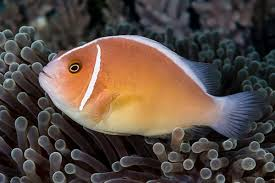
There is a clownfish out there that most people walk right past at the fish store. It is not orange. It does not have the bold black-and-white bars you see on the famous Nemo fish. But once you spot it in a well-lit reef tank, swimming gracefully with a single white stripe running along its back like a racing stripe, you stop and stare.
That is the Pink Skunk Clownfish. And it might just be the most underrated clownfish in the entire hobby.
Whether you are searching for a peaceful, reef-safe, beginner-friendly fish that stands out from the crowd, or you want a clownfish that can actually bond with a host anemone and potentially breed in your tank, the Pink Skunk Clownfish delivers on every front.
This guide covers everything you need to know, including the difference between the regular Skunk Pink Clownfish and the rarer Fiji Skunk Pink Clownfish, how to care for them, what to feed them, how breeding works, and where to buy a healthy, quarantined specimen at the best price.
What Is the Pink Skunk Clownfish?
The Pink Skunk Clownfish goes by the scientific name Amphiprion perideraion. It is also called the Skunk-Striped Clownfish or Pink Anemonefish. The name comes from the single white stripe that runs from just above its nose all the way down the dorsal surface to the tail, like the stripe on a skunk’s back.
Unlike most clownfish that have vertical white bars on the side of their body, the Pink Skunk has one stripe on top. That is what makes it instantly recognizable and incredibly unique in any aquarium.
Its body is a warm, soft pink to orange color with bright, clear fins. It grows up to 4 inches as an adult and is one of the most peaceful clownfish species in the hobby.
There are two varieties available at Dr. Reef’s Quarantined Fish:
The regular Skunk Pink Clownfish (Amphiprion perideraion) and the Fiji Skunk Pink Clownfish, which is a variant native to the Fiji region of the Indo-Pacific. Both are fully captive-bred, both are priced at $39.99, and both are fully reef-safe.
The Fiji variant often shows slightly more vibrant coloration due to the regional genetics of its parent stock. If you want the most vivid pink tones and plan to keep your fish long-term, the Fiji Skunk is worth the same price point.
Pink Skunk Clownfish at a Glance
- Scientific Name: Amphiprion perideraion
- Common Names: Pink Skunk Clownfish, Skunk-Striped Clownfish, Pink Anemonefish
- Adult Size: 3 to 4 inches (8 to 10 cm)
- Lifespan: 10 to 15 years or more with proper care
- Temperament: Peaceful to semi-aggressive (territorial near a host anemone)
- Reef Compatible: Yes, fully reef-safe
- Minimum Tank Size: 30 gallons
- Care Level: Beginner to Intermediate
- Diet: Omnivore
- Water Temperature: 74 to 78 degrees Fahrenheit
- Salinity: 1.023 to 1.025
- pH: 8.1 to 8.4
- Price at Dr. Reef’s: $39.99 (both Skunk Pink and Fiji Skunk Pink)
Pink Skunk Clownfish Care Requirements
One of the best things about this fish is how forgiving it is for beginners. It is hardier than many other clownfish species and adapts quickly to aquarium life, especially when captive-bred.
Tank Size
A 30-gallon tank is the minimum for a single fish or a bonded pair. If you plan to add a host anemone, budget for a slightly larger system because anemones need stable, mature water conditions that are easier to achieve in bigger tanks.
Water Quality
Keep your parameters stable and clean. Pink Skunk Clownfish are not as sensitive as some other marine fish, but like all saltwater fish, they do best in clean, stable water. Aim for nitrates below 20 ppm and do water changes of 15 to 20 percent every two weeks.
Tank Setup
Provide plenty of live rock with caves and crevices. The fish will choose a home territory and spend most of its time near that spot. Open swimming space in the middle and upper water column is appreciated since this species swims more actively than many clownfish.
A well-established aquarium of at least two months old is ideal for introducing a Pink Skunk. Avoid adding them to a brand new, cycling tank.
Compatible Tank Mates
Pink Skunk Clownfish are among the most peaceful clownfish you can keep. They get along well with tangs, wrasses, gobies, blennies, cardinalfish, chromis, anthias, and other peaceful community fish.
Avoid keeping them with large aggressive fish like triggers, lionfish, or groupers that may view the clownfish as a meal.
Feeding Your Pink Skunk Clownfish
Pink Skunk Clownfish are omnivores and enthusiastic eaters. They are not picky and will accept most foods offered in a saltwater tank.
Best Foods to Offer:
Frozen mysis shrimp is the gold standard for marine fish nutrition. Offer it two to three times per day in small portions. Enriched brine shrimp, finely chopped krill, and marine pellets are all excellent additions.
Rotate your foods to give your fish a varied, complete diet. Include spirulina flakes or small pieces of nori occasionally for the plant-based nutrition component.
Foods rich in carotenoids, such as certain pellet blends formulated for clownfish, will enhance the pink coloration and keep the white stripe bright and clear.
Feeding Schedule:
Two to three small feedings per day is ideal. Never overfeed. If food is hitting the substrate without being eaten, you are feeding too much. Uneaten food breaks down and spikes your ammonia levels.
Captive-bred Pink Skunk Clownfish from Dr. Reef’s are already eating prepared foods before they ship. This is one of the single biggest advantages of buying captive-bred quarantined fish. You skip the painful and sometimes impossible process of training a wild-caught fish to eat pellets.
Temperament and Behavior
Here is something that surprises first-time Pink Skunk owners: this fish has a genuine personality.
It will learn your face. It will swim to the front of the glass when you approach. It will patrol its territory and interact with anything it considers its home, whether that is a host anemone, a coral, or a favorite corner of the tank.
Compared to other clownfish like the Tomato Clownfish or Maroon Clownfish, the Pink Skunk is notably calmer. It is far less aggressive toward tank mates and far less territorial without an anemone present. This makes it an ideal community fish in a reef system.
With an anemone present, expect some territorial behavior around the host. The fish will protect its anemone vigorously and may chase away curious tank mates that get too close. This is completely normal and actually fascinating to watch.
Pink Skunk Clownfish are one of the few clownfish species that will readily host in the Magnificent Sea Anemone (Heteractis magnifica) in the wild. In captivity, they will also accept Bubble Tip Anemones (Entacmaea quadricolor) and Carpet Anemones (Stichodactyla mertensii).
Anemones are not required. Many Pink Skunk Clownfish thrive for years without a host anemone and will adopt a favorite coral or rock formation instead.
Breeding Pink Skunk Clownfish in Your Tank
This is where it gets exciting. Pink Skunk Clownfish are one of the more achievable breeding projects for home aquarists. Here is how it works.
How Clownfish Pairs Form
All clownfish are born male. The dominant fish in a pair transitions to female. This means if you buy two juveniles together, the larger or more dominant one will eventually become female. This sex change happens naturally and permanently.
To breed Pink Skunk Clownfish, start with a bonded pair or two juveniles. Introduce them to a tank together while they are both small. Over several months, the dominant fish will become female and the pair will bond.
Setting Up for Spawning
Once you have a bonded pair, provide a smooth flat surface near the base of the tank or near their anemone. A clay pot, flat tile, or section of smooth live rock works great. The male will spend hours cleaning this surface before spawning begins.
Water quality needs to be pristine for spawning to occur. Keep nitrates as low as possible and maintain stable temperature and salinity. A healthy, well-fed pair in a peaceful tank will typically begin spawning within 6 to 12 months of pairing.
The Spawning Process
The female lays between 100 and 1,000 eggs directly onto the cleaned flat surface. The male immediately fertilizes the eggs and then guards them obsessively for the next 6 to 8 days until they hatch. The female will also defend the territory aggressively during this time.
Eggs start as a rich orange-red color and gradually become silver-gray as the larvae develop and prepare to hatch.
Raising the Larvae
Raising the larvae is the most challenging part of breeding clownfish at home. The larvae need specific conditions, including rotifers as first food followed by baby brine shrimp. Water quality must be exceptional during the larval stage.
Many hobbyists raise larvae successfully in a separate 5 to 10 gallon larval rearing tank with gentle, sponge-filtered water flow and daily feeding of live rotifers.
Why This Matters
Every captive-bred Pink Skunk Clownfish at Dr. Reef’s represents exactly this kind of responsible breeding. Captive breeding reduces pressure on wild reef populations and produces hardier, better-adapted fish. When you buy captive-bred and successfully breed at home, you become part of a chain of conservation that actually benefits the ocean.
Fiji Skunk vs. Regular Skunk Pink Clownfish: What Is the Difference?
Both are Amphiprion perideraion. Both are priced at $39.99 at Dr. Reef’s. Both are captive-bred.
The Fiji Skunk Pink Clownfish is a regional variant sourced from parent stock native to Fiji. The Indo-Pacific populations around Fiji are known for producing fish with slightly more saturated pink and orange coloration compared to specimens from other parts of the range.
If you want the fish for a community tank and coloration is your main priority, go with the Fiji variant. If you want a bonded pair for breeding and plan to work with a matched set, either variant works perfectly.
Both fish will reach 3 to 4 inches, both will live 10 to 15 years with proper care, and both will behave identically. The choice comes down to color preference.
Why Buy Your Pink Skunk Clownfish From Dr. Reef’s Quarantined Fish?
At $39.99, the Pink Skunk Clownfish and Fiji Skunk Pink Clownfish at Dr. Reef’s Quarantined Fish are an outstanding value. But the price is not the main reason serious hobbyists choose Dr. Reef’s. The quarantine process is.
Every fish that leaves Dr. Reef’s facility has been through a full medical quarantine protocol. That means observation, parasite prevention, dietary conditioning, and health confirmation before the fish is ever listed for sale. The fish arrives at your door ready to eat, free of the most common diseases that kill new arrivals, and already adapted to aquarium conditions.
That matters more than most new hobbyists realize. The most common cause of fish death in the hobby is disease introduced by untreated livestock. A fish that arrives sick, stressed, and loaded with parasites has a very slim chance of surviving, no matter how good your tank is. A fish that arrives pre-quarantined and already eating gives you a true head start.
Dr. Reef’s also offers extended guarantee options. You can choose the included 3-day guarantee at no extra cost, upgrade to a 7-day guarantee for $8.00, or a 14-day guarantee for $12.00. That level of confidence in their livestock reflects the quality of their process.
Shipping goes out Tuesday through Thursday via overnight UPS, with delivery Wednesday through Friday. Free shipping is available on orders over $500. Payments are accepted via PayPal, Stripe, and Venmo. And 24/7 email support is available if you ever have a question about your order.
Visit drreefsquarantinedfish.com to order the Skunk Pink Clownfish or the Fiji Skunk Pink Clownfish today.
A Recap on Pink Skunk Clownfish
The Pink Skunk Clownfish is one of those fish that rewards you twice. Once when you see it glide across your tank for the first time with that unmistakable white dorsal stripe. And again years later, when you realize the fish is still thriving, still interactive, and still one of the most beautiful animals in your reef.
At $39.99 for a captive-bred, quarantined specimen from Dr. Reef’s, it is one of the best investments you can make for a saltwater tank. Whether you want a peaceful community fish, a long-lived reef companion, or a breeding project that will change how you think about the marine hobby, the Pink Skunk delivers.
Order yours today at drreefsquarantinedfish.com and give your reef a fish that will still be turning heads a decade from now.