
Passer Angelfish for Sale: Why Juveniles Look Completely Different from Adults

Passer Angelfish for Sale: Why Juveniles Look Completely Different from Adults
Some fish change appearance slightly as they grow. The Passer Angelfish does not change slightly. A juvenile Passer Angelfish and an adult Passer Angelfish look like two completely different species. This transformation is one of the most dramatic in the entire saltwater hobby and one of the reasons serious collectors seek this fish out.
What Is the Passer Angelfish?
The Passer Angelfish, scientifically known as Holacanthus passer, is also called the King Angelfish. It is native to the Eastern Pacific, found from the Gulf of California down through Costa Rica and the Galapagos Islands. This geographic range, entirely outside the Indo-Pacific where most marine fish originate, gives it a distinctly different look from the angelfish most hobbyists are familiar with.
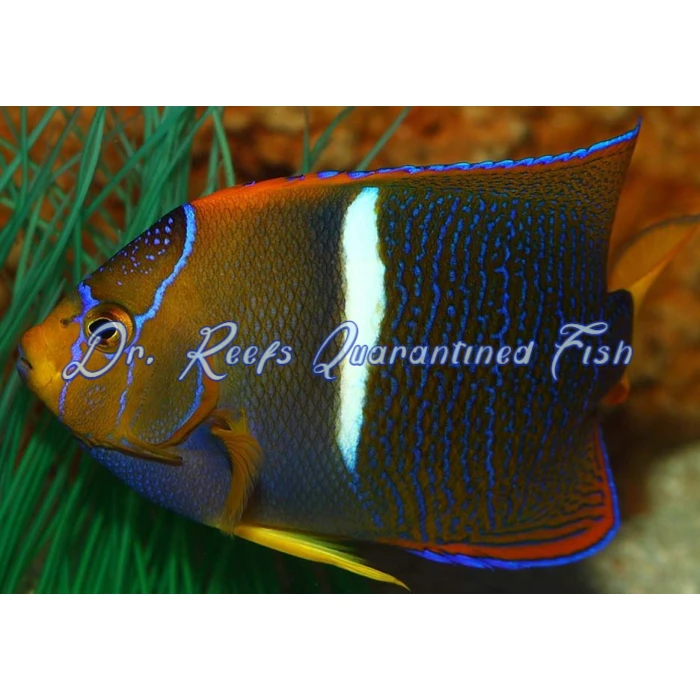
Adults reach 12 to 14 inches at full size, making this one of the larger marine angelfish in the hobby. The adult body is dark blue to black with a single broad vertical white bar just behind the pectoral fins, bright yellow-orange highlights on the pectoral fin and tail, and blue-edged scales that catch the light beautifully. It belongs to the family Pomacanthidae and the genus Holacanthus, which also includes the Clarion and Rock Beauty angels.
Quick Specifications
| Scientific Name | Holacanthus passer |
| Common Names | Passer Angelfish, King Angelfish |
| Care Level | Advanced |
| Temperament | Aggressive and dominant |
| Diet | Omnivore – mysis, chopped seafood, marine algae, nori, sponge-containing angelfish preparations |
| Reef Compatible | No – will nip at corals, clams, and sessile invertebrates |
| Max Adult Size | 12 – 14 inches |
| Water Temp | 72 – 78°F |
| Salinity (sg) | 1.023 – 1.025 |
| pH | 8.1 – 8.4 |
| Min Tank Size | 180 gallons; 250+ gallons recommended |
| Family | Pomacanthidae |
| Price at Dr. Reef’s | $349.99 — free shipping on orders over $500 |
The Juvenile-to-Adult Color Transformation
This is what makes the Passer Angelfish genuinely remarkable. Here is how the transformation works:
Juvenile Stage
Young Passer Angelfish display a completely different color pattern. The body is dark with bold white and blue vertical stripes running from head to tail. Blue and white markings around the face and a pattern that looks nothing like the adult. This coloration serves a social purpose in the wild, signaling to dominant adults that the juvenile is not a competitor.
Subadult Stage
As the fish grows, the stripes begin to consolidate and shift. The blue brightens and the white stripes start fading or merging. The characteristic single white bar begins to appear behind the pectoral fin. The tail starts developing the yellow-orange coloring of the adult. This phase can last months and produces some of the most interesting transitional colorations of any marine angelfish.
Adult Stage
The fully adult Passer Angelfish is bold and dramatic. Dark blue-black body, a single clean white bar, bright yellow-orange fin accents, and the commanding presence of a 12 to 14-inch fish that has settled into the top of the tank hierarchy. If you purchase a juvenile or subadult, you get to watch the entire transformation unfold in your own tank. That is a rare experience in the hobby.
Personality and Behavior
The Passer Angelfish is not a mild-mannered fish. It is one of the most dominant large angelfish in the hobby. Once established in a tank, it will be the boss. It recognizes its keeper, responds to the presence of people near the tank. It is an engaging, interactive fish, but you need to plan the rest of your tank around it rather than adding it to an existing community.
Introduce the Passer Angelfish last. Adding it to a tank that already has established residents will go better than introducing it to a tank where it has to fight for dominance from scratch. Even then, expect some assertive behavior in the first few weeks.
Tank and Care Requirements
- Tank size: 180 gallons minimum, 250 gallons or larger preferred for long-term adult care
- Rockwork: Large pieces with caves and swimming areas, but open swim lanes are essential
- Water flow: Moderate to strong flow to keep this active swimmer healthy
- Filtration: Oversized protein skimmer and heavy biological filtration for a large, messy eater
Diet
The Passer Angelfish is a hearty eater and will accept almost anything once settled in. Offer:
- High-quality angelfish preparations containing sponge
- Frozen mysis shrimp and chopped seafood
- Nori and marine algae
- Spirulina-based pellets
Feed two to three times daily. A well-fed Passer Angelfish is a calmer, healthier fish that shows better coloration and is less aggressive toward tankmates.
Why Dr. Reef’s Quarantine Matters at This Price
A Passer Angelfish at $349.99 is a significant investment. Large marine angelfish are among the most disease-susceptible fish during transport, particularly to marine ich. Dr. Reef’s Quarantined Fish holds every Passer Angelfish for 30 to 45 days at the Tulsa, Oklahoma facility, monitoring for disease, treating as necessary, and conditioning the fish to prepared foods before it ever ships. The transformation from juvenile to subadult to adult plays out visibly during quarantine, giving the team a clear view of the fish’s health and condition over time.
Quick Q and A
Q: What size should I buy, juvenile or adult?
A: Both have advantages. A juvenile gives you the full color transformation to watch, which is one of the most rewarding experiences in the hobby. An adult gives you the full impact immediately. Dr. Reef’s can advise on what age and size is currently available.
Q: Can I keep it with other large angelfish?
A: In very large systems of 300 gallons or more, yes. In anything smaller, the Passer Angelfish will typically dominate and stress other large angels.
Q: Is it reef safe?
A: No. It will damage coral polyps, clam mantles, and sessile invertebrates. It belongs in a FOWLR system.
Q: How long does the color transformation take?
A: The full transformation from juvenile pattern to adult coloration can take one to three years depending on tank conditions, diet, and the individual fish. The most dramatic visible changes happen during the subadult phase.
Your Complete Recap
The Passer Angelfish is one of the most visually transformative fish in the saltwater hobby. Watching a juvenile develop through the subadult stage into the commanding dark blue and yellow adult is a genuine reward for patient and experienced hobbyists. At $349.99 from Dr. Reef’s Quarantined Fish, this is a professionally quarantined specimen from a source that takes the health of every fish seriously. Visit drreefsquarantinedfish.com to check current availability and speak directly with the team about which size and stage is right for your system.