
Sohal Tang for Sale: Why This Tang Is Not for Beginners

Sohal Tang for Sale: Why This Tang Is Not for Beginners
$399.99 – $459.99 — Free Shipping on Orders Over $500
The Sohal Tang is not a fish you buy on impulse. It is a fish you plan for. Native exclusively to the Red Sea, the Sohal is widely regarded as one of the most aggressive, territorial, and physically impressive tangs in the world. It is also reef safe, a powerful algae grazer, and visually one of the most striking fish you can put in a large display tank. Dr. Reef’s Quarantined Fish offers the Sohal Tang starting at $399.99 on drreefsquarantinedfish.com under Saltwater Fish, Tangs.
Confirmed Specifications
| Field | Details |
| Scientific Name | Acanthurus sohal |
| Common Names | Sohal Tang, Red Sea Sohal Tang, Sohal Surgeonfish |
| Care Level | Advanced |
| Temperament | Aggressive — highly territorial, particularly toward other tangs |
| Diet | Herbivore — algae, nori, spirulina pellets, herbivore formula frozen foods |
| Reef Compatible | Yes — will not harm coral, safe with most invertebrates |
| Max Adult Size | 12–16 inches |
| Water Temperature | 75–82°F |
| Salinity (sg) | 1.023–1.025 |
| pH | 8.1–8.4 |
| Minimum Tank Size | 250 gallons |
| Family | Acanthuridae |
| Quarantine Duration | 30–45 days at Dr. Reef’s Tulsa facility |
| Price | $399.99 – $459.99 — free shipping on orders over $500 |
What Is the Sohal Tang?
The Sohal Tang is a surgeonfish found only in the Red Sea and the adjacent Gulf of Aden. It is the dominant fish on many Red Sea reef flats and shallow reef crests, where it holds and defends feeding territories against all competitors. In its natural habitat it is among the most aggressive fish on the reef, using its sharp caudal peduncle spine to slash at anything that challenges its territory.
In captivity, that same personality does not change. The Sohal Tang brings its Red Sea aggression with it into every tank it enters. This is not a fish that settles down and becomes peaceful over time. This is a fish that establishes dominance immediately and defends it permanently.
Why the Sohal Tang Is Not for Beginners
Several specific factors make this species unsuitable for anything less than an experienced, well-equipped hobbyist:
1. Adult Size Demands a Very Large Tank
The Sohal Tang reaches 12 to 16 inches at full adult size. That is a foot or more of fast-moving, aggressive fish that needs horizontal swimming space to stay healthy and manageable. The minimum recommended tank size is 250 gallons, and larger is genuinely better. Tanks under 200 gallons produce stressed, overly aggressive specimens that harm or kill tank mates.
2. It Will Dominate Everything Else in the Tank
In the wild, the Sohal Tang holds a territory on the reef and attacks every other tang that enters it. In captivity, that territory becomes the entire tank. It will bully, chase, and injure other tang species relentlessly. Most experienced hobbyists keep only one tang species in a Sohal Tang tank, or none at all.
3. Introduction Order Is Critical
Once a Sohal Tang is established in a tank, adding new fish becomes very difficult. New arrivals, especially other tangs or similarly shaped fish, will face immediate, sustained aggression. The Sohal should typically be introduced last into any community, or you must have a tank large enough that the aggressor cannot trap smaller fish in corners.
4. High Water Flow Is Not Optional
The Sohal Tang is native to wave-swept reef crests with exceptionally strong water movement. Without high flow, it develops stress-related diseases more quickly than almost any other tang species. HLLE (head and lateral line erosion), ich susceptibility, and general lethargy are common in tanks with inadequate circulation.
What the Sohal Tang Offers That Other Tangs Cannot
For the right keeper with the right setup, the Sohal Tang delivers something genuinely extraordinary. Here is what makes it worth the commitment:
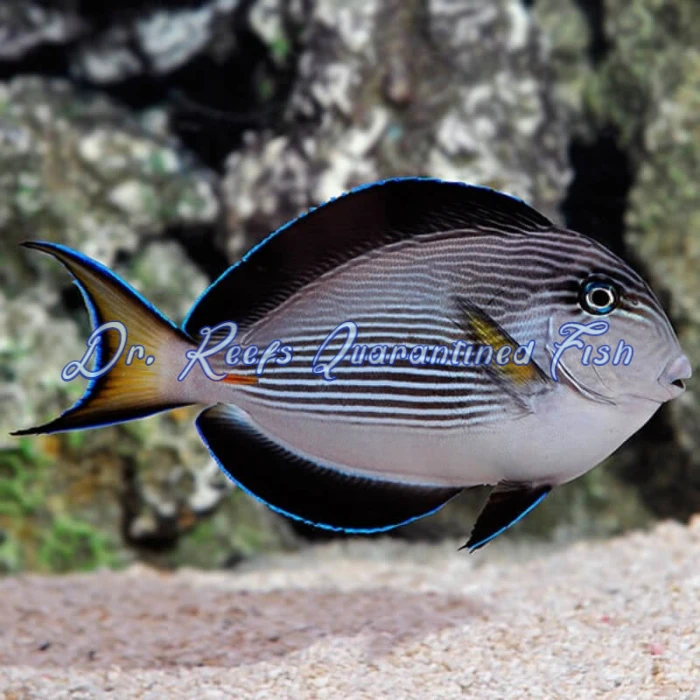
- Coloration: A dark blue to gray body with bold horizontal white and orange stripes, orange caudal peduncle accents, and electric blue fin edging. Color intensity improves significantly with proper diet and high water quality
- Personality: One of the most personable and behaviorally interesting fish in the hobby. It learns its keeper, responds to the presence of people near the tank, and commands every viewing
- Algae control: An extremely effective grazer that will keep nuisance algae cropped in a large system
- Longevity: With proper care in an appropriately sized system, the Sohal Tang can live 15 to 20 years
Tank and Care Requirements
Minimum System Requirements
- Tank volume: 250 gallons minimum. 300 to 500 gallons recommended for long-term adult keeping
- Dimensions: Tank length is more important than depth. 8 feet or longer preferred
- Water flow: Strong, multi-directional flow. Target 20 to 30 times tank volume per hour turnover
- Filtration: Oversized protein skimmer, heavy biological filtration, regular water changes
Water Parameters
- Temperature: 75–82°F (23–28°C)
- Salinity: 1.023–1.026
- pH: 8.1–8.4
- Ammonia and Nitrite: 0 ppm at all times
- Nitrate: Below 20 ppm for optimal health and color
Feeding the Sohal Tang
The Sohal Tang is a dedicated herbivore that grazes continuously throughout the day. In captivity it must have consistent access to algae-based foods. Feed two to three times daily with:
- Dried nori sheets on a clip, replenished daily
- Algae-based pellets and spirulina flakes
- Herbivore-formula frozen foods
- Naturally growing tank algae, which it will graze between feedings
A Sohal Tang that is not receiving adequate plant material in its diet will become more aggressive, lose color intensity, and become increasingly susceptible to ich and HLLE. Diet is the single most important long-term care factor for this species.
Compatible Tankmates
This is where planning matters most. The Sohal Tang will coexist with:
- Large angelfish species like Emperor Angels or French Angels in very large tanks
- Large groupers and similar predatory fish that the tang cannot intimidate
- Large triggers in tanks where there is enough space for both to establish territory
- Robust wrasse species like the Harlequin Tusk in tanks of 300 gallons or more
The Sohal Tang should generally not be kept with other tang species in tanks under 400 gallons. Even then, conflicts can occur. It should never be kept with other Acanthurus tangs in the same system.
Disease Susceptibility
Sohal Tangs are prone to marine ich (Cryptocaryon irritans) and marine velvet (Amyloodinium ocellatum), particularly during the stress of transport and introduction. HLLE is also a risk in tanks with poor diet or insufficient water flow. These are the primary health reasons that quarantine before introduction to a display tank is not just recommended but essential.
Why Dr. Reef’s Quarantine Matters Especially Here
At $399.99 to $459.99, a Sohal Tang is a significant purchase. Losing it to a preventable disease in the first month is a costly outcome. Dr. Reef’s Quarantined Fish holds every Sohal Tang for 30 to 45 days at the Tulsa facility in sterile, cycled quarantine tanks. During that period the fish is:
- Observed for signs of ich, velvet, or bacterial infection
- Treated as necessary and cleared before sale
- Conditioned to prepared aquarium foods
- Confirmed eating consistently on herbivore-formula foods
Customers are not charged until the livestock is confirmed ready to ship. An electronic invoice is sent one to two weeks before the scheduled dispatch date.
Shipping and Payment
All livestock at Dr. Reef’s ships via FedEx Priority Overnight from Tulsa, Oklahoma. Bagged in sterile saltwater with industrial-grade oxygen and packed in styrofoam with temperature-control packs sized for the season. Dispatch Tuesday through Thursday, delivery Wednesday through Friday. Free shipping on orders over $500. The Sohal Tang qualifies automatically at its purchase price.
Contact Dr. Reef’s
- Phone: (918) 964-3333
- Email: support@drreefs.com
- Website
Sohal Tang vs. Other Aggressive Tangs
| Species | Max Size | Aggression Level | Min Tank Size |
| Sohal Tang | 12–16 inches | Very High — dominates entire tank | 250 gallons |
| Achilles Tang | 9–10 inches | High — territorial toward tangs | 180 gallons |
| Purple Tang | 8 inches | Moderate — aggressive toward conspecifics | 100 gallons |
| Powder Blue Tang | 8–9 inches | Moderate — prone to ich under stress | 125 gallons |
| Yellow Tang | 7–8 inches | Low to Moderate | 75 gallons |
Frequently Asked Questions
Can I keep a Sohal Tang in a 150-gallon tank?
Not recommended for the long term. A juvenile may tolerate it briefly, but as the fish approaches full adult size, a 150-gallon tank will produce a stressed, highly aggressive specimen. Plan for 250 gallons minimum if you intend to keep this fish into adulthood.
Will the Sohal Tang harm my corals?
No. It is reef safe and will not damage coral tissue. It may occasionally rearrange lightweight rubble while grazing, but coral damage is not a concern with this species.
Can I keep more than one Sohal Tang?
This is extremely difficult even in very large systems. Sohal Tangs are solitary and intensely territorial. Keeping two in the same tank almost always results in one of them being severely harassed or killed.
What is the caudal peduncle spine and should I be careful?
All surgeonfish have a sharp spine near the base of the tail called the caudal peduncle spine. The Sohal Tang’s spine is particularly large and capable of inflicting a painful cut. Use caution when performing maintenance in a tank with an established Sohal Tang. Net handling should be done carefully and quickly.
Is the price of $399.99 to $459.99 reasonable for this species?
Yes. The Sohal Tang is collected exclusively from the Red Sea, which limits supply. Combined with the 30 to 45 day quarantine process, confirmed food conditioning, and disease clearance at the Tulsa facility, this price represents a professionally prepared specimen of a genuinely scarce fish.
The Bottom Line on the Sohal Tang
The Sohal Tang from Dr. Reef’s Quarantined Fish is the centerpiece fish for a large, purpose-built system owned by a serious and experienced marine hobbyist. It demands a 250-gallon minimum, strong water flow, careful tankmate selection, and an algae-heavy diet. In return, it delivers a fish that commands the tank, lives for 15 to 20 years, and brings one of the most striking color patterns in the ocean into your home. At $399.99 to $459.99, the combination of species rarity, quarantine protocol, and confirmed eating status makes this the most reliable way to bring a Sohal Tang home without the early mortality risk that comes from skipping professional preparation. Dr. Reef’s is built for this kind of purchase.
Order or inquire: drreefsquarantinedfish.com | (918) 964-3333 | support@drreefs.com