
Blue Star Leopard Wrasse for Sale: Why Many Hobbyists Struggle to Keep It Alive

Blue Star Leopard Wrasse for Sale: Why Many Hobbyists Struggle to Keep It Alive
$199.99 — Free Shipping on Orders Over $500
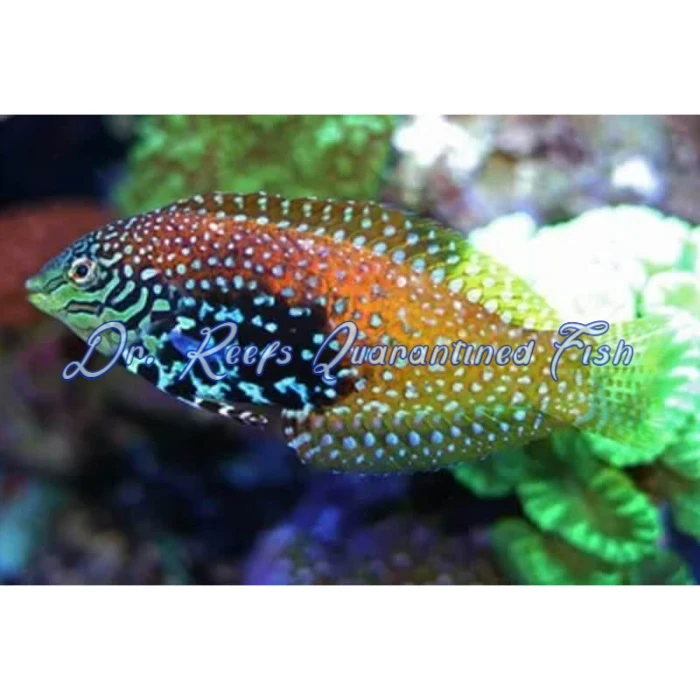
The Blue Star Leopard Wrasse is widely considered one of the most beautiful wrasse species available in the marine hobby. It is also one of the most frequently purchased and quickly lost. The gap between how it looks in a photo and how difficult it is to keep alive is larger for this species than almost any other commonly sold reef fish. Understanding why that gap exists is what this article is about. Dr. Reef’s Quarantined Fish offers the Blue Star Leopard Wrasse at $199.99 on drreefsquarantinedfish.com under Saltwater Fish, Wrasses Reefsafe.
Confirmed Specifications
| Field | Details |
| Scientific Name | Macropharyngodon bipartitus |
| Common Names | Blue Star Leopard Wrasse, Blue Spotted Wrasse |
| Care Level | Advanced |
| Temperament | Peaceful — reef safe |
| Diet | Carnivore — live copepods, amphipods, frozen mysis (once conditioned) |
| Reef Compatible | Yes — reef safe but hunts microfauna |
| Max Adult Size | 5 inches |
| Water Temperature | 72–78°F |
| Salinity (sg) | 1.020–1.025 |
| pH | 8.1–8.4 |
| Minimum Tank Size | 50 gallons |
| Family | Labridae |
| Quarantine Duration | 30–45 days at Dr. Reef’s Tulsa facility |
| Guarantee | Live Arrival Guarantee |
| Price | $199.99 — free shipping on orders over $500 |
What Is the Blue Star Leopard Wrasse?
The Blue Star Leopard Wrasse is a sand-dwelling wrasse native to the Indian Ocean and the Red Sea. The female displays intricate leopard-style spotting in white and orange-brown. The male develops the iridescent blue star-shaped markings that give the species its common name. Both sexes are visually striking, but the male is often the target for collectors.
In the wild, this species spends its day picking through sandy rubble and live rock rubble for tiny crustaceans, bristle worms, small mollusks, and other microfauna. At night, it buries itself completely in the sand to sleep. This burrowing behavior is not optional. It is a biological requirement.
Why Do So Many Hobbyists Lose This Fish?
The Blue Star Leopard Wrasse has a higher failure rate in captivity than almost any other routinely sold reef fish. Here are the specific reasons:
1. It Arrives Thin and Is Hard to Feed
This species is a specialized microfauna predator. In the wild it hunts constantly, picking through substrate all day for tiny living animals. In a newly set up or sterile quarantine tank, there is nothing to hunt. Most specimens arrive from importers already underweight from the stress of collection and transport. Without immediate access to live food, they continue to lose condition rapidly.
Many hobbyists receive a thin fish, cannot get it to eat prepared foods, and lose it within days or weeks of arrival.
2. No Sand Substrate Means No Survival
This species buries itself in sand every night without exception. Without fine, deep sand substrate (minimum 2 to 3 inches), it cannot sleep. A fish that cannot sleep does not recover from stress, does not eat properly, and dies early. Tanks with bare-bottom setups or thin sand layers are unsuitable for this species.
3. Poor Water Quality Kills It Fast
The Blue Star Leopard Wrasse is one of the most water-quality-sensitive fish in the hobby. Even brief spikes in ammonia, nitrite, or significant nitrate elevation can trigger rapid decline. This species requires a mature, stable, fully cycled system. It should never be introduced to a new tank.
4. Competition and Stress
Aggressive tank mates, fast-moving competitors at feeding time, or territorial wrasse species will stress the Blue Star Leopard Wrasse to the point where it stops eating entirely. It is a shy, non-confrontational species that loses feeding competitions easily.
What Makes the Dr. Reef’s Approach Different
The single biggest reason this species fails in most tanks is that it arrives from importers without being conditioned to prepared foods. It is still expecting live microfauna and does not recognize frozen or pellet foods as food at all.
Dr. Reef’s Quarantined Fish holds the Blue Star Leopard Wrasse for 30 to 45 days at the Tulsa facility in a dedicated quarantine system with a mature sand bed and copepod populations. During this period, each specimen is conditioned to accept prepared foods step by step, moving from live foods toward frozen mysis, brine shrimp, and cyclops. The fish must be confirmed eating consistently and have gained visible body weight before it is offered for sale or invoiced for shipping.
This pre-conditioning is what the $199.99 price reflects. It is not just a fish. It is a fish that has already passed the hardest survival test of captive life.
Tank Requirements for Long-Term Success
Substrate
Fine to medium grain sand at a minimum depth of 2 to 3 inches. This is not negotiable. The fish must be able to bury itself completely. Crushed coral or coarse substrate can damage the skin and fins during burrowing.
Established Tank
This species should only go into a tank that has been running for at least 6 months with a stable, mature sand bed and an established copepod and amphipod population. Dosing copepods or adding refugium-cultivated pods to the display before introduction helps bridge the transition.
Water Quality
- Temperature: 72–78°F
- Salinity: 1.020–1.025
- pH: 8.1–8.4
- Pristine water: Ammonia and nitrite at 0; nitrate below 10 ppm ideal
Feeding Frequency
Feed 3 to 4 times daily in small portions. This species grazes throughout the day in the wild and does not do well with once-daily large feedings. Target feed near the substrate where it naturally hunts.
What to Feed
- Live copepods and amphipods: Critical during initial weeks post-arrival
- Frozen mysis shrimp: Primary staple once conditioned
- Frozen brine shrimp enriched with Selcon or similar
- Frozen cyclops and other fine frozen foods
- Live blackworms: Useful for any specimen that is struggling to transition
Tankmate Compatibility
The Blue Star Leopard Wrasse should be kept with peaceful species only. Avoid:
- Other wrasse species that are territorial or fast-moving eaters
- Any fish that will compete aggressively at feeding time
- Large predatory fish that cause constant low-level stress
Suitable tankmates include gobies, small anthias, small clownfish, firefish, and other genuinely peaceful reef species.
Shipping and Payment
Ships via FedEx Priority Overnight from Tulsa, Oklahoma with sterile saltwater packing and industrial-grade oxygen. Tuesday through Thursday dispatch with Wednesday through Friday delivery. Free shipping on orders over $500. The Blue Star Leopard Wrasse at $199.99 qualifies automatically.
Payment accepted via PayPal, Stripe, Venmo, and Zelle. Invoice sent electronically before shipping. No charge at time of ordering.
Contact Dr. Reef’s
- Phone: (918) 964-3333
- Email: support@drreefs.com
- Website
Frequently Asked Questions
Is the Blue Star Leopard Wrasse suitable for beginners?
No. It carries an advanced care designation and is one of the more demanding species in the hobby. It requires specific tank setup, pristine water, live food availability during acclimation, and a fully established system. Beginners should build experience with hardier wrasse species first.
Will it bury itself during the day as well as at night?
It buries at night to sleep, which is normal. If it is burying during the day, that is a stress response. Stress burrowing is a warning sign that something in the environment is wrong, whether it is water quality, a threatening tank mate, or inadequate food.
Can it be kept with other leopard wrasse species?
Generally no, particularly in smaller systems. Multiple Macropharyngodon specimens in the same tank often leads to competition and stress. Single-specimen keeping is strongly recommended.
Why is it priced at $199.99 when I see it cheaper at other vendors?
The price reflects a 30 to 45 day conditioning process at the Dr. Reef’s Tulsa facility, confirmed prepared-food acceptance, and healthy body weight at time of shipping. Cheaper specimens elsewhere are typically freshly imported, unconditioned, and significantly higher risk.
The Bottom Line on the Blue Star Leopard Wrasse
The Blue Star Leopard Wrasse is one of the most beautiful fish in the marine hobby and one of the most unforgiving of husbandry gaps. The difference between success and failure with this species almost always comes down to one thing: whether the fish was conditioned to prepared foods before it arrived in your tank. The specimen from Dr. Reef’s Quarantined Fish has cleared that hurdle. For experienced reef keepers with the right system, the $199.99 price tag buys not just a stunning fish but the most viable version of that fish available anywhere in the trade.
Order or inquire: drreefsquarantinedfish.com | (918) 964-3333 | support@drreefs.com