
Tube Anemone for Sale: Care Differences from Bubble Tip Anemones

Tube Anemone for Sale: Care Differences from Bubble Tip Anemones
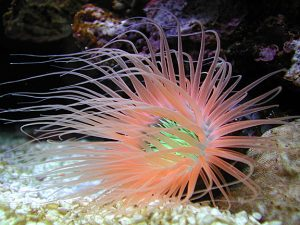
The Tube Anemone Super Orange, scientific name Cerianthus sp., is a visually striking and genuinely unique marine invertebrate that belongs to an entirely different biological group from Bubble Tip Anemones. It is reef compatible, requires a minimum tank of 30 gallons, and is always in stock and quarantined at Dr. Reef’s Quarantined Fish, based in Tulsa, Oklahoma, at $89.99. Shipping size is approximately 1 to 2 inches, confirmed on the Dr. Reef’s product page. All inverts at Dr. Reef’s are sold as quarantined only and ship overnight via UPS to all 50 states.
What Is a Tube Anemone?
The Tube Anemone looks like an anemone. It moves like an anemone. It even stings like an anemone. But here is what surprises most reef keepers when they first learn about it. The Tube Anemone is not actually an anemone at all.
True anemones like the Bubble Tip Anemone belong to the order Actiniaria. Tube Anemones belong to the order Ceriantharia, a completely separate group with fundamentally different biology, behavior, and care requirements. The two are only distantly related despite their similar appearance.
The Tube Anemone builds a leathery, protective tube in soft substrate using mucus and sediment particles. This tube is its permanent home. The animal lives inside with only its tentacle crown extending above the surface. When threatened, it withdraws entirely into the tube within seconds. Unlike true anemones, Tube Anemones cannot attach to rock surfaces. They are exclusively substrate dwellers and that requirement shapes every aspect of their tank setup.
How Much Does the Tube Anemone Cost at Dr. Reef’s?
The Tube Anemone Super Orange at Dr. Reef’s Quarantined Fish is $89.99. It is listed under Inverts and Anemones and is confirmed quarantined before shipping. Inverts at Dr. Reef’s are always in stock and ready to ship. Arriving size is approximately 1 to 2 inches. Free shipping on orders over $500. Overnight UPS delivery Tuesday through Thursday. Payment via PayPal, Stripe, and Venmo. Dr. Reef’s is a proud sponsor of Reef2Reef and ReefCentral.
Tube Anemone vs Bubble Tip Anemone: The Key Differences
This is the most important comparison for any reef keeper choosing between these two species and the differences go well beyond appearance.
The Bubble Tip Anemone, Entacmaea quadricolor, is a true anemone from the order Actiniaria. It attaches to hard substrates like rock surfaces using its muscular base called the pedal disc. It requires moderate to high lighting for photosynthesis because it hosts zooxanthellae algae in its tissue. It hosts clownfish. It needs a minimum 50 gallon tank. It is mobile and will relocate if unhappy with conditions.
The Tube Anemone, Cerianthus sp., belongs to the order Ceriantharia. It does not attach to rocks. It burrows into soft substrate and builds a tube that becomes its permanent home. Critically, it does not host zooxanthellae algae, which means it does not depend on light for energy the way true anemones and corals do. It is purely a carnivorous, filter feeding animal. It will not host clownfish. It requires a minimum 30 gallon tank. The confirmed minimum tank size for the Dr. Reef’s Tube Anemone Super Orange is 30 gallons, smaller than the 50 gallon minimum required for Bubble Tip Anemones.
The Tube Anemone has two rings of tentacles. The outer ring of longer tentacles is used for capturing prey. The inner ring of shorter tentacles around the mouth is used for passing food to the oral opening. Bubble Tip Anemones have a single ring of tentacles with bubble shaped or elongated tips.
The sting of a Tube Anemone is significantly more potent than that of a Bubble Tip Anemone. Tube Anemones are capable of stinging and harming corals and other invertebrates that come into contact with their outer tentacles. Placement planning and adequate spacing are essential.
Is the Tube Anemone Reef Compatible?
Reef compatible is confirmed on the Dr. Reef’s product page. However, this designation requires important context for Tube Anemones specifically.
The Tube Anemone will not eat corals or actively hunt reef inhabitants. But its powerful sting means any coral, shrimp, or invertebrate that drifts or wanders into contact with its extended outer tentacles can be stung and killed. Their tentacles extend significantly further than the visible body suggests, particularly at night when they open fully to feed.
For this reason, placement matters enormously. The Tube Anemone should be positioned in soft substrate with a generous buffer zone of open space around it, away from coral frags, ornamental shrimp, small fish, and other invertebrates that could accidentally make contact during its nighttime feeding extension.
A mature, established reef system with thoughtful placement and adequate spacing around the Tube Anemone is reef compatible in the practical sense. A crowded tank where corals and invertebrates are close together is not an appropriate setup for this species.
Does the Tube Anemone Need High Lighting?
No. This is one of the most important practical differences between Tube Anemones and Bubble Tip Anemones and it is a key reason many reef keepers choose Tube Anemones for low-light zones in their systems.
Because the Tube Anemone does not host zooxanthellae, it has no photosynthetic energy requirement. It does not need high PAR reef lighting to survive and thrive. It can be placed in lower light areas of the tank including shaded zones, deep sandbed areas, or tanks with moderate lighting that would be insufficient for SPS corals or Bubble Tip Anemones.
This makes the Tube Anemone a genuinely useful and visually dramatic option for filling sandbed real estate in areas where lighting is not optimized for photosynthetic organisms.
What Substrate Does the Tube Anemone Need?
Deep, soft substrate is the single most critical tank requirement for Tube Anemones. This is not optional or flexible. The Tube Anemone must be able to build its leathery tube by burrowing into sand or fine substrate. Without appropriate substrate depth, it cannot establish itself and will not survive long term.
A sand bed of at least 4 to 6 inches of fine substrate is the recommended standard for Tube Anemone keeping. The animal will burrow down into the sand, leaving only its tentacle crown visible above the surface. Over time it extends its tube deeper as it grows.
Do not use coarse gravel or crushed coral as the primary substrate in a tank housing Tube Anemones. Fine sand, fine aragonite, or a combination of sand and mud substrate work best.
How to Feed the Tube Anemone
The Tube Anemone is a carnivore and filter feeder. It does not generate energy through photosynthesis. It must be actively fed to thrive long term.
Target feed with small meaty foods including frozen mysis shrimp, frozen brine shrimp, small pieces of krill, silversides cut into small pieces, or raw table shrimp pieces. Place food directly onto or near the outer tentacle ring using feeding tongs, a pipette, or turkey baster. The tentacles will contact the food, sting it, and draw it toward the mouth in the center of the disc.
Feed two to three times per week for best long term health. Regular feeding maintains vibrant tentacle color, supports tube building, and keeps the animal visible and active rather than retracted deep in the substrate.
Do not overfeed. Excess uneaten food in the substrate around the tube degrades water quality and can create localized anaerobic conditions in the sand bed.
Why Does the Tube Anemone Retract?
New keepers are often startled to find their Tube Anemone has completely disappeared into the substrate. This is completely normal defensive behavior and does not indicate a problem.
Any sudden light change, water disturbance, approaching hand, or perceived threat causes the Tube Anemone to withdraw entirely into its tube within seconds. It may remain retracted for hours or even days after a significant disturbance. A Tube Anemone that consistently stays retracted and never extends to feed is a sign of environmental stress, poor water quality, or inappropriate tank conditions rather than normal defensive behavior.
A healthy Tube Anemone in an undisturbed, stable environment extends its tentacles fully at night or in low light conditions and can become a visually spectacular nighttime display in the reef system.
Tube Anemone Tankmates to Avoid
Because of the Tube Anemone’s powerful sting and substrate dwelling nature, certain tankmates create risk for either the anemone or for other tank residents.
Avoid keeping Tube Anemones with burrowing fish like sand sifting gobies, jawfish, and other species that excavate the substrate heavily. Persistent substrate disruption around the tube causes chronic stress and prevents stable tube building.
Avoid ornamental shrimp that wander the substrate at night and may accidentally contact the outer tentacles. Fire Shrimp, Cleaner Shrimp, and small crabs that forage the sandbed at night are all at risk from Tube Anemone stings.
Avoid placing Tube Anemones near soft corals, LPS corals with sweeping tentacles like Hammer and Torch, or any coral positioned close enough to the substrate surface that the Tube Anemone’s outer tentacles can reach during full nighttime extension.
Tube Anemone vs True Anemone: Which Is Right for Your Tank?
The right choice depends on your tank setup, livestock, and goals.
Choose a Bubble Tip Anemone from Dr. Reef’s if you want to host clownfish, have appropriate high intensity reef lighting, have a mature 50 plus gallon system, and want a mobile, responsive anemone that interacts visually with clownfish throughout the day.
Choose the Tube Anemone Super Orange from Dr. Reef’s if you want a dramatic, deeply colored display animal for the sandbed, have a 30 plus gallon system with adequate fine sand depth, do not need clownfish hosting behavior, and want a species that thrives without high intensity lighting in areas of the tank that other photosynthetic organisms cannot occupy.
Both are quarantined at Dr. Reef’s, both are always in stock, and both ship overnight via UPS from Tulsa, Oklahoma.
Frequently Asked Questions About Tube Anemones
Q: Is the Tube Anemone the same as a Bubble Tip Anemone?
A: No. They are from completely different biological orders. Tube Anemones are Ceriantharia. Bubble Tip Anemones are Actiniaria. They differ in biology, behavior, substrate requirements, lighting needs, and clownfish hosting ability.
Q: What is the minimum tank size for the Tube Anemone Super Orange?
A: 30 gallons confirmed on the Dr. Reef’s product page. This is smaller than the 50 gallon minimum for Bubble Tip Anemones.
Q: Does the Tube Anemone host clownfish?
A: No. Tube Anemones do not host clownfish. If clownfish hosting is your goal, choose a Bubble Tip Anemone from Dr. Reef’s instead.
Q: Does the Tube Anemone need high lighting?
A: No. Tube Anemones do not host zooxanthellae and have no photosynthetic energy requirement. They thrive in low to moderate lighting conditions.
Q: What size does the Tube Anemone arrive from Dr. Reef’s?
A: Approximately 1 to 2 inches confirmed on the Dr. Reef’s product page. All inverts are quarantined and always in stock.
Q: Is the Tube Anemone reef safe?
A: Reef compatible per the Dr. Reef’s product page. Its powerful sting requires careful placement with generous spacing from corals, ornamental shrimp, and small fish.
Q: How do I feed my Tube Anemone?
A: Target feed two to three times per week with frozen mysis, krill, brine shrimp, or small pieces of raw shrimp placed directly onto the outer tentacle ring.
Q: Why has my Tube Anemone disappeared into the sand?
A: Complete retraction into the tube is normal defensive behavior. It may stay retracted for hours or days after disturbance. Consistent permanent retraction suggests environmental stress that should be investigated.
The Bottom Line on Tube Anemones
The Tube Anemone Super Orange is a genuinely different kind of reef display animal. It fills substrate real estate that photosynthetic animals cannot, it thrives under lower lighting, it requires no clownfish hosting consideration, and its dramatic orange tentacle display at night is one of the most visually striking sights available for a sandbed focused reef system.
At $89.99 from Dr. Reef’s Quarantined Fish, quarantined, always in stock, and shipping approximately 1 to 2 inches overnight via UPS from Tulsa, Oklahoma, it is an accessible, responsibly sourced, and genuinely rewarding addition to the right reef setup. Browse all quarantined anemone options at drreefsquarantinedfish.com and find the right variety for your system.