
Blood Red Fire Shrimp for Sale: Care and Reef Compatibility

Blood Red Fire Shrimp for Sale: Care and Reef Compatibility
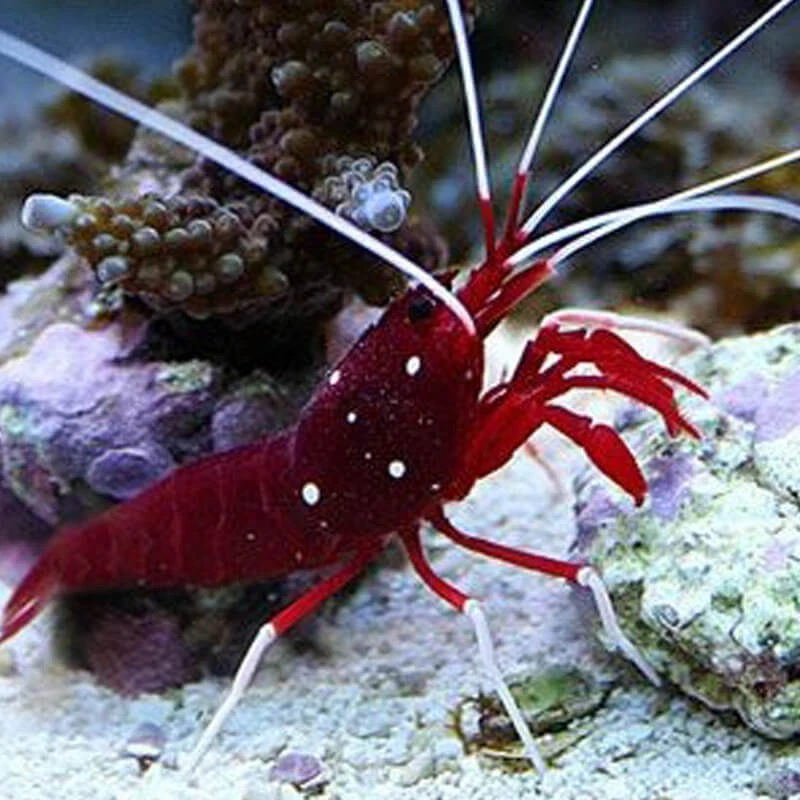
The Fire Shrimp, scientific name Lysmata debelius, also commonly known as the Blood Shrimp, Blood Red Fire Shrimp, and Scarlet Cleaner Shrimp, is a stunning reef safe invertebrate featuring deep blood-red coloration with bright white spots and long white antennae. It is rated easy to moderate care level, grows to 2 inches, and requires a minimum tank of 20 gallons. Dr. Reef’s Quarantined Fish offers the Fire Shrimp at $69.99 with a 5 out of 5 star customer rating based on verified buyer reviews. All inverts at Dr. Reef’s are sold only as quarantined and are always in stock and ready to ship overnight via UPS to all 50 states.
What Is the Fire Shrimp?
The Fire Shrimp is one of the most visually striking invertebrates available for reef tanks. Its deep blood-red body is dotted with bright white spots and it carries long, brilliant white antennae that remain visible even when the shrimp is tucked inside a cave. Native to the Indo-Pacific, this species inhabits reef environments where it lives in caves and rocky crevices, occasionally venturing out to scavenge food or perform cleaning services for fish.
Dr. Reef’s lists the Fire Shrimp under Inverts and Shrimp categories on their website at drreefsquarantinedfish.com.
How Much Does the Fire Shrimp Cost at Dr. Reef’s?
The Fire Shrimp at Dr. Reef’s Quarantined Fish is $69.99 per specimen. It carries a 5 out of 5 star verified customer rating. A customer review on the product page confirms the shrimp settled in within one day, became a very aggressive eater, and was described as beautiful in the tank. All inverts at Dr. Reef’s are quarantined before shipping. Orders ship overnight via UPS with free shipping on orders over $500.
Is the Fire Shrimp Reef Safe?
Yes. The Fire Shrimp is completely reef safe. This is confirmed directly on the Dr. Reef’s product page with no caveats. It will not harm corals, clams, anemones, or any other reef invertebrate. Its diet is entirely scavenger based. Soft corals, LPS, SPS, and tridacna clams are all completely safe in the same tank as a Fire Shrimp.
This makes the Fire Shrimp one of the safest and most colorful invertebrate additions available for any reef system regardless of coral type or stocking level.
Confirmed Water Parameters for the Fire Shrimp
Per the Dr. Reef’s product page. Temperature 72 to 78 degrees Fahrenheit. Salinity 1.023 to 1.025. pH 8.1 to 8.4. Stable, high quality water conditions are essential. Like all invertebrates, the Fire Shrimp is extremely sensitive to copper based medications. Never use copper treatments in any system housing Fire Shrimp or any other invertebrate.
What Tank Size Does the Fire Shrimp Need?
The minimum confirmed tank size on the Dr. Reef’s product page is 20 gallons. A 30 gallon or larger tank is preferred for the shrimp’s long term comfort. The Fire Shrimp does not need a large amount of swimming space but it does need quality live rock with caves, overhangs, and deep crevices to feel secure. Without adequate hiding spots, this species stays hidden and stressed. With proper cave structures, it gradually becomes more visible and confident over time.
Why Is the Fire Shrimp So Shy?
Understanding the natural shyness of the Fire Shrimp sets realistic expectations and helps you set up the tank correctly for success.
In the wild, this species lives in dim cave environments and ventures out primarily at night or in low light conditions. In captivity, this behavior continues. When first introduced, the Fire Shrimp may disappear entirely for days or even weeks. This is completely normal behavior, not a sign of poor health. You will often see only the long white antennae extending from a cave entrance.
Patience is essential with this species. Most Fire Shrimp become gradually bolder over weeks and months as they establish comfort and trust in their new environment. Keeping a pair rather than a single specimen tends to produce more visible, confident behavior. Peaceful tankmates, subdued lighting or shaded areas, and an undisturbed cave structure all help.
How to Feed the Fire Shrimp
The Fire Shrimp is an opportunistic omnivore. Its natural diet in the wild includes small food particles, detritus, and organic matter that accumulates in cave environments. It may also occasionally clean parasites and debris from fish, though it does this less consistently than the Skunk Cleaner Shrimp.
In captivity, offer frozen mysis shrimp, frozen brine shrimp, high quality sinking pellets, and chopped frozen seafood. Feed once daily and consider target feeding near hiding spots to ensure the shrimp receives adequate nutrition rather than being outcompeted by faster moving tank inhabitants. Feeding after the aquarium lights dim can encourage the Fire Shrimp to emerge more boldly.
Fire Shrimp vs Cleaner Shrimp: Which Should You Choose?
This is one of the most common questions reef keepers ask and the honest answer is that both serve different purposes.
The Skunk Cleaner Shrimp, Lysmata amboinensis, is far more active and visible. It performs cleaning station behaviors consistently and is rarely shy once established. If you want a shrimp that actively cleans fish and is highly visible throughout the day, the Skunk Cleaner Shrimp is the better choice.
The Fire Shrimp is more reclusive but delivers dramatically more visual impact in terms of pure color. That blood red body with white spots and antennae is one of the most striking sights in reef keeping. It still occasionally performs cleaning services but not as reliably or consistently as the Cleaner Shrimp.
Many experienced reef keepers keep one of each. They serve complementary roles and coexist peacefully. Dr. Reef’s carries both species, with the Cleaner Shrimp listed at $49.99 and the Fire Shrimp at $69.99.
Fire Shrimp Social Structure and Breeding
The Fire Shrimp is a simultaneous hermaphrodite, meaning every individual has both male and female reproductive organs. Pairs can be kept successfully and commonly breed in home aquariums. Paired specimens carry visible dark green or brown eggs and are generally more confident and visible than single specimens.
Larvae from Fire Shrimp breeding are extremely difficult to raise in captivity, but the breeding behavior itself is fascinating to observe and a sign of a healthy, comfortable pair in a well maintained reef system.
Tankmates to Avoid With the Fire Shrimp
The Fire Shrimp is vulnerable to predation from triggerfish, large aggressive wrasses, groupers, lionfish, and other predatory species. Do not keep Fire Shrimp with any fish known to eat ornamental shrimp. Beyond this, the Fire Shrimp is compatible with essentially all peaceful reef fish and invertebrates.
The Fire Shrimp is also an excellent jumper when startled. A secure aquarium lid is strongly recommended, particularly in the first weeks after introduction before the shrimp has settled into familiar territory.
Iodine Supplementation and Molting
The Fire Shrimp molts regularly as part of its normal growth cycle. Around molting periods it may remain hidden for several days. This is completely normal and should not cause alarm. The empty shed exoskeleton can look like a dead shrimp at first glance. Leave it in the tank as the shrimp will often consume it for the minerals it contains.
Providing iodine supplementation supports healthy molting cycles. This can be done through regular water changes with high quality salt mix, which naturally replenishes trace minerals including iodine, or through targeted supplementation. Consult your specific salt mix parameters to determine whether additional supplementation is needed.
What the Customer Reviews Say
The Fire Shrimp at Dr. Reef’s Quarantined Fish holds a 5 out of 5 star rating from verified customers. One confirmed buyer noted the shrimp settled in within a single day, became a very aggressive eater, and was described as beautiful. This reflects the quality of Dr. Reef’s quarantine process and the condition in which their invertebrates arrive.
Frequently Asked Questions About the Fire Shrimp
Q: Is the Fire Shrimp the same as the Blood Red Fire Shrimp? A: Yes. Fire Shrimp, Blood Shrimp, Blood Red Fire Shrimp, and Scarlet Cleaner Shrimp are all common names for the same species, Lysmata debelius.
Q: Is the Fire Shrimp completely reef safe? A: Yes. Confirmed completely reef safe on the Dr. Reef’s product page. It will not harm corals, clams, or any reef invertebrate.
Q: What is the minimum tank size for a Fire Shrimp? A: 20 gallons confirmed minimum per Dr. Reef’s product page. 30 gallons or more is preferred for long term comfort.
Q: Why is my Fire Shrimp hiding all the time? A: This is completely normal behavior for this species. It is naturally reclusive and cave dwelling. Give it weeks to months to gain confidence. Provide proper cave structures, peaceful tankmates, and subdued or shaded lighting areas.
Q: Can I keep two Fire Shrimp together? A: Yes. Pairs coexist well and are generally more visible and confident than single specimens. They may breed regularly in a healthy reef system.
Q: What is the difference between a Fire Shrimp and a Cleaner Shrimp? A: The Fire Shrimp is more reclusive with dramatically more striking red coloration. The Skunk Cleaner Shrimp is far more visible and active, performing cleaning station behaviors more consistently. Many keepers maintain both species in the same tank.
Q: How long does a Fire Shrimp live? A: The Dr. Reef’s product page confirms 2 to 3 years with proper care and up to 4 years with optimal tank conditions.
Q: Does Dr. Reef’s quarantine the Fire Shrimp? A: Yes. All inverts at Dr. Reef’s are sold only as quarantined. The Fire Shrimp is always in stock and ships quarantined and ready.
The Bottom Line on the Fire Shrimp
The Blood Red Fire Shrimp is one of the most visually stunning and completely reef safe invertebrates available in the saltwater hobby. It is fully reef safe, low maintenance, and compatible with virtually any peaceful reef system of 20 gallons or more. The key to success is patience, proper cave structure, and peaceful tankmates.
At $69.99 from Dr. Reef’s Quarantined Fish with a 5 out of 5 star verified customer rating, free shipping on orders over $500, overnight UPS delivery, and every specimen sold as quarantined, this is one of the best value and most reliable invertebrate purchases available anywhere in the online reef hobby.