
Trochus Snails for Sale: The Best Algae Eaters?

Trochus Snails for Sale: The Best Algae Eaters?
Walk into any conversation about reef tank clean-up crews and the Trochus Snail comes up almost immediately. It is reliable, hardy, actively grazes where other snails cannot, and has one trick that no other common aquarium snail can match. It can right itself after being knocked over. That single ability, which sounds minor, is actually a game-changing survival advantage that makes Trochus Snails the longest-living, most effective snail choice for most reef systems. But are they truly the best algae eaters available?
What Is a Trochus Snail?
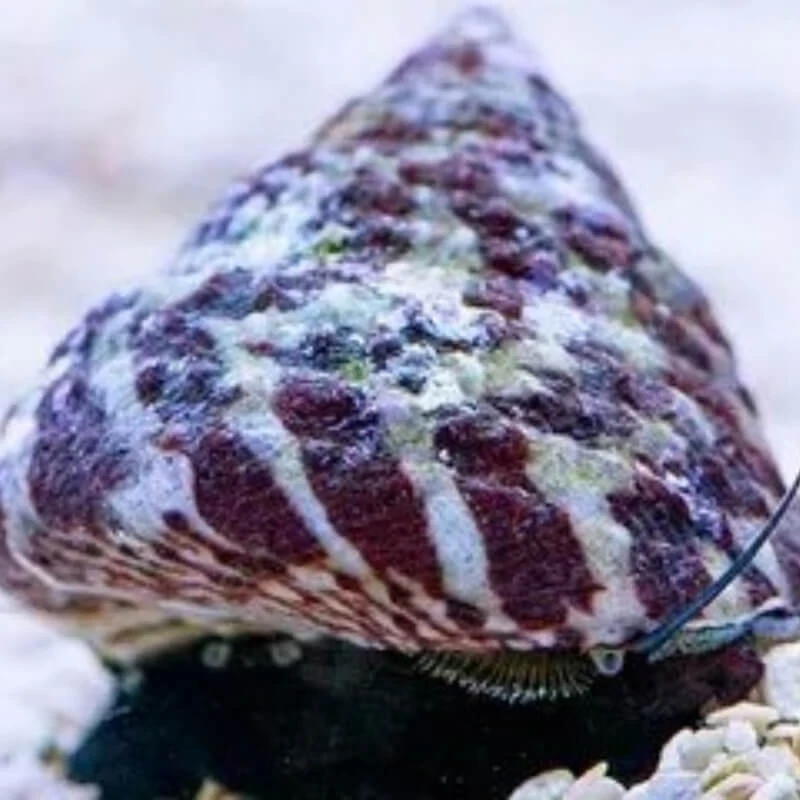
The Trochus Snail, belonging to the genus Trochus and family Trochidae, is a marine gastropod native to the Indo-Pacific Ocean. It features a distinctively conical, top-shaped shell with a flat base and pointed apex. Shell coloring varies from gray to reddish brown with white spiral banding. The snail itself is active, robust, and reaches about one to one and a half inches in shell height as an adult.
The Self-Righting Advantage
Why This Matters So Much
Every reef hobbyist who has kept Astrea Snails has experienced this scenario. The snail falls off the glass or a rock, lands upside down on the sand bed, and cannot flip itself back over. Stuck on its back, it slowly dies. You can manually right them but in a tank with many snails across a large aquascape, you will miss some. Dead snails spike ammonia and degrade water quality.
Trochus Snails Solve This Problem
Trochus Snails can right themselves from an upside-down position using their muscular foot. They flip back over without any assistance and continue grazing immediately. In the long run this means more snails survive, your cleaning crew stays at effective population levels longer, and you spend less money replacing snail losses over time.
What Do Trochus Snails Eat?
Film Algae
Trochus Snails graze thin film algae from glass, rock, and coral skeleton surfaces constantly. Their radula, the rasping feeding structure, effectively removes film algae that coats surfaces in sheets invisible to the naked eye.
Hair Algae
Moderate hair algae growth gets grazed by active Trochus Snails working across rock surfaces. They are not as effective against thick, established hair algae mats as some larger turbo-style snails but they maintain surfaces well and prevent light growth from becoming heavy infestations.
Diatoms
The brown diatom bloom that plagues new tanks and occurs periodically in established systems is one of the Trochus Snail’s primary food sources. A group of Trochus Snails in a new tank experiencing a diatom bloom will visibly clear glass and rock surfaces within days.
Coralline Algae
Trochus snails graze lightly on coralline algae, which like the Tuxedo Urchin actually helps spread coralline spores and promotes new growth in areas adjacent to where they feed. Net coralline growth in a healthy system remains positive with Trochus Snails present.
How Do Trochus Snails Compare to Other Algae Eaters?
Trochus wins on longevity due to the self-righting advantage. Astrea Snails graze at a similar pace but die in significantly higher numbers from falling. Over a six to twelve month period, a Trochus population maintains itself far better than an equivalent Astrea population.
Trochus vs Turbo Snails
Turbo Snails graze faster and more aggressively, making them better for heavy algae problems. However, they are larger, more disruptive to aquascapes, and cannot right themselves. Trochus Snails are the better long-term maintenance choice while Turbos are the better emergency algae-removal choice.
These two species occupy different niches. Cerith Snails focus on sand bed and glass cleaning. Trochus Snails focus on rock and glass surface grazing. They are complementary rather than competitive and work best together in a comprehensive clean-up crew.
Trochus Snail Pricing at Dr. Reef’s
At Dr. Reef’s Quarantined Fish, Trochus Snails are priced at $39.99 to $149.99 at Dr.Reef’s Quarantined fish depending on quantity selected. Buying in larger quantities through Dr. Reef’s gives you the per-snail value needed to stock your tank at effective population levels without overspending. Every snail goes through Dr. Reef’s professional quarantine process before shipping, which prevents hitchhiker pests and pathogens from entering your display system with your new clean-up crew.
How Many Trochus Snails Do You Need?
General Stocking Guide
One Trochus Snail per 2 to 5 gallons of display volume is a commonly recommended starting point. A 75-gallon reef with moderate algae growth benefits from 15 to 30 Trochus Snails working as an active maintenance crew.
Adjust for Algae Load
Tanks with heavier algae growth need more snails initially. Once algae is under control, the population can be maintained at a lower level since the snails prevent regrowth more than they eliminate established growth.
Tank Size
Trochus Snails work in tanks from 10 gallons and up. Their adaptability makes them suitable for nano reefs and large display systems.
Water Parameters
Standard reef parameters apply perfectly. Temperature between 72 and 78 degrees Fahrenheit. Salinity at 1.023 to 1.025. Stable alkalinity and calcium support healthy shell maintenance over time.
Supplemental Feeding
In very clean tanks where algae is minimal, Trochus Snails may need supplemental feeding. Place a small piece of dried nori near the rockwork to sustain the population during low-algae periods.
Breeding in Captivity
Trochus Snails breed in reef tanks with stable parameters and adequate food supply. Spawning events release eggs into the water column and small juvenile snails occasionally appear on glass and rock surfaces in well-established tanks. This natural reproduction helps maintain population levels over time.
Quick Q and A
Q: Are Trochus Snails truly the best algae eaters for reef tanks?
A: For long-term, low-maintenance algae control they are the top choice for most reef systems. Their self-righting ability, broad diet, and reef-safe behavior make them the most practical all-around algae-grazing snail available.
Q: How long do Trochus Snails live in a reef tank?
A: With proper conditions they can live several years. Their self-righting ability means far fewer losses from falling compared to other snail species, which significantly extends effective population lifespan.
Q: Will Trochus Snails bother my corals?
A: No. They graze algae growing on surfaces and do not disturb coral tissue. They are completely reef safe.
Q: How much do Trochus Snails cost at Dr. Reef’s?
A: Trochus Snails are priced at $39.99 to $149.99 at Dr.Reef’s Quarantined fish depending on quantity, with professional quarantine included on every order.
Q: Can Trochus Snails live in a nano reef tank?
A: Yes. They adapt well to small systems from 10 gallons and up. Stock two to five snails in a nano reef for effective maintenance grazing.
Q: What is the biggest advantage of Trochus Snails over Astrea Snails?
A: The ability to self-right after falling. This single advantage means dramatically lower mortality rates over time, a more stable clean-up crew population, and significantly better long-term value per snail purchased.
Essential Snail Care Tips for Beginners
The Trochus Snail earns its reputation as the best long-term algae-grazing snail for most reef systems. Hardy, effective, self-righting, and reef safe, it checks every box that matters for a clean-up crew member that will still be working hard in your tank two years from now. At $39.99 to $149.99 from Dr. Reef’s Quarantined Fish, buying a properly quarantined group of Trochus Snails is one of the smartest investments you can make in your reef’s long-term cleanliness and stability. Visit Dr. Reef’s Quarantined Fish today and build the clean-up crew your reef deserves.