
Female Guppy Fish

Female Guppy Fish for Sale: Breeding and Tank Setup Guide
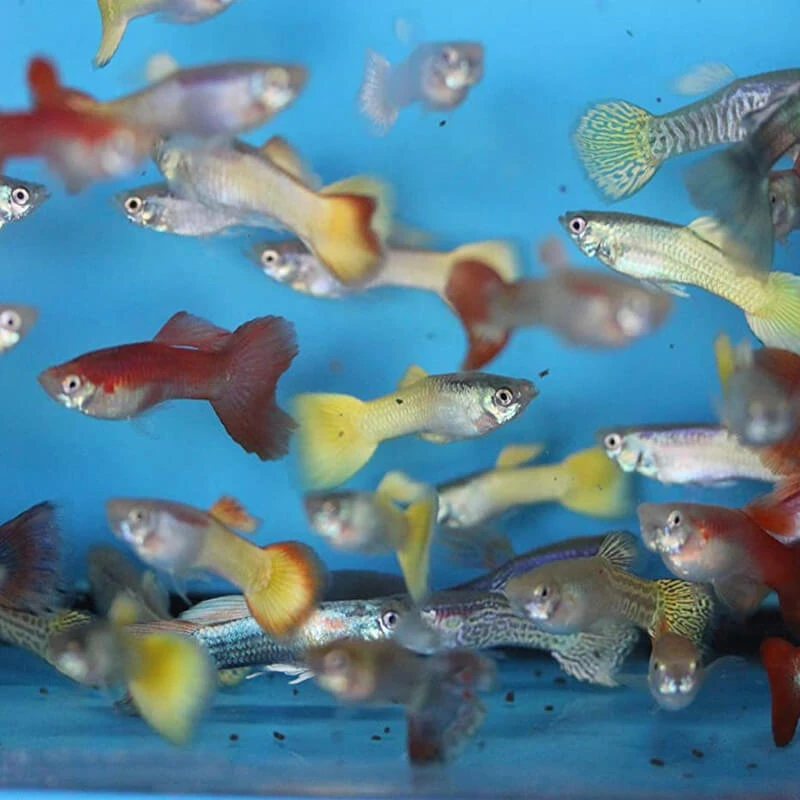
Guppies might be the most popular freshwater fish on the planet. And for very good reason. They are colorful, peaceful, easy to feed, and they breed so readily that many hobbyists find themselves with more fish than they planned for in the best possible way. The female guppy is the engine of every guppy breeding program and deserves far more attention than she usually gets. This complete guide covers everything about female guppy care, breeding, tank setup, and where to buy healthy specimens today.
What Is a Female Guppy?
The Guppy, scientifically known as Poecilia reticulata, is a small livebearer native to northeastern South America and parts of the Caribbean. They have been selectively bred in captivity for well over a century, producing hundreds of color and fin varieties that look nothing like the original wild fish.
How Do You Tell a Female Guppy Apart?
Size Difference
Female guppies are noticeably larger than males, typically reaching 1.5 to 2.5 inches compared to the male’s 1 to 1.5 inches. That size difference is one of the first things you notice when both sexes are in the same tank.
Color and Fins
Females are usually less colorful than males, displaying more subdued tones of silver, gray, olive, or light tan with minimal patterning. Their fins are shorter and more functional compared to the elaborate flowing tails of show-quality males.
The Gravid Spot
Female guppies develop a dark triangular patch near the rear of the abdomen called the gravid spot. As a female approaches giving birth, this spot darkens and enlarges noticeably. This is one of the clearest signs of pregnancy in any livebearer species.
Why Female Guppies Matter So Much
In any guppy breeding program, the females determine everything. They carry the fry, influence genetic outcomes, and regulate the pace of your breeding operation. A healthy, well-conditioned female guppy can give birth to 20 to 60 live fry every 28 days under good conditions. That productivity makes female selection the most important decision in guppy breeding.
Assorted Female Guppy Pricing at Dr. Reef’s
Dr. Reef’s Quarantined Fish offers Assorted Female Guppies at just $4.99 each. This is an outstanding value for healthy, assorted female guppies from a seller known for quality livestock standards across both marine and freshwater species. Buying assorted females gives you genetic variety that strengthens your breeding stock and produces more diverse, colorful offspring across generations.
Tank Setup for Female Guppies
Tank Size
A 10-gallon tank is a practical minimum for a small group of female guppies. A 20-gallon long tank is the sweet spot for a breeding group of three to five females with one to two males. Larger tanks give fry more hiding space and survival options.
Use a sponge filter rather than a power filter with an intake tube. Fry are tiny and will be sucked into standard filter intakes. A sponge filter provides gentle biological filtration with zero fry risk and has the added benefit of growing microorganisms that newborn fry can graze on.
Temperature
Guppies thrive between 74 and 82 degrees Fahrenheit. Breeding activity is most consistent at the higher end of that range around 78 to 80 degrees. A reliable small heater keeps temperature stable year-round.
Water Parameters
Guppies are adaptable but prefer slightly hard, alkaline water. pH between 7.0 and 7.8. They tolerate a range of water hardness levels but do best with moderate mineral content. Regular water changes of 25 to 30 percent weekly keep the tank healthy and stimulate breeding activity.
Dense planting is essential in a breeding tank. Java moss, hornwort, guppy grass, and floating plants like frogbit provide critical cover for newborn fry. Without hiding spots, adults including the mother will eat a significant portion of each birth. Plants save fry lives.
Feeding Female Guppies
What Do Female Guppies Eat?
Female guppies are omnivores that accept a wide range of foods. High-quality flake food forms the nutritional foundation of their diet. Supplement with frozen baby brine shrimp, daphnia, and micro worms for breeding conditions. Protein-rich foods significantly improve fry counts and birth frequency in breeding females.
How Often to Feed
Feed small amounts two to three times daily. A well-fed female in breeding condition should look round and healthy but never bloated or lethargic. Overfeeding degrades water quality fast in small breeding tanks.
Newborn guppy fry are surprisingly capable eaters from day one. Crushed flake food, baby brine shrimp, and liquid fry food all work well. Feed fry four to five small meals daily for fastest growth and best survival rates.
Breeding Female Guppies Successfully
Ratio of Males to Females
Always keep more females than males. A ratio of one male to two or three females prevents constant harassment of individual females. An over-pestered female stops eating, hides constantly, and produces fewer, weaker fry.
Separating Pregnant Females
Move visibly pregnant females with a dark, enlarged gravid spot into a separate breeding or nursery tank a few days before the expected birth. This eliminates stress from tankmates during the birth process and dramatically improves fry survival rates.
How Long Is the Gestation Period?
Female guppies gestate for approximately 28 days at optimal temperatures. A healthy, well-fed female on this schedule can produce close to 200 to 300 fry per month at peak breeding productivity with proper management.
Selective Breeding Basics
If you want to develop specific color lines or fin types, separate females by desired trait and pair them exclusively with males carrying the traits you want to reinforce. Track lineages and cull heavily deformed individuals from the breeding population. Guppy selective breeding is a genuinely rewarding hobby within a hobby.
Quick Q and A
Q: How do I know if my female guppy is pregnant?
A: Look for a darkening and enlarging gravid spot near the rear of the abdomen. A noticeably rounder belly than usual is another clear sign.
Q: How many female guppies should I buy to start a breeding project?
A: Start with three to five assorted females from Dr. Reef’s at $4.99 each. Genetic variety in assorted females gives you a stronger, more diverse founding stock.
Q: Why are my female guppies not giving birth?
A: Common causes include water temperature below optimal range, poor nutrition, stress from male harassment, or inadequate tank maturity. Check temperature first, then evaluate male-to-female ratio.
Q: Can female guppies get pregnant without a male present?
A: Yes. Female guppies can store sperm for up to six months and continue producing fry without a male present after a single mating. A seemingly isolated female can still give birth.
Q: What is the best food for increasing fry survival rates?
A: Baby brine shrimp is the single best food for newborn guppy fry. It is highly nutritious, perfectly sized, and stimulates active feeding behavior from the very first day.
Q: Are assorted female guppies good for breeding?
A: Absolutely. Assorted females at $4.99 from Dr. Reef’s provide genetic diversity that produces more varied and colorful offspring, which is ideal for hobbyists building a breeding program from scratch.
Key Takeaways for Fish Owners
The female guppy is the heartbeat of one of the most accessible and rewarding breeding projects in the freshwater hobby. At just $4.99 each for assorted females from Dr. Reef’s Quarantined Fish, starting a healthy, productive guppy breeding program has never been more affordable. Whether you are a beginner exploring livebearer breeding for the first time or an experienced hobbyist building a new color line, Dr. Reef’s quality livestock standards give your breeding project the best possible foundation. Visit Dr. Reef’s Quarantined Fish today and bring home your founding females.