
Clown Tang Care Guide

Clown Tang Care Guide: Tank Size, Diet, and Aggression
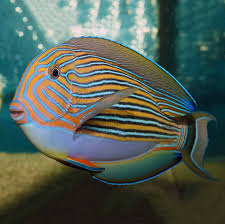
Few saltwater fish make a visual statement quite like the Clown Tang (Acanthurus lineatus). Its vivid horizontal stripes of electric blue, yellow-orange, and black running the full length of its streamlined body make it one of the most recognizable and striking surgeonfishes available in the marine hobby. It is a genuine showpiece species that commands attention in any large marine system. However, the Clown Tang is also one of the more demanding and challenging tangs in the hobby, and it is a fish that does not forgive poor planning or inadequate preparation.
What Is the Clown Tang?
The Clown Tang is a surgeonfish native to the tropical Indo-Pacific, found across shallow reef flats, lagoons, and outer reef slopes from the East African coast through Polynesia. In the wild it is often found grazing in loosely organized groups across algae-covered reef surfaces, defending feeding territories aggressively against competitors. In captivity it grows to around 12 to 15 inches as an adult and lives for many years under proper conditions, making it a long-term commitment rather than a casual purchase.
The caudal peduncle carries a pair of sharp, scalpel-like spines typical of the surgeonfish family. These spines are used in dominance disputes with other fish and can inflict serious cuts on both tankmates and hobbyists during handling or net chasing. Exercise caution whenever working in a tank that contains a Clown Tang, particularly during moves or water changes when the fish may feel threatened.
Tank Size Requirements
The Clown Tang is a fast, powerful, open-water swimmer that covers considerable horizontal distance throughout the day in constant search of grazing territory and feeding opportunities. A minimum of 180 gallons is required for a single adult specimen, and systems of 250 gallons or more are genuinely ideal. Horizontal swimming space matters far more than tank height for this species, so long, wide tank footprints are strongly preferred over tall, narrow designs.
Cramped conditions create a compounding set of problems for this species. Insufficient space leads to chronic stress, which suppresses immune function, intensifies aggression toward all tankmates, and makes the fish significantly more difficult to manage over time. Do not attempt to house a Clown Tang in an undersized system with the intention of upgrading later. Plan and build the appropriate setup before purchase.
Aggression and Tankmate Selection
The Clown Tang is highly territorial toward other surgeonfishes and tangs and should generally be kept as the only tang in the system unless the tank is 300 gallons or larger. Even in suitably large systems, introducing multiple tangs simultaneously rather than sequentially reduces the risk of territorial conflict significantly.
With non-tang species, the Clown Tang can be manageable in a well-planned community but remains assertive and should never be underestimated. Suitable tankmates include large marine angelfish, robust groupers, large wrasses, and other substantial reef fish with strong personalities of their own. Avoid small, passive, or timid species that cannot compete for space or withstand occasional aggression from a dominant, territorial tang.
Diet and Nutrition
As a predominantly herbivorous species, the Clown Tang’s diet must center on marine plant material provided consistently and generously. Offer dried Nori seaweed sheets attached to a feeding clip daily, supplemented with frozen herbivore formula blends, spirulina-enriched frozen foods, and high-quality marine pellets formulated for herbivorous surgeonfishes. Occasional offerings of frozen mysis shrimp and other protein-based foods add useful nutritional variety and help prevent deficiencies.
Underfed Clown Tangs become markedly more aggressive, more territorial, and significantly more susceptible to external parasites and disease. Generous, consistent feeding is not optional with this species. It is one of the most effective tools available for maintaining a manageable and stable Clown Tang in captivity.
Health and Quarantine
The Clown Tang is prone to marine ich, velvet, and other external parasitic infections, particularly when stressed by poor water quality, insufficient tank size, or inappropriate tankmates. A proper quarantine period of at least four weeks is essential for all new arrivals and should never be skipped regardless of how healthy the fish appears at the point of purchase. At Dr. Reef’s Quarantined Fish, every fish goes through a rigorous quarantine and observation process so you can introduce your new Clown Tang knowing it arrives in the best possible condition and ready to thrive.