
Leopard Wrasse

Leopard Wrasse for Sale: Sand-Sleeping Wrasse Care Guide
The Leopard Wrasse is one of the most elegantly beautiful fish in the entire saltwater hobby. Its intricate spotted patterning, graceful swimming style, and fascinating sand-sleeping behavior make it a captivating species that experienced reef keepers absolutely love. At Dr. Reef’s Quarantined Fish, we take the specialized care required to properly condition Leopard Wrasses seriously, giving you the best possible foundation for success with this stunning but demanding species.
What Is a Leopard Wrasse?
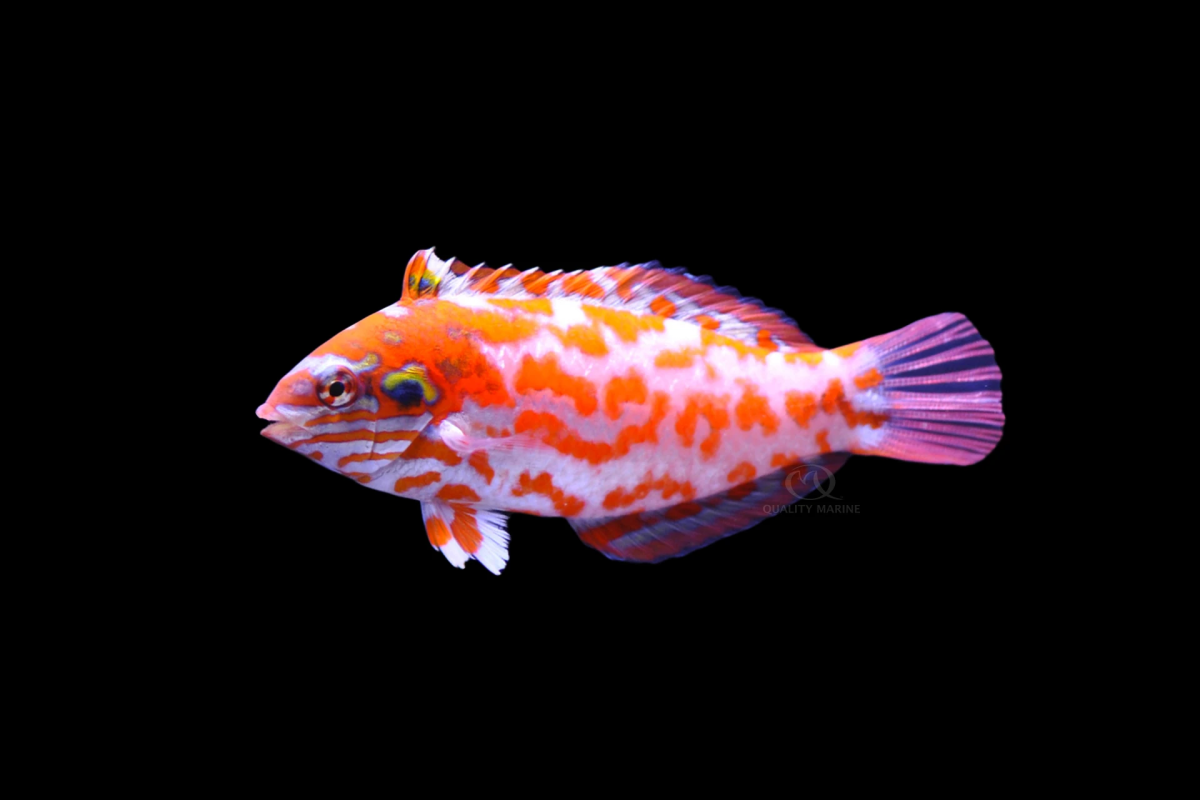
Leopard Wrasses belong to the genus Macropharyngodon and are found across the reefs of the Indo-Pacific. Several species are available in the hobby, with the most commonly kept being the Ornate Leopard Wrasse, the Black Leopard Wrasse, and the Guinea Fowl Wrasse. Each species shares the characteristic spotted or reticulated patterning that gives the group its name, though coloration varies significantly between species and between juveniles and adults.
Female and juvenile Leopard Wrasses typically display a white or light-colored body adorned with orange, black, and brown spots arranged in intricate patterns across the entire body. Males often develop more vivid coloration with greens, blues, and dramatic facial markings that emerge as the fish matures. Watching a juvenile Leopard Wrasse develop its full adult coloration over time is one of the genuine rewards of keeping this species long-term.
The Sand-Sleeping Behavior That Makes Leopard Wrasses Unique
One of the most fascinating and distinctive behaviors of Leopard Wrasses is their habit of sleeping buried in the sand. Every night, a Leopard Wrasse will dive into the sand bed and remain completely buried until morning. This is entirely natural behavior that serves as a protection mechanism against nighttime predators on the reef.
In the home aquarium, this behavior requires specific tank setup considerations. A deep, fine sand bed is not optional for Leopard Wrasses. It is an absolute requirement. Without adequate sand depth, the fish cannot perform its natural sleeping behavior, which causes chronic stress and significantly shortens its lifespan. Provide a sand bed of at least three to four inches of fine aragonite sand throughout the tank or at minimum in a dedicated area the wrasse can access easily.
New Leopard Wrasse owners are sometimes alarmed the first morning after introduction when they cannot find their fish anywhere in the tank. Do not panic. Your wrasse is almost certainly buried safely in the sand bed and will emerge on its own once the lights come on and it feels secure. This is completely normal and expected behavior.
Why Leopard Wrasses Require Extra Care and Expert Quarantine
Leopard Wrasses are widely considered one of the more difficult species to keep in captivity, and most of the challenges associated with them arise in the first weeks after purchase. They are sensitive to the stress of collection and transport, can be very reluctant to accept prepared foods initially, and require pristine water quality at all times.
Many Leopard Wrasses purchased from unprepared vendors arrive already declining and never successfully transition to prepared aquarium foods. This is the primary reason this species has a reputation for being difficult. The fish itself is not inherently fragile. The problem is almost always inadequate conditioning before sale.
Dr. Reef’s Quarantined Fish addresses this head-on. Every Leopard Wrasse goes through an extended conditioning period where it is carefully transitioned from wild prey items to prepared aquarium foods including frozen copepods, mysis shrimp, and other small meaty offerings. Fish are only made available for sale once they are eating reliably and consistently. This single factor makes a dramatic difference in the long-term survival rate of Leopard Wrasses purchased from Dr. Reef compared to those bought elsewhere.
Tank Requirements and Compatible Tank Mates
Leopard Wrasses do best in tanks of 75 gallons or larger with the deep sand bed described above. They are peaceful, reef-safe fish that ignore corals and most invertebrates entirely. They are excellent hunters of small amphipods, copepods, and tiny worms that live in the sand bed and on the rock surface, making them beneficial members of a reef cleanup crew as well as beautiful display animals.
Keep Leopard Wrasses with other peaceful species and avoid housing them with aggressive fish that may outcompete them for food or stress them during their vulnerable settling-in period. They can be kept with other wrasse species in larger systems, but avoid combining multiple Leopard Wrasse males as territorial conflicts can occur.
Feed multiple times daily with frozen copepods, frozen mysis shrimp, and other small meaty foods. The key to keeping a Leopard Wrasse healthy long-term is frequent small feedings that mimic the constant natural grazing behavior of this species on the wild reef.
With the right setup, a properly conditioned Leopard Wrasse from Dr. Reef’s Quarantined Fish will reward you with years of graceful beauty and endlessly fascinating behavior that makes it one of the most memorable fish you will ever keep.