
Melanurus Wrasse

Melanurus Wrasse for Sale: Reef-Safe Pest Control Fish
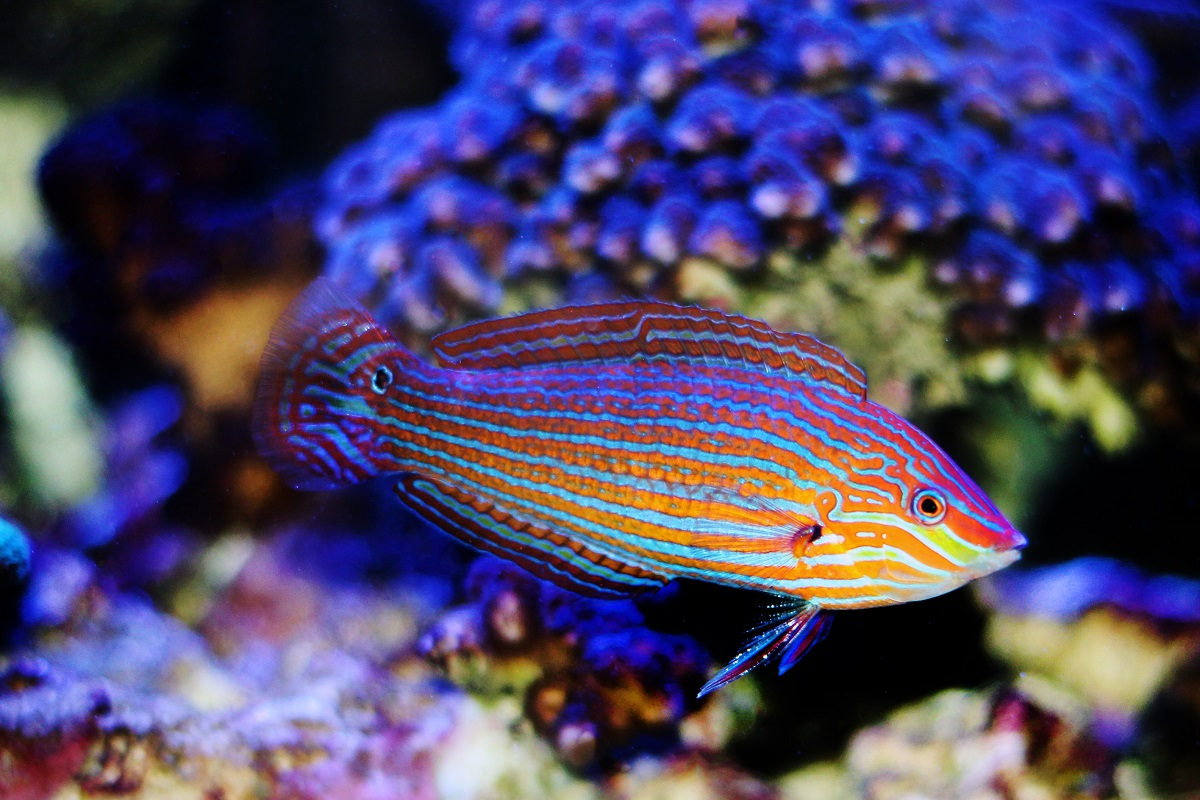
The Melanurus Wrasse (Halichoeres melanurus) is one of those rare reef fish that earns its place in a tank on multiple levels. It is visually striking, peaceful with most tankmates, and actively useful as a natural predator of some of the most troublesome reef pests. At Dr. Reef, Melanurus Wrasses are available after completing a rigorous quarantine process, so you can add this hardworking fish to your display tank knowing it is healthy, eating, and ready to get to work.
Appearance and Natural Behavior
Also known as the Tail Spot Wrasse or Hoeven’s Wrasse, the Melanurus Wrasse is native to the Indo-Pacific region, where it inhabits sandy reef flats and lagoon areas. Males display a brilliant combination of green, red, and orange banding with a distinctive spot near the tail that gives the fish its common name. Females are slightly more subdued in coloration but still attractive fish in their own right.
Like most wrasses, the Melanurus is constantly in motion, darting along the sand bed and between rockwork in search of food. This active, curious personality makes it an engaging fish to watch and a genuinely effective hunter of small invertebrate pests.
Why Reefers Love the Melanurus Wrasse for Pest Control
The Melanurus Wrasse has earned a strong reputation in the reef-keeping community as one of the most effective biological controls for common aquarium pests. It actively hunts and consumes a range of problematic organisms including bristle worms, pyramid snails, small fireworms, and zoanthid-eating nudibranchs. For reefers who have battled these pests, having a Melanurus Wrasse patrolling the sand bed and rockwork provides a level of ongoing pest management that no manual intervention fully replicates.
Pyramid snails in particular are a serious threat to Tridacna clams, and the Melanurus Wrasse is one of the few fish that will hunt and eat them reliably. Reefers who keep clam collections frequently add a Melanurus specifically for this purpose.
Importantly, the Melanurus Wrasse accomplishes this pest control without harming desirable reef inhabitants. It is considered reef safe with small corals, anemones, and sessile invertebrates. It does best in tanks without very small ornamental shrimp, as it may view tiny cleaner or peppermint shrimp as prey, but it coexists well with larger shrimp species like Skunk Cleaner Shrimp.
Tank Requirements
The Melanurus Wrasse requires a tank of at least 50 gallons with a sand bed of at least two inches. Like most wrasses, it sleeps buried in the sand at night and will also dive into the sand if startled or threatened. A fine to medium grain sand bed is essential for this natural behavior, and a tank without adequate sand depth will stress the fish.
Maintain standard reef parameters: salinity of 1.023 to 1.025, temperature between 72 to 78 degrees Fahrenheit, and a pH of 8.1 to 8.4. A secure lid is important, as Melanurus Wrasses are known jumpers, particularly during the initial acclimation period.
Quarantine and the Melanurus Wrasse
Wrasses as a group are known to be susceptible to ich and marine velvet. The Melanurus Wrasse is no exception, and fish sourced without proper quarantine frequently succumb to parasitic infection within weeks of being added to a display tank. The tragedy is that by the time symptoms are visible, the pathogen is already established in the system.
At Dr. Reef, every Melanurus Wrasse is quarantined for a minimum of 30 days and treated prophylactically for common parasites before being made available for sale. By the time your fish ships, it has cleared treatment, resumed its natural feeding behavior, and been confirmed healthy by the Dr. Reef team. This process protects your display tank and gives the fish itself the best possible foundation for a long, healthy life.
Diet and Feeding
Melanurus Wrasses are carnivores and readily accept high-quality frozen foods in captivity. Mysis shrimp, frozen brine shrimp, and quality carnivore pellets are all accepted enthusiastically by well-quarantined fish. Feeding two to three times daily keeps the fish active and energetic, supporting the constant patrolling behavior that makes it such an effective pest controller. A well-fed Melanurus is also less likely to turn its attention to desirable tank inhabitants.
Compatibility With Other Fish
The Melanurus Wrasse is peaceful toward fish of different species and does not show the territorial aggression common in other reef fish. It can be kept with most community reef fish including tangs, clownfish, gobies, and dartfish. Multiple females can be kept together in larger systems, and a male-female pair is a striking display. Avoid keeping two males together, as competition between males can lead to persistent aggression.
A Fish That Earns Its Keep
The Melanurus Wrasse is the rare fish that justifies its presence in a reef tank on looks, personality, and practical utility all at once. Dr. Reef’s Quarantined Fish makes it easy to add one to your system with complete confidence in its health. Check the current Melanurus Wrasse stock at Dr. Reef and add one of the hobby’s hardest-working reef fish to your display today.