
Captive-Bred Seahorses in a Home Aquarium

What Are the Essential Setup Requirements for Keeping Captive-Bred Seahorses in a Home Aquarium?
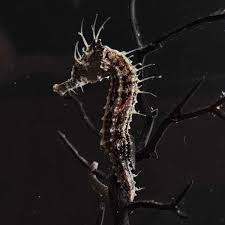
Captive-bred seahorses represent one of the genuinely transformative developments in the marine hobby. Where wild-caught specimens historically struggled to survive beyond a few months in home systems, refusing prepared foods and arriving weakened by the stresses of collection and transshipment, captive-bred individuals are a fundamentally different proposition. They are raised on frozen foods from the earliest stages of life, adapted to aquarium conditions, and considerably more tolerant of the normal variations that occur in a well-managed home system. They are also the ethical choice, leaving wild populations undisturbed while providing the aquarist with a far better chance of long-term success.
But captive-bred does not mean maintenance-free, and seahorses have specific setup requirements that differ meaningfully from those of a standard reef or fish-only system. Getting those requirements right before the fish arrive is the foundation of everything that follows.
Tank Size and Orientation
Seahorses are vertically oriented animals that use the full height of the water column rather than its horizontal footprint. This makes the height of the display as important as its volume, and a tall tank consistently outperforms a wide, shallow one of the same gallon rating. The minimum height for a standard-sized seahorse species should be at least 18 to 24 inches, giving the fish adequate vertical range for courtship behavior and natural movement.
For volume, a minimum of 30 gallons is appropriate for a first pair of standard-sized seahorses such as Hippocampus erectus, with an additional 10 to 15 gallons recommended for each additional pair. A system in the 45 to 90 gallon range allows for better water stability, more diverse aquascape, and greater flexibility in adding compatible tank mates if desired.
System Maturity and Water Quality
Seahorses should only be introduced to a fully cycled, biologically mature aquarium. The urgency of this requirement is greater than for most other marine fish because seahorses have a simplified digestive system that makes them unusually vulnerable to the Vibrio bacteria and other pathogens that thrive in deteriorating water quality. Ammonia and nitrite must be maintained at zero, and nitrates should be kept below 10 to 15 parts per million. Anything above that range begins to compromise immune function in a species that has limited capacity to compensate.
Filtration should be robust, with excellent biological capacity and good surface agitation for gas exchange. Water flow requires careful calibration: seahorses are weak swimmers and become exhausted and stressed by strong, turbulent current, but they also need enough flow to prevent dead spots and maintain water quality. Moderate, directional flow with calm resting areas in the mid-tank is the target. Temperature should be maintained at 72 to 75 degrees Fahrenheit for most temperate and subtropical species, or 74 to 78 degrees for tropical species such as H. erectus and H. kuda.
Aquascape and Hitching Posts
Seahorses anchor themselves to structure using their prehensile tails, a behavior they engage in constantly throughout the day. An aquarium without adequate hitching opportunities is an aquarium in which seahorses are unable to rest, feed properly, or behave naturally. Live rock, macroalgae, artificial corals, and purpose-built hitching posts all serve this function, and a well-designed seahorse display incorporates multiple hitching options at different heights throughout the water column.
Live rock should be free of large bristleworms and mantis shrimp before introduction. A sandbed is beneficial and naturalistic, though a bare-bottom system is easier to keep clean and many breeders recommend it for new keepers managing food waste and bacterial load. The aquarium must have a tightly sealed lid with no gaps. Seahorses are not leaping fish in the way that wrasses or blennies are, but an open top is an unnecessary risk.
Heating Safely
Standard aquarium heaters should never be placed in the main display where seahorses have direct access. Because seahorses hitch to virtually any available structure, they will wrap around an exposed heater, and when the heater activates, the contact causes burns that lead to infection and death. Heaters should be housed in a sump, placed in the back filtration chamber of an all-in-one system, or replaced with an in-line heater that sits entirely outside the display. This is a non-negotiable safety requirement unique to seahorse systems.
Feeding Setup
Captive-bred seahorses should be eating frozen mysis shrimp as their primary diet, ideally before leaving the breeder. Feed two to three times daily in small portions. Because seahorses are slow, methodical feeders that cannot compete with faster fish, a dedicated feeding station is highly effective: a small dish or section of the tank where food is directed by a turkey baster or gentle current, allowing the seahorse to pick off individual shrimp at its own pace without competition.
Larger captive-bred juveniles are considerably easier to establish than very small ones. Individuals should ideally be at least four to six months old and three inches or more in length before being transferred to a new home, as smaller fish have higher feeding requirements and tolerate shipping stress less effectively.
Quarantine Before Display Introduction
Even with captive-bred specimens from reputable breeders, a quarantine period of at least 30 days before introduction to the display is strongly recommended. New seahorses may temporarily stop eating after the stress of shipping, and a bare-bottom quarantine tank that closely resembles the conditions they were raised in gives the best chance of resuming feeding quickly. Observing the fish in quarantine before display introduction also allows early detection of any health issues that could spread to established tank mates.