
Barnacle Blenny

What Type of Aquarium Setup Best Suits the Barnacle Blenny in a Saltwater Tank?
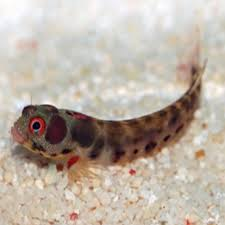
Among the many small, character-filled fish that populate the reef hobby, the Barnacle Blenny (Acanthemblemaria hancocki) occupies a uniquely charming niche. This tiny, tube-dwelling species is not the most colorful fish you will ever keep, nor the rarest, but it is one of the most entertaining. Its habit of poking its oversized head out of a small hole, swiveling its eyes independently to survey the surroundings, and darting back inside at the slightest provocation gives it a personality that punches far above its size. Setting up an aquarium that genuinely suits the Barnacle Blenny, however, requires understanding exactly what this fish needs to thrive rather than simply survive, and the answers are specific enough to be worth getting right before the fish arrives.
The Tube-Dwelling Lifestyle: Everything Starts Here
The Barnacle Blenny is not a free-swimming fish in any conventional sense. It is a tube dweller, spending almost its entire life either inside a narrow tube or hole or perched at the entrance of one with its body occupying the full length of the cavity. In the wild, these fish inhabit empty barnacle shells, worm tubes, and small holes in reef rock from which they emerge briefly to feed on passing zooplankton before retreating again. This behavior is not a stress response. It is simply what Barnacle Blennies do, and every element of a successful aquarium setup for this species flows directly from that fundamental behavioral reality.
An aquarium that does not provide appropriate tube structures will house a Barnacle Blenny that is chronically stressed, rarely visible, and in poor long-term health. An aquarium that provides exactly what the fish needs will reward the keeper with one of the most watchable and behaviorally engaging small fish in the hobby, visible and active for much of the day from the security of its chosen home.
Tank Size: Smaller Is Perfectly Appropriate
The Barnacle Blenny is one of the genuinely nano-appropriate fish in the saltwater hobby. Adults reach a maximum size of around 2 inches, and their sedentary, tube-oriented lifestyle means they require almost no open swimming space. A tank as small as 10 to 20 gallons can comfortably house one or two Barnacle Blennies, provided the water quality is maintained diligently. Nano tanks are notoriously unforgiving of parameter swings, and the smaller the system the more attentive the husbandry needs to be, but for an aquarist comfortable with that level of attention, a small dedicated nano tank can showcase a Barnacle Blenny better than a large system where the fish would simply be lost in the scale of the aquascape.
In larger reef systems, Barnacle Blennies can be included as part of a diverse community, but placing them in the right area of the aquascape is essential. Position their tubes toward the front of the display, at a height where they are easy to observe at eye level. A fish that spends its life at the back corner of a 200-gallon tank behind a wall of rockwork might as well not be there from the aquarist’s perspective.
Providing the Right Tubes and Shelter Structures
This is the single most important element of a Barnacle Blenny setup and the one most frequently underestimated by first-time keepers. The fish must have access to narrow, snug tubes that fit its body closely from entrance to back wall. Holes that are too wide do not provide the security the fish requires and will be rejected in favor of whatever tighter space the fish can locate in the rockwork, which may or may not be visible to the keeper.
Purpose-made barnacle cluster decorations and small PVC tubes of appropriate diameter are both effective options. Many experienced keepers of this species use sections of rigid airline tubing or small-diameter PVC pipe cut to 2 to 3 inch lengths and positioned vertically or at a slight angle in the rockwork, creating a custom tube field that the blennies will colonize enthusiastically. The internal diameter of the tube should be just wide enough for the fish to enter and turn around without offering so much space that it loses the snug, secure feeling the fish is seeking.
Providing more tubes than there are fish is always a good practice. Barnacle Blennies are territorial about their chosen tube and will defend it actively against other small fish that attempt to investigate. Having surplus tube options distributed across the aquascape reduces this territorial pressure and allows the fish to establish a home without constant competition.
Water Flow, Parameters, and Feeding Position
Barnacle Blennies are planktivores that feed by darting out of their tube to intercept small zooplankton items carried past by the current and immediately retreating. Replicating this feeding dynamic in captivity is the key to getting the fish to feed consistently. Position the tubes in an area of the tank that receives moderate, steady flow directed across the entrance of the tubes rather than directly into them. Food particles carried past on this current will trigger the fish’s natural feeding response reliably and repeatedly throughout the day.
Feed small frozen zooplankton items, including frozen copepods, frozen Cyclops, and small frozen mysis shrimp, by releasing them just upstream of the tube cluster at feeding time. A reef system with a productive refugium supplying live copepods into the display provides a continuous food source that Barnacle Blennies will exploit throughout the day between manual feedings, significantly improving their long-term nutrition and body condition. Water parameters should be maintained within standard reef ranges, with particular attention to stability, as these small fish have limited physiological reserves to buffer against sudden parameter swings.
Tank Mates and Community Considerations
The Barnacle Blenny is a peaceful fish toward almost everything that is not attempting to occupy its tube. It is fully reef-safe, will not disturb corals or invertebrates, and poses no threat to any tank mate too large to be swallowed whole, which given its 2-inch adult size is essentially everything. The threat runs in the other direction. Any fish large enough to view a Barnacle Blenny as a meal, or assertive enough to stress it out of its tube repeatedly, is an incompatible tank mate regardless of how reef-safe it might otherwise be.
Ideal companions are other small, peaceful species that occupy different areas of the tank and do not compete for tube structures. Small gobies, small Chromis, Clownfish, and peaceful nano wrasses all make appropriate community members. Avoid hawkfish, which perch on rockwork and stress tube-dwelling fish persistently, and avoid any damsel species with established territorial behavior that might include the blenny’s tube cluster within its claimed zone.
A Small Fish That Rewards Thoughtful Setup
The Barnacle Blenny is proof that a fish does not need to be large, rare, or expensive to be genuinely captivating. Given the right tube structures, the right flow, the right feeding approach, and the right community of tank mates, it becomes one of the most reliably entertaining fish in the display, visible and active and full of personality every single day. Get the setup right before the fish arrives, and it will reward that preparation for years.
Browse our current Barnacle Blenny availability at Dr. Reef’s Quarantined Fish and bring one of the hobby’s most characterful small fish into a system that is genuinely ready for it.