
Resplendent Anthias for Sale

Resplendent Anthias for Sale – A Deep-Water Gem and Prized Addition for Advanced Reef Aquarists
There are fish in the reef hobby that are beautiful, and then there are fish that stop you in your tracks the first time you see them. The Resplendent Anthias (Pseudanthias pulcherrimus) belongs firmly in the second category. One of the most visually spectacular members of the Anthias family, this deep-water gem carries a combination of vivid coloration, graceful movement, and genuine rarity that places it at the very top of what serious reef aquarists aspire to keep. It is not a fish for the casual hobbyist. It is a fish for the experienced, well-equipped aquarist who understands what it takes to keep a demanding deep-water species in peak condition and is prepared to meet that challenge without compromise.
At Dr. Reef’s Quarantined Fish, sourcing and successfully conditioning Resplendent Anthias represents one of the most careful and demanding processes in our entire operation. Every specimen we offer has completed our comprehensive quarantine protocol, has been transitioned onto prepared foods, and is eating and behaving with confidence before we make it available. When a Resplendent Anthias leaves our facility, it is as ready as any fish of this caliber can be for the display tank it deserves.
The Visual Spectacle of the Resplendent Anthias
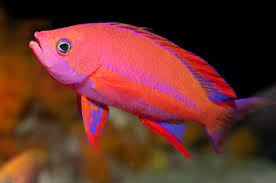
The name says everything. Pulcherrimus means most beautiful in Latin, and the fish earns it. Male Resplendent Anthias display a breathtaking palette of deep magenta and rose-pink body coloration, accented with vivid yellow markings along the dorsal fin and face that create a contrast of extraordinary intensity. The combination is not subtle. In a well-lit reef system, a male Resplendent Anthias radiates color in a way that draws the eye from across the room and holds it there.
Females display a softer, more uniformly rosy coloration with delicate yellow accents, beautiful in their own right and visually complementary to the dominant male when kept as a harem group. As with all Anthias, Resplendent females are capable of transitioning to male if the dominant male in a group is lost, a protogynous hermaphroditism that shapes how these fish should be managed and how groups should be structured for long-term stability.
Beyond coloration, the Resplendent Anthias moves with the fluid, hovering grace characteristic of its family, holding position in open water with effortless fin work and constantly engaging with the surrounding current. In a large reef with strong flow, a small harem of Resplendent Anthias creates a living display of color and movement that no coral arrangement alone can replicate.
Deep-Water Origins and What They Mean for Husbandry
The Resplendent Anthias is a deep-water species, collected from depths typically ranging from 25 to 70 meters or more across its range in the Indo-Pacific. This origin has profound implications for how the fish must be kept in a home reef system. Deep-water environments are characterized by cooler, highly stable temperatures, exceptional water clarity, strong dissolved oxygen levels, and relatively low and consistent nutrient concentrations. Replicating these conditions as closely as possible is not aspirational for this species. It is essential.
Temperature is one of the most critical parameters to manage correctly. Resplendent Anthias thrive at temperatures between 68 and 75 degrees Fahrenheit, significantly cooler than the range many shallow-water reef inhabitants prefer. Keeping this species at temperatures consistently above 76 to 78 degrees Fahrenheit suppresses immune function, reduces feeding motivation, and shortens lifespan. Aquarists serious about keeping Resplendent Anthias long-term often invest in aquarium chillers specifically to maintain the lower end of the appropriate temperature range, particularly during warmer months.
Water quality must be impeccable and unwavering. Elevated nitrates or phosphates, sudden salinity shifts, or inconsistent pH will stress these fish in ways that are not immediately visible but that compound over time into irreversible health decline. A mature, heavily skimmed system with established biological filtration, high dissolved oxygen through strong surface agitation, and consistent parameters measured and maintained with precision is the minimum appropriate environment for this species.
Tank Size, Setup, and the Importance of System Maturity
A minimum tank size of 180 gallons is recommended for a small harem of Resplendent Anthias, and larger systems are strongly preferred. These fish are active open-water swimmers that require meaningful horizontal swimming space to express natural behavior. Cramped conditions generate chronic low-level stress that manifests as reduced feeding, faded coloration, and susceptibility to opportunistic infection, all of which are difficult to reverse once established.
The system should be mature, ideally at least two years old, with a fully established biological filter, stable chemistry, and the kind of microfaunal diversity that only develops in a well-run reef over time. A refugium producing live copepods into the display is not optional for this species. It is one of the most important structural elements of a system designed to support Resplendent Anthias long-term, providing a continuous supply of natural zooplankton that these fish evolved to actively hunt throughout the day.
Aquascape the system to provide open swimming space in the middle and upper water column while including areas of rockwork and moderate shelter where the fish can retreat if startled. Strong, layered flow that creates variable current throughout the tank encourages the natural hovering and active swimming behavior that keeps these fish physically conditioned and behaviorally engaged.
Feeding Resplendent Anthias: Precision, Frequency, and Variety
Feeding is where the long-term success or failure of keeping Resplendent Anthias is ultimately decided. These fish have extremely high metabolic rates and must consume food multiple times per day without exception. A Resplendent Anthias that misses feedings regularly, or that is outcompeted for food by faster or more aggressive tank mates, will lose body condition rapidly and decline in ways that are very difficult to reverse. The aquarist’s commitment to consistent, multiple daily feedings is non-negotiable.
The ideal diet centers on small, high-quality frozen zooplankton. Frozen mysis shrimp, frozen copepods, frozen Cyclops, and enriched frozen Artemia are all excellent staples. Variety is important both for nutritional completeness and for maintaining feeding motivation over the long term. Many experienced keepers of this species supplement with high-quality small-pellet foods delivered by automatic feeder during hours between manual feedings, ensuring the fish have continuous access to nutrition throughout the day even when the aquarist is not present.
A productive refugium that exports live copepods into the display continuously is one of the most powerful tools available for supporting Resplendent Anthias nutrition. Live copepods provide a natural, always-available food source that these fish hunt actively and consume enthusiastically, supplementing manual feedings in a way that closely mirrors the natural feeding ecology of deep-water Anthias on wild reefs. For any aquarist planning to keep this species, establishing a well-seeded refugium before the fish arrive is strongly recommended.
Harem Structure, Social Dynamics, and Group Management
Resplendent Anthias should always be kept in groups structured as a harem, one dominant male with multiple females. Attempting to keep a single specimen in isolation almost invariably leads to chronic stress and decline. The social context of a harem group provides behavioral stability, feeding confidence, and the kind of social stimulation that these fish require for genuine long-term health. A group of one male with three to five females is an appropriate and stable structure for most systems of adequate size.
Introduce the group simultaneously rather than sequentially. Adding fish to an established group one at a time disrupts the social hierarchy repeatedly and generates ongoing aggression that is stressful for all members of the group. A simultaneous introduction allows the hierarchy to establish once, with minimal ongoing disruption once the initial social dynamics settle.
If the dominant male is lost, one of the females will begin the transition to male within days to weeks, a process that is fascinating to observe and that underscores the importance of maintaining the group with enough female members to ensure social continuity. Maintaining a group of at least four to five individuals also provides resilience against individual losses without destabilizing the group structure.
Reef Compatibility and Choosing the Right Tank Mates
Resplendent Anthias are fully reef-safe. They will not disturb corals, clams, or invertebrates of any kind, and their open-water swimming behavior means they interact minimally with the rockwork and substrate where most coral colonies are positioned. They are an ideal complement to a coral-focused display, adding constant color and movement to the open water space that corals leave unoccupied.
Tank mate selection requires careful thought. Avoid any species that is aggressive, territorial in open water, or that will compete effectively for food at feeding time. Resplendent Anthias can be displaced from food by faster or more assertive feeders, which compounds the nutritional management challenge significantly. Ideal companions are calm, similarly peaceful species such as small wrasses, gobies, assessors, and other non-competitive reef fish. Large, boisterous fish, aggressive damsels, or anything with a tendency to harass active open-water swimmers should be excluded from any system housing this species.
The Critical Role of Proper Quarantine for a Species This Valuable
The Resplendent Anthias is both a rare and expensive fish and a deeply disease-susceptible one. The stress of collection from depth and the shipping process makes newly arrived specimens highly vulnerable to ich, velvet, and brooklynella. Introducing an unquarantined specimen directly into a display reef is an unacceptable risk for any fish, but for a fish of this value and sensitivity it is a risk with consequences that are likely to be severe and difficult or impossible to reverse.
The quarantine period also serves the essential function of transitioning deep-water Anthias from wild prey organisms to the prepared frozen foods they will depend on in a home system. This transition takes time, patience, and consistent effort in a controlled environment. Attempting to manage it in a display tank while simultaneously maintaining a reef system is not a realistic approach for a species with this level of dietary sensitivity.
At Dr. Reef’s Quarantined Fish, every Resplendent Anthias undergoes a minimum four to six week quarantine that includes preventative treatment for parasites, daily monitoring, multiple feedings per day to establish and reinforce prepared food acceptance, and complete health assessment before being offered for sale. We share feeding documentation and updates throughout the process. When a Resplendent Anthias leaves our facility, it has already demonstrated the feeding confidence and physical stability that give it the best possible chance of thriving in your system.
The Pinnacle of What an Anthias Can Be in a Home Reef
The Resplendent Anthias represents something close to the pinnacle of what the reef hobby can offer to the aquarist willing to commit to its demands. It is rare, extraordinarily beautiful, behaviorally fascinating, and genuinely challenging to keep well. For the experienced reef keeper with the right system, the right infrastructure, and the dedication to meet its daily requirements without compromise, a harem of Resplendent Anthias is the kind of achievement that defines a serious reef and a serious hobbyist.
Browse our current Resplendent Anthias availability at Dr. Reef’s Quarantined Fish and take the next step toward building the display that this exceptional fish deserves. The investment is real. So is the reward.