
Marble Cat Shark for Sale

Marble Cat Shark for Sale – A Striking and Hardy Shark for Spacious Dedicated Marine Aquariums
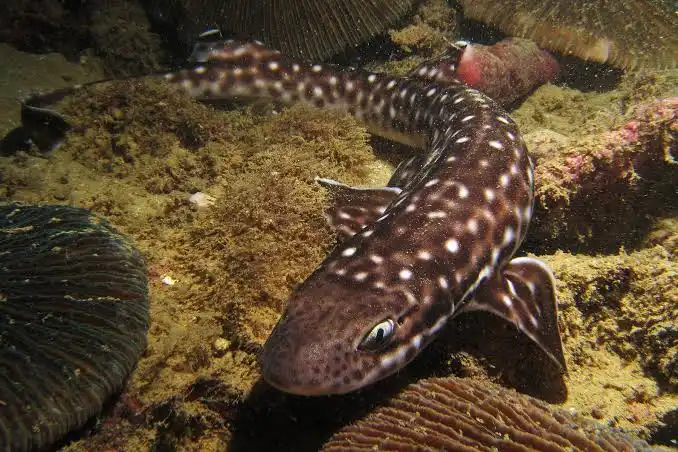
The Marble Cat Shark (Atelomycterus macleayi) is one of those rare marine animals that genuinely stops people in their tracks. With its bold, contrasting pattern of dark spots and saddles across a pale body, this small but visually dramatic shark brings an entirely different dimension to the marine aquarium hobby. Unlike the typical reef fish most hobbyists keep, the Marble Cat Shark is a bottom-dwelling elasmobranch that rewards dedicated keepers with an intimate, fascinating look at shark behavior up close. If you have the space and the commitment, this species is unlike anything else you can put in a home aquarium.
What Is the Marble Cat Shark?
The Marble Cat Shark is found across the Indo-Pacific, inhabiting shallow coastal reef zones and sandy bottom areas where it hunts at night for small fish, crustaceans, and invertebrates. It is a small shark by any measure, typically reaching 24 to 28 inches in adulthood, which makes it one of the more manageable shark species for dedicated home aquariums. Its body is slender and flexible, adapted for navigating tight reef crevices and resting motionless on the substrate during daylight hours.
The patterning is the immediate draw. A mosaic of dark brown or black spots arranged over a lighter background gives the fish its common name, and no two individuals are marked in exactly the same way. It is a genuinely striking animal, and in a well-designed shark aquarium it becomes the undisputed centerpiece.
Behavior in a Dedicated Marine Aquarium
The Marble Cat Shark is nocturnal by nature. During the day it will typically find a sheltered spot among rockwork or beneath a ledge and remain largely still. As the lights dim in the evening, it becomes noticeably more active, moving along the substrate in search of food and exploring the tank with measured, deliberate swimming. Watching this behavioral shift from day to night is one of the more rewarding aspects of keeping this species.
Unlike open-water swimmers such as the Fusilier Damselfish, which moves fluidly through the mid and upper sections of the aquarium, the Marble Cat Shark is entirely a bottom-oriented fish. It rarely ventures into open water and spends the vast majority of its time along the sand bed and lower rockwork. This distinction is important when planning a tank around this species, as the layout should prioritize open sand areas over dense vertical rockscaping.
It is not an aggressive shark toward humans and handles aquarium life well once settled, but it is absolutely a predator in the context of its tank mates. Anything small enough to be consumed will eventually be eaten. This is not a community fish and should not be treated as one.
Tank Requirements
A dedicated species aquarium is strongly recommended. The Marble Cat Shark requires a minimum tank size of 180 gallons for a single adult specimen, and larger is always better. The footprint of the tank matters more than height. A long, wide aquarium gives this bottom dweller the swimming room and resting space it genuinely needs. Tall, narrow tanks are poorly suited to this species regardless of total volume.
Substrate should be a deep, fine sand bed. The Marble Cat Shark rests directly on the bottom for extended periods, and coarse gravel or bare glass can cause abrasion injuries to its underside over time. Sand also allows it to behave naturally, occasionally partially burying itself when resting.
Rockwork should be arranged to create caves, overhangs, and sheltered resting spots while keeping a generous open sand area for movement. Avoid stacking rock in ways that could collapse and injure the shark. Stability in the aquascape is critical.
Maintain water parameters carefully. Salinity should be held at 1.025 to 1.026, temperature between 72 and 78 degrees Fahrenheit, and pH between 8.1 and 8.3. Excellent filtration and consistent water quality are non-negotiable. Sharks are sensitive to ammonia and nitrite, and a well-cycled, heavily filtered system is a prerequisite before any specimen is introduced.
Feeding in Captivity
The Marble Cat Shark feeds readily in captivity once acclimated, which is one of the qualities that makes it a practical choice for experienced hobbyists. It accepts a variety of meaty foods including whole silversides, shrimp, squid, and marine-based prepared shark foods. Feeding is best done in the evening when the shark is naturally more active.
Because it is a bottom feeder, food should be placed directly on the substrate rather than released into the water column. This reduces waste and ensures the shark locates its meal efficiently. Feed every two to three days for adult specimens, adjusting based on body condition and activity.
Compatibility
The Marble Cat Shark should be kept in a dedicated setup or alongside only large, robust fish that are genuinely too big to be considered prey. Large angelfish, sizeable wrasses, and similarly scaled species can sometimes coexist in a large enough system, but careful observation is always required. Small fish, ornamental shrimp, and any invertebrate small enough to be eaten will not survive in the same tank.
Why Quarantine Is Essential
As with any shark species, purchasing a quarantined specimen makes an enormous difference. At Dr. Reef’s Quarantined Fish, every Marble Cat Shark is held through a thorough quarantine process, confirmed eating prepared foods, and monitored for disease before being made available. Introducing an unquarantined shark into an established system carries serious risk to the animal and to everything else in the tank.
Final Thoughts
The Marble Cat Shark is not a beginner’s fish. It demands a large, purpose-built aquarium, excellent water quality, and a keeper willing to meet its specific needs. But for the hobbyist ready to make that commitment, it delivers an experience unlike anything in the standard marine fishkeeping world. Source a quarantined specimen, build the right system, and this striking, hardy shark will become one of the most compelling animals you have ever kept.