

Fusilier Damselfish

How Does the Fusilier Damselfish Behave When Kept in a Community MarineArium?
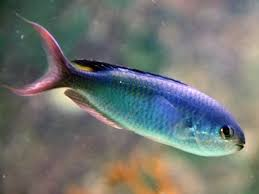
The Fusilier Damselfish (Lepidozygus tapeinosoma) is one of the more underappreciated species in the marine aquarium hobby. Slender, fast-moving, and beautifully colored with its distinctive blue and yellow tones, it brings a different kind of energy to a community marine tank compared to the typical stocky damselfish most hobbyists are familiar with. But before adding one to your system, understanding how this fish actually behaves in a community setting is essential to making it work.
What Is the Fusilier Damselfish?
The Fusilier Damselfish is found across the Indo-Pacific, from the Red Sea to the central Pacific Ocean. Unlike most damselfish that hug the rock work and substrate, the Fusilier Damselfish is a mid-water and open-water swimmer. In the wild it forms large schools in open reef areas, feeding on zooplankton drifting in the current.
It has a slender, streamlined body compared to other damselfish, with a forked tail and a coloring that combines blue along the upper body with a yellow or golden lower half. It typically reaches around 4 inches in adulthood. Its open-water swimming habit and schooling nature make it behaviorally quite different from its damselfish relatives, and this shapes how it interacts with tank mates in a community aquarium.
General Behavior in a Community Tank
The Fusilier Damselfish is notably less aggressive than most other damselfish species. This is one of its most appealing qualities for community marine aquariums. While damselfish as a group have a well-earned reputation for being territorial and confrontational, the Fusilier sits at the more peaceful end of that spectrum.
In a community tank it tends to spend most of its time in open water, moving actively through the mid and upper sections of the aquarium. It does not claim and defend a single territory the way many other damselfish do, which significantly reduces conflict with other fish. Instead it moves fluidly through the tank, occasionally interacting with tank mates but rarely initiating serious aggression.
That said, it is still a damselfish and will show assertive behavior if it feels threatened or crowded. In smaller tanks or with fish that persistently invade its space, it can become nippy and defensive. Giving it adequate room and compatible tank mates goes a long way toward keeping its behavior relaxed and manageable.
How It Interacts With Other Fish
The Fusilier Damselfish generally coexists well with a wide range of peaceful to semi-aggressive marine fish. It works particularly well alongside similarly sized schooling fish, larger peaceful wrasses, anthias, dartfish, and small to mid-sized angelfish. Its open-water swimming habit means it rarely competes directly with bottom-dwelling species for space or food, which reduces a common source of tension in community tanks.
Keeping a small group of three to five Fusilier Damselfish together is highly recommended. In the wild this is a schooling species, and a solitary individual in captivity can become stressed, skittish, and more prone to aggressive behavior toward other fish. A small group spreads social interaction across the school, resulting in calmer and more natural behavior overall. It also looks spectacular in a larger tank, with the group moving together in open water in a way that closely mirrors wild reef behavior.
Avoid housing the Fusilier Damselfish with highly aggressive species or very large predatory fish that may see it as a food source. Its slender body and open-water habits make it more vulnerable than stockier fish in a tank with serious aggression.
Behavior Around Corals and Invertebrates
The Fusilier Damselfish is considered reef-safe for most practical purposes. It feeds on zooplankton in the wild and shows little to no interest in coral polyps or sessile invertebrates in a reef tank. It can be kept confidently with most hard and soft corals without the risk of nipping or damaging them.
Larger ornamental invertebrates such as cleaner shrimp and fire shrimp are generally safe as well. Very small shrimp or tiny crustaceans may occasionally attract attention, so these should be introduced with some caution in a tank that includes any damselfish species.
Feeding Behavior in Captivity
The Fusilier Damselfish is an enthusiastic and easy feeder in captivity, which makes it one of the more straightforward species to care for on a daily basis. It readily accepts a wide variety of prepared foods including frozen mysis shrimp, enriched brine shrimp, small pellets, and finely chopped marine seafood.
Because it is a mid-water feeder by nature, it tends to intercept food as it falls through the water column rather than picking at the substrate. This feeding style means it competes actively at mealtimes and can outpace slower or more timid tank mates. Target feeding shyer species ensures everyone in the tank gets adequate nutrition.
Feed small amounts two to three times daily to keep the fish active, well-nourished, and less likely to show food-related stress behaviors.
Tank and Water Requirements
A minimum tank size of 70 gallons is recommended, with larger being better. This is an active, open-water swimmer that needs genuine space to move. Cramped conditions bring out the more aggressive side of its personality and prevent the natural schooling behavior that makes this fish so appealing.
Maintain stable water parameters with salinity at 1.025 to 1.026, temperature between 74 and 80 degrees Fahrenheit, and pH between 8.1 and 8.3. Good water flow through the mid and upper sections of the tank supports its natural swimming behavior and keeps it active and healthy.
Why Quarantine Matters Before Adding This Fish
Even a hardy and adaptable species like the Fusilier Damselfish benefits enormously from proper quarantine before entering a display tank. At Dr. Reef’s Quarantined Fish, every specimen is held through a careful quarantine process, monitored for disease, and confirmed eating prepared foods before being offered for sale.
Introducing any unquarantined fish into an established community tank carries real disease risk, particularly for the existing inhabitants that have already settled into a healthy and stable system. A quarantined Fusilier Damselfish arrives ready to integrate smoothly, without putting everything you have built at risk.
Final Thoughts
The Fusilier Damselfish is a refreshing choice for hobbyists who want the hardiness and adaptability of a damselfish without the intense territorial aggression that comes with many species in that family. It is active, visually striking, reef-safe, and genuinely enjoyable to watch in an open, well-planned community marine aquarium.
Keep it in a small group, give it space to swim, source a quarantined specimen from Dr. Reef’s Quarantined Fish, and this underrated species will quickly become one of the most dynamic and rewarding fish in your tank.