
Skeletor Eel

Skeletor Eel for Sale – A Rare and Visually Striking Moray for Large Marine Aquariums
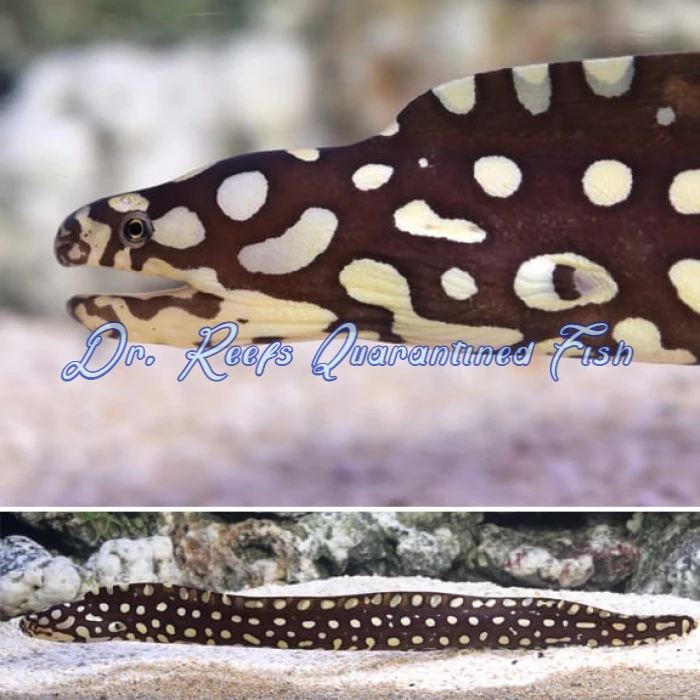
Few marine animals combine rarity, dramatic appearance, and predatory character quite like the Skeletor Eel (Echidna xanthospilos). With its bold, high-contrast patterning of dark body and vivid yellow spotting, this striking moray is one of the most visually distinctive eels available in the marine hobby and a genuine prize for dedicated aquarists with the space and experience to house it properly. At Dr. Reef Quarantined Fish, every Skeletor Eel is carefully observed and confirmed eating before it ships to you.
A Moray of Genuine Rarity
The Skeletor Eel is not a species encountered regularly in the marine trade. Its natural range spans portions of the Indo-Pacific, where it inhabits coral reef environments and rocky coastal zones, typically in areas with abundant crevices, caves, and structural complexity that provide the shelter this species seeks during daylight hours. Limited collection numbers and the challenges associated with sourcing and preparing moray eels to a high standard keep availability consistently low, making a well-quarantined specimen from a trusted source a meaningful opportunity for aquarists who have been searching for an eel with genuine rarity and visual impact.
Appearance and Size
The Skeletor Eel earns its evocative common name from its bold and somewhat otherworldly patterning. The body is dark brown to black with a pattern of vivid yellow to cream spots and reticulations that create a striking high-contrast appearance unlike most other moray species available in the hobby. The effect is simultaneously elegant and dramatic, and under good aquarium lighting the yellow markings take on a particularly brilliant quality. Adults typically reach 24 to 30 inches in length, making this a manageable mid-sized moray compared to some of the larger species in the family, though it still requires a suitably scaled system with robust equipment and thoughtful aquascaping.
Aquarium Requirements
The Skeletor Eel requires a well-established marine aquarium of at least 100 gallons, with the emphasis on providing abundant hiding spots, caves, and crevices within the rockwork where the eel can spend its daylight hours concealed and secure. Live rock arranged to create a network of tunnels and overhangs reflects the natural habitat preferences of this species and encourages the most natural behavior. All equipment within the aquarium should be secured or protected, as morays are notorious for investigating and damaging heaters, pump intakes, and other exposed equipment. A heavy, secure lid with no gaps is absolutely essential, as moray eels are highly capable escape artists that will exploit any opening in the aquarium cover without hesitation.
Feeding
Moray eels can present feeding challenges in captivity, particularly during the initial settling period when newly acquired specimens may refuse food for extended periods while they adjust to their new environment. The Skeletor Eel is a carnivore that feeds on fish and crustaceans in the wild. In captivity it can be transitioned onto a diet of meaty marine foods including whole prawns, pieces of squid, silversides, and other substantial marine protein sources. Offering food using tongs or a feeding stick near the entrance of the eel’s chosen cave during evening hours, when morays are naturally more active, is the most reliable approach for establishing a regular feeding response. Patience during the initial period is important, as it can take several weeks for a newly introduced moray to feed with confidence.
Temperament and Tank Compatibility
The Skeletor Eel is a predator that will consume fish and crustaceans small enough to be taken as prey. Tank mates must be chosen with this firmly in mind, and small fish, ornamental shrimp, and other small invertebrates should not be housed in the same system. With larger, robust fish species that are clearly too large to be considered prey, the Skeletor Eel can coexist peacefully, as morays are not generally aggressive toward animals they do not view as food. Handling should always be approached with caution, as morays possess sharp teeth and a powerful bite reflex that can cause significant injury, particularly during feeding.
Why Buy from Dr. Reef
At Dr. Reef Quarantined Fish, every Skeletor Eel is carefully observed, held under stable conditions, and confirmed eating before being offered for sale. We do not offer a moray eel for sale until it is actively accepting food in our care. That commitment is particularly important for a species with the rarity and value of the Skeletor Eel, where purchasing an animal that has already established a feeding response removes the most significant and stressful challenge most aquarists face when acquiring a new moray.